
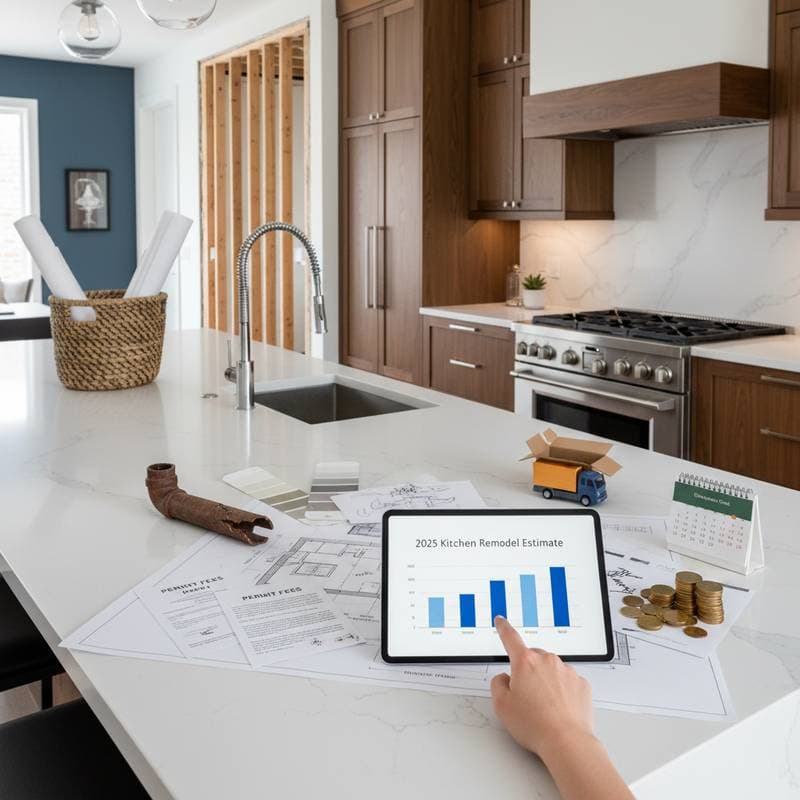
Hidden Costs of 2025 Kitchen Remodels That Calculators Overlook
Homeowners frequently enter details into online remodel calculators and receive reassuring figures. These tools offer straightforward projections, yet actual expenses mount as demolition progresses. Structural discoveries, permit requirements, and waste management fees often exceed initial predictions. Preparation becomes essential once individuals identify these concealed expenditures.
Limitations of Standard Estimates
Online calculators rely on national averages that seldom align with specific home conditions or local markets. A typical midrange kitchen remodel appears at $30,000 to $40,000, yet this figure excludes regional labor variations, supply chain disruptions, or challenges in older properties that elevate totals.
In areas with elevated labor costs, bids may surpass calculator outputs by 20 to 30 percent. Variations in cabinet quality or appliance selections can alter the budget by thousands of dollars. These tools presume perfect conditions, such as straight walls and even floors, which diverge from common household realities.
Hidden Cost 1: Structural Issues Revealed During Demolition
Demolition exposes potential problems like outdated electrical systems, plumbing reroutes, or weakened framing. Remediation for these concerns ranges from $2,000 to $8,000 based on project scale.
Relocating a sink to an island involves plumbing adjustments that may require subfloor cuts and joist supports. In older homes, compliance with current electrical codes demands new wiring, receptacles, and possibly an upgraded service panel. Calculators typically omit such intricacies.
Hidden Cost 2: Permits and Required Inspections
Permits represent a necessary step in nearly all jurisdictions. Fees for permits and inspections vary from $500 to $2,500 according to location and project extent.
Licensed contractors manage these processes, though clients bear the charges. Bypassing permits risks substantial penalties or corrections during home sales due to unapproved modifications. Allocating funds for permits from the outset prevents larger financial burdens.
Hidden Cost 3: Waste Disposal, Material Delivery, and Site Cleanup
Estimates frequently neglect logistics for removing debris and introducing new elements. Dumpster rentals for average projects cost $400 to $700, while transport charges for cabinets, surfaces, and flooring add $300 to $600.
Professional cleanup after construction ensures a habitable environment free of residue, incurring several hundred dollars. Although minor on their own, these elements accumulate rapidly.
Hidden Cost 4: Disruptions to Daily Living During Construction
Extended kitchen inaccessibility alters meal preparation routines for weeks. Reliance on delivery services or improvised setups proves costlier than anticipated.
Basic external meal sourcing accumulates $500 or more across the timeline. For comprehensive overhauls, options like portable sinks or compact cooking zones with electric burners mitigate excessive spending.
Hidden Cost 5: Adjustments to Design and Scope Changes
Initial designs encounter modifications upon material arrival. Lighting may alter tile appearances, or precise cabinet dimensions require tweaks.
Change orders incur extra labor and supplies, frequently with premiums. Minor alterations escalate costs by hundreds. Finalize selections meticulously, verify dimensions, and approve materials prior to commencement to reduce revisions.
Hidden Cost 6: Connections for Appliances and Power Enhancements
Budgets cover appliances, but installations and wiring receive less attention. Advanced units like dual ovens or electric ranges necessitate exclusive circuits, alongside potential plumbing or exhaust modifications.
Simple connections, such as for dishwashers, cost $150, whereas range hood setups exceed $1,000. Delivery services often limit services to placement, excluding full integration.
Hidden Cost 7: Price Volatility and Supply Alternatives
Material pricing varies between quoting and fitting stages. Supplier rate changes during production can impact pre-ordered items like cabinets.
Inquire about fixed pricing agreements and material acquisition timelines with contractors. A contingency reserve of 10 to 15 percent of the overall budget accommodates such variances.
Hidden Cost 8: Accessories and Styling Elements
Core construction concludes, yet space completion demands additional purchases. Items including seating, illumination, floor coverings, or drapery contribute thousands, particularly amid style evolutions.
Calculators emphasize infrastructure over ambiance. These enhancements define the kitchen's character. Incorporate them into early planning to avoid post-completion budget strains.
Strategies to Control Expenses
- Allocate a contingency fund of at least 10 percent to address unforeseen issues and preserve adaptability.
- Solicit itemized proposals from contractors to clarify inclusions and exclusions.
- Schedule acquisitions during promotional periods to lower costs on appliances and hardware.
- Document all agreements in contracts to eliminate ambiguities and disputes.
- Arrange provisional meal areas before work starts to limit reliance on prepared foods.
Safeguarding Your Renovation Outcomes
Strategic planning transforms a kitchen remodel into a valuable asset. Early recognition of concealed costs enables confident management and enjoyable results.