
Hidden 2025 Kitchen Remodel Costs You Need to Know
Homeowners often envision a refreshed kitchen with modern countertops and efficient cabinets. Initial estimates provide a starting point, yet numerous unforeseen expenses emerge during the project. Awareness of these hidden costs enables better planning and prevents budget overruns in a full renovation or simple update.
The True Cost of Seemingly Minor Upgrades
Small modifications frequently exceed expectations due to interconnected elements. For instance, replacing standard cabinets with stock models begins at approximately $4,000, but hardware selections, trim installations, and finishing touches increase the total by at least 20 percent. Opting for soft-close mechanisms or custom shelving introduces additional labor charges and specialized parts, potentially adding $2,000 or more.
Light fixtures represent another area where costs accumulate. A single modern pendant light fixture ranges from $300 to $500, including necessary electrical modifications to ensure compliance with current standards. Countertop replacements trigger further adjustments, such as resizing backsplashes or repositioning sink fixtures, which extend labor time and elevate expenses beyond preliminary calculations.
Unexpected Plumbing and Electrical Expenses
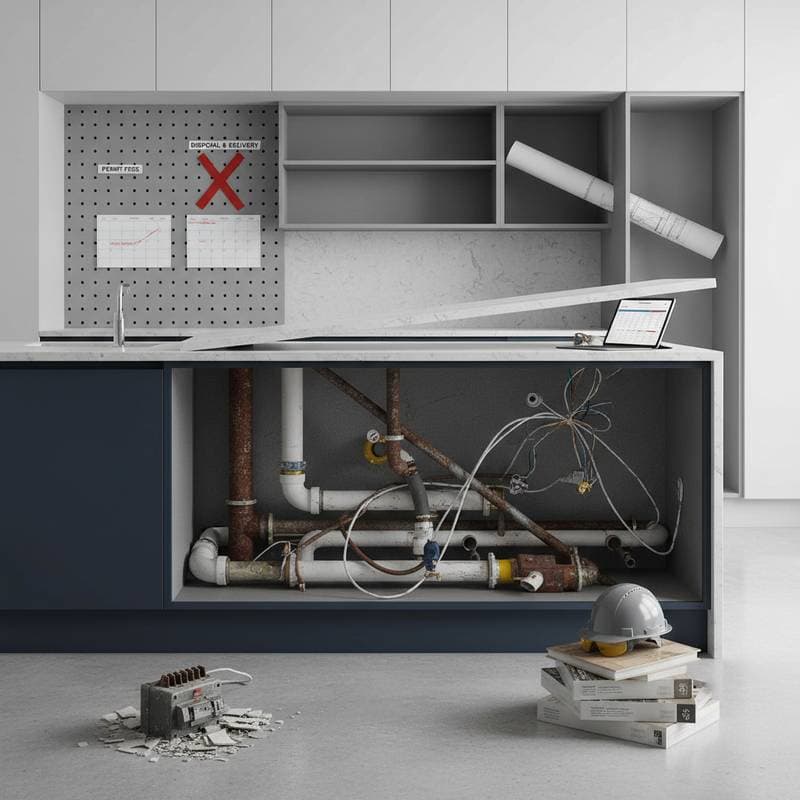
Contractors uncover issues with plumbing and electrical systems only after removing existing fixtures. Older kitchens commonly feature outdated piping or wiring that fails to meet safety codes, necessitating upgrades before installing new appliances. Rewiring to support high-powered devices like induction ranges or multiple outlets costs between $1,000 and $3,000, depending on the home's age and layout complexity.
Relocating plumbing for an island addition or sink repositioning incurs fees of $500 to $1,500, including pipe rerouting and leak testing. These interventions prioritize safety and energy efficiency, reducing future risks like electrical fires or water damage. Allocate 10 to 15 percent of the overall budget specifically for such discoveries to maintain financial control.
Navigating Permit Fees and Regulatory Demands
Structural changes or electrical additions require building permits in most jurisdictions, a step many overlook. Fees vary widely by location, typically spanning $150 to $1,000, and cover initial reviews plus potential inspections. Delays from required follow-up visits extend project timelines and introduce extra labor charges from contractors.
Consult local building authorities early to identify specific requirements, such as seismic reinforcements in earthquake-prone areas. Noncompliance risks substantial fines, work stoppages, or complications during property resale. Proactive verification ensures smooth progress and legal adherence.
Accounting for Delivery and Disposal Expenses
Material acquisitions involve more than purchase prices; transportation adds significant charges. Delivering bulky items like quartz slabs, ceramic tiles, or prefabricated cabinets often exceeds $300, particularly for remote locations or oversized orders. Factor in these logistics when comparing supplier quotes to avoid surprises.
Disposal of demolished materials presents another layer of cost. Hauling away old cabinets, worn flooring, and damaged drywall ranges from $200 to $700, influenced by local waste regulations and volume. Request itemized breakdowns from contractors to clarify how these fees integrate into the total estimate, promoting transparency throughout the process.
Practical Strategies for Budget Management
Reserve 15 to 20 percent of the project estimate as a contingency fund to address unforeseen issues without derailing finances. Insist on comprehensive quotes that detail labor hours, material specifications, and ancillary fees like disposal. This approach fosters accountability and aligns expectations from the outset.
Consider selective do-it-yourself tasks for cost savings, such as applying fresh paint to walls or installing simple backsplash tiles, provided basic tool proficiency exists. These efforts can reduce expenses by hundreds of dollars while building personal investment in the outcome. Time projects during off-peak seasons, like late fall or winter, to secure lower contractor rates and shorter wait times.
Preserving Your Kitchen Remodel's Longevity
Regular maintenance extends the lifespan of your renovated space and minimizes repair needs. Apply sealant to natural stone surfaces annually to prevent staining and cracks. Wipe down grease traps in range hoods monthly and inspect cabinet hinges quarterly for wear.
Monitor for subtle signs of trouble, including moisture buildup under sinks or flickering lights, to catch problems early. These habits sustain functionality and aesthetics, ensuring the kitchen remains a valuable asset. Thoughtful preparation and ongoing care transform a remodel into a enduring enhancement.