
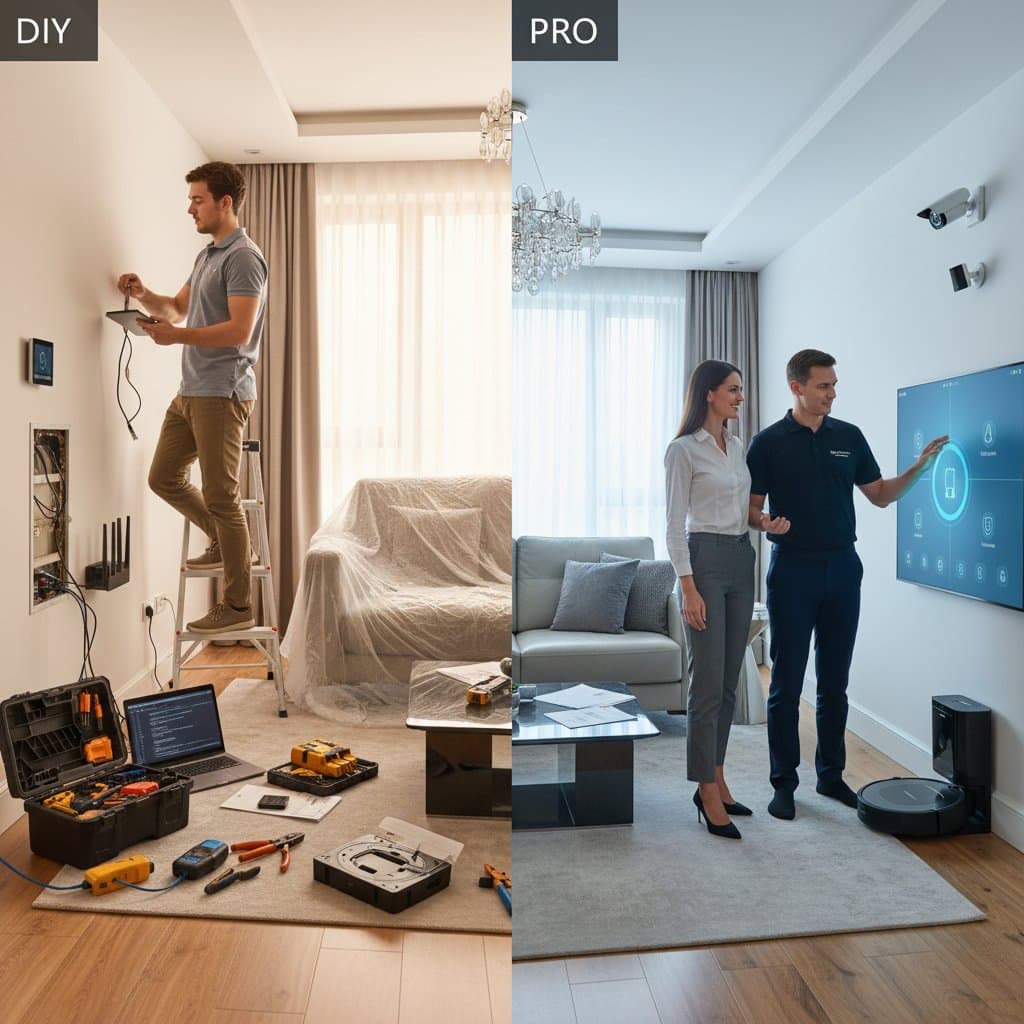
DIY Versus Professional Smart Home Setup: Finding the Best Fit for Your Needs
Home automation promises convenience, from voice-activated lighting to remote climate control. However, the process of establishing such a system often involves decisions about installation methods. Individuals frequently wonder whether to handle the setup personally or hire specialists.
Two primary options exist: self-installation or expert assistance. Self-installation allows for personalization and cost savings. Expert services provide assurance through tested configurations. The suitable selection hinges on personal circumstances, priorities, and technical proficiency.
This examination details the implications of each method on expenses, functionality, and daily use. Readers gain insights to make informed choices for their residences.
The Self-Installation Approach: Empowerment and Potential Challenges
Self-installed smart home systems gain traction due to accessible devices and user-friendly interfaces. Basic components, such as voice assistants or outlet adapters, often require minimal configuration through mobile applications. Established platforms including Google Nest, Amazon Echo, and Apple Home facilitate gradual expansion.
Advantages of Self-Installation
1. Reduced Initial Expenses
Begin with essential items and add features incrementally. A basic self-installed configuration typically costs between $100 and $1,000, varying by device quantity. Individuals avoid service charges and select from diverse retailers or promotions.
2. Extensive Customization Options
Users select specific products, placement locations, and integration methods. Transitions between platforms occur without contractual obligations to providers.
3. Skill Development and Independence
The process educates participants on residential networks and device interactions. This expertise aids in resolving issues and implementing enhancements over time.
Potential Drawbacks
1. Integration Difficulties
Devices from different manufacturers may not function uniformly within a single platform. Users could encounter situations where lighting elements fail to respond to voice commands, necessitating multiple control applications.
2. Network and Technical Issues
Interruptions in wireless signals, software modifications, or bandwidth limitations disrupt routines. Those unaccustomed to such problems may experience ongoing irritation.
3. Coverage and Compliance Concerns
Certain installations influence product guarantees or liability protections. Electrical modifications or surveillance setups require adherence to specific guidelines to maintain validity.
Guidelines for Safe Self-Installation
- Disconnect electrical sources prior to handling connected components like controllers or temperature regulators.
- Employ protective devices for central units and network equipment.
- Review all provided operational and assurance documents thoroughly.
- Maintain current software versions to mitigate access risks.
Individuals who appreciate device experimentation and problem-solving find self-installation rewarding. For those seeking dependable performance without intervention, expert involvement proves beneficial.
Experience Comparison: Self-Installation Versus Professional Services
| Category | Self-Installation | Professional Installation |
|---|---|---|
| Cost Range | $100 to $1,000 typical | $1,500 to $10,000 typical |
| Setup Time | Several hours to multiple days | Typically one to two days |
| Complexity | Suitable for basic to moderate setups | Designed for comprehensive home systems |
| Maintenance | User-handled adjustments and fixes | Expert monitoring and guarantees |
| Customization | Broad selection of products | Tailored for seamless operation |
| Learning Curve | Moderate to steep | Minimal |
| Reliability | Relies on individual expertise and infrastructure | Verified through professional evaluation |
Self-installation suits enthusiasts willing to address inconsistencies. Professional setups excel in delivering consistent results, expert guidance, and refined execution.
Strategies for Effective Implementation
1. Plan the System Layout in Advance
Diagram residential spaces and identify positions for detection units, monitoring devices, and control centers. Assess wireless signal strength to eliminate coverage gaps. Such preparation minimizes subsequent adjustments.
2. Select Harmonious Technologies
Prioritize devices within a unified framework to reduce management complexity. Combining disparate systems risks operational discrepancies or excessive application usage.
3. Fortify Network Security
The effectiveness of smart residences depends on robust connectivity. Implement complex access codes, activate multi-step verification, and segregate intelligent components on separate networks when feasible through router settings.
4. Allocate Funds for Growth
Connected environments develop progressively. Reserve resources for additional acquisitions or improvements rather than exhausting allocations at the outset.
5. Recognize Limits of Self-Effort
Engage specialists for tasks involving cabling, power distribution, or utility interfaces. This applies particularly to security integrations linked with emergency alerts or access mechanisms.
Sustaining and Enhancing Your Smart Home Environment
Once established, a smart home system integrates into everyday activities, streamlining tasks and improving efficiency. Regular evaluations ensure components align with evolving needs. Users benefit from heightened security, energy conservation, and personalized comforts.
Professional oversight, even in self-managed setups, can address complex expansions. Continuous learning about emerging technologies maintains the system's relevance. Ultimately, the chosen method empowers residents to create spaces that adapt intelligently to their lifestyles.