
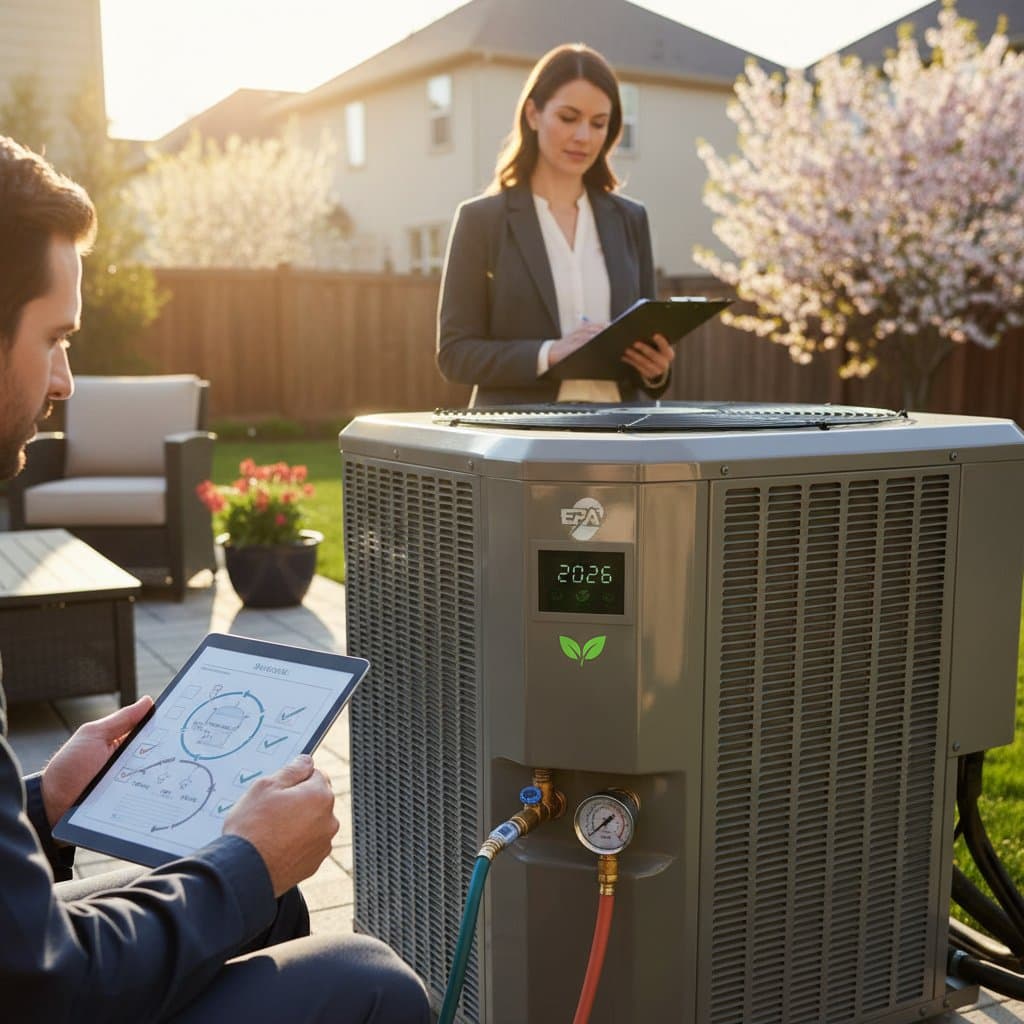
Spring HVAC Checklist for EPA Refrigerant Regulations
Homeowners must address the latest Environmental Protection Agency regulations on refrigerants before activating cooling systems this spring. These updated rules alter the management of specific refrigerants, and failure to comply may result in substantial repair costs or regulatory challenges. Proactive measures ensure that systems operate efficiently, safely, and in full adherence to standards.
Understanding the Importance of These Regulations
The Environmental Protection Agency has imposed stricter controls on refrigerants with high global warming potential. Numerous older heating, ventilation, and air conditioning systems continue to use phased-out refrigerant blends, which will become increasingly expensive and challenging to replenish. Systems employing these refrigerants may necessitate certified recovery processes, specialized handling, or outright equipment replacement during servicing.
Noncompliance carries several risks for homeowners. Leaks or improper servicing can lead to elevated utility expenses, safety hazards from refrigerant exposure, and violations of local building codes. Professional technicians now adhere to mandatory protocols for tracking refrigerants and managing leaks. All maintenance involving refrigerants requires thorough documentation, and only licensed professionals may acquire or recharge these substances. This framework increases accountability, elevates service costs slightly, yet promotes safer operations and reduced environmental impact.
Essential Steps for a Compliant Spring Inspection
Initiate the seasonal review promptly to identify and resolve potential issues. Incorporate the following items into the inspection process:
-
Determine the refrigerant type. Examine the label on the outdoor condenser unit or indoor air handler for specifications. If an outdated blend appears, consult a licensed heating, ventilation, and air conditioning professional regarding retrofit possibilities or full system upgrades.
-
Inspect for refrigerant leaks. Look for oil residue around connections, valves, or coils, which indicates potential refrigerant escape. Repair any detected leaks without delay, as recharging without fixing contravenes Environmental Protection Agency guidelines.
-
Arrange a professional tune-up. Engage a certified technician to conduct pressure tests, verify refrigerant levels, and assess component integrity against prevailing standards. This step confirms operational reliability and regulatory conformity.
-
Clean evaporator and condenser coils, along with air filters. Accumulated dirt on coils diminishes heat transfer efficiency, prompting the system to work harder and strain refrigerant circulation. Replace or wash filters to maintain unrestricted airflow.
-
Evaluate insulation on refrigerant lines. Damaged or worn insulation leads to energy loss through condensation and temperature fluctuations. Replace sections as needed to preserve thermal performance.
-
Test thermostat functionality. Inaccurate readings cause excessive compressor operation, which accelerates refrigerant depletion and electricity consumption. Calibrate or replace the device for precise temperature control.
-
Secure maintenance documentation. Retain all service invoices, technician credentials, and compliance reports. These documents support warranty validations and may prove essential during property assessments or sales.
Financial Implications and Return on Investment
A routine maintenance appointment typically costs between one hundred and two hundred dollars, depending on location and system complexity. More extensive interventions, such as refrigerant conversions or system overhauls, may range from one thousand to five thousand dollars or higher, influenced by equipment scale and labor charges. Compliance investments yield benefits by preventing fines, which can exceed several hundred dollars per violation, and by prolonging equipment durability.
Well-maintained systems compliant with regulations often achieve up to twenty percent greater energy efficiency, translating to hundreds of dollars in annual savings on cooling expenses. For units over ten years old or reliant on restricted refrigerants, installing a contemporary heat pump or high-efficiency air conditioner offers superior long-term value. Numerous utility providers and local governments provide incentives, including rebates up to several thousand dollars, for qualifying eco-friendly installations. Verify program criteria and application processes prior to proceeding with upgrades.
Indicators Requiring Professional Intervention
Homeowners may perform basic tasks, such as coil cleaning or filter changes, without risk. However, refrigerant-related activities demand expertise due to federal mandates. Certified professionals handle recovery, recharging, and disposal to prevent hazards like chemical burns or system damage.
Seek immediate expert assistance if the system emits unusual hissing noises, delivers inconsistent cooling, or shows frost accumulation on coils or piping. These symptoms suggest refrigerant issues or mechanical faults that, if ignored, could escalate into complete failures. Self-attempted repairs risk personal injury, warranty invalidation, and regulatory infractions.
Sustaining System Performance Year-Round
After completing the spring inspection and achieving compliance, implement ongoing practices to uphold standards. Change air filters every one to three months, remove vegetation or debris from around outdoor components, and book yearly professional evaluations. Comprehensive records of all upkeep activities demonstrate adherence and safeguard manufacturer warranties.
For homeowners considering a property sale, documented refrigerant compliance enhances buyer confidence and can elevate market value by highlighting energy-efficient features. Proactive management of these regulations extends beyond legal obligations. It safeguards financial interests, optimizes resource use, and guarantees reliable comfort throughout the summer season.