
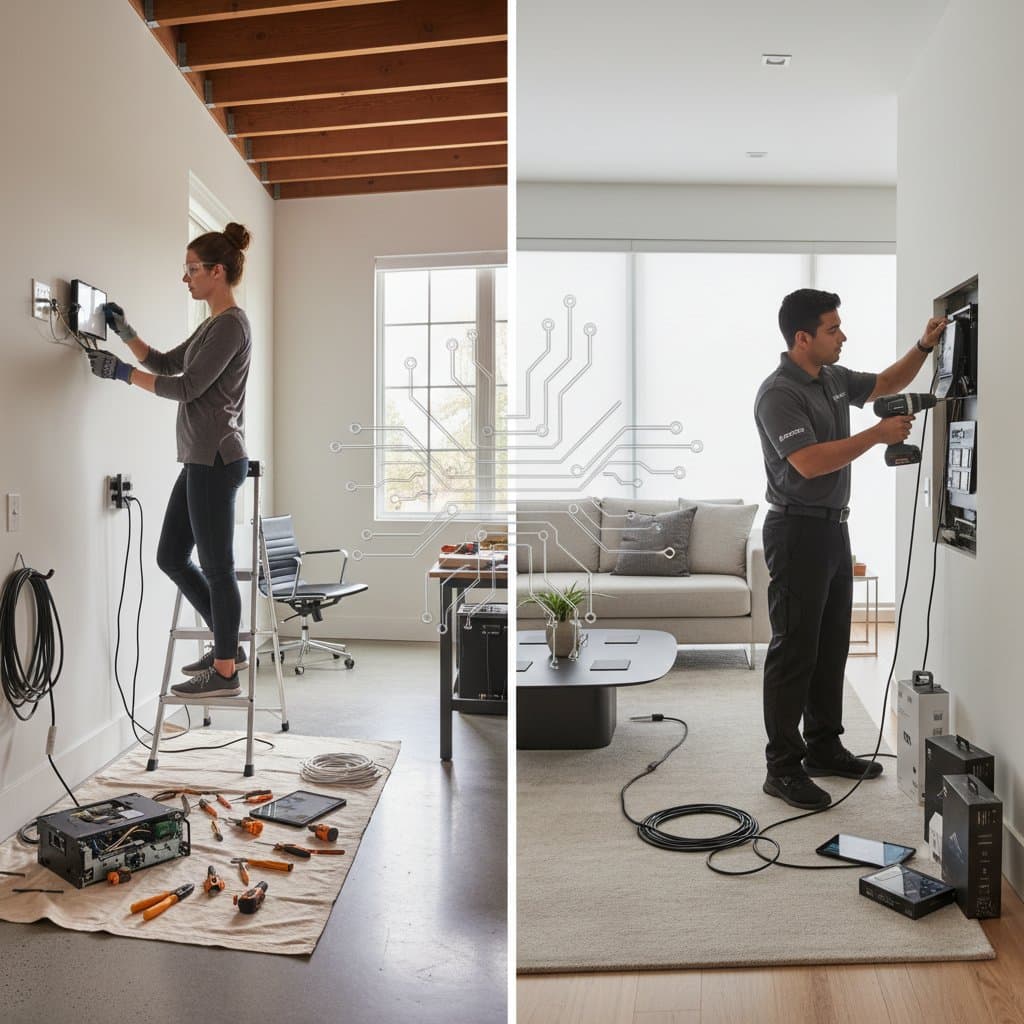
DIY Smart Home Projects: When to Install Yourself and When to Call a Professional
Many homeowners contemplate smart home enhancements while browsing devices in stores, such as a smart thermostat. These upgrades offer convenience, reduced energy costs, and modern functionality. However, concerns about electrical wiring, application configurations, and device interoperability often arise. The central decision involves determining whether to proceed with a do-it-yourself approach or engage a qualified professional.
This guide clarifies appropriate circumstances for each option. It outlines factors to consider, highlights potential pitfalls, and provides strategies to ensure a functional smart home environment.
Benefits of Professional Installation
Engaging a professional installer involves higher initial expenses, yet it delivers specialized knowledge, adherence to safety protocols, and streamlined execution. For individuals prioritizing reliability or planning intricate systems, this choice often yields long-term financial advantages through error prevention.
Key Advantages Provided by Professionals
1. Safety and Regulatory Adherence:
Certified electricians possess in-depth understanding of local building codes and safety requirements. They evaluate wiring integrity and electrical loads to safeguard property and maintain insurance validity.
2. Seamless Device Integration:
Experts ensure compatibility across devices, resolving communication challenges efficiently. This prevents prolonged troubleshooting sessions that could otherwise disrupt daily routines.
3. Efficiency in Execution:
A full smart lighting installation may consume an entire weekend for novices. Professionals typically complete such tasks within several hours, minimizing inconvenience and accelerating benefits.
4. Preservation of Manufacturer Warranties:
Certain brands validate warranties only for installations performed by authorized technicians. Review product documentation prior to initiating any self-directed work to avoid voiding coverage.
Selecting Suitable DIY Projects
Individuals new to smart home technology should begin with straightforward initiatives that avoid electrical modifications or advanced equipment. These efforts foster familiarity with device interactions and build practical skills.
Entry-Level DIY Initiatives
- Smart Plugs: Connect these devices to standard outlets, link them to a wireless network, and remotely manage connected appliances like lamps or fans through a mobile application.
- Smart Light Bulbs: Replace existing bulbs without altering fixtures; pair them with control software to enable scheduling and voice commands.
- Voice-Controlled Assistants: Position the unit, complete initial network pairing, and use it to oversee compatible smart devices throughout the home.
- Smart Speakers or Displays: Install these as central hubs for audio entertainment and voice-activated home management, ensuring stable Wi-Fi connectivity during setup.
Moderate DIY Initiatives
After gaining experience with basic devices, advance to projects involving minor wiring or mounting.
- Smart Thermostats: Suitable for those adept at simple electrical tasks; disconnect power sources before accessing heating, ventilation, and air conditioning components. Follow manufacturer diagrams to connect wires accurately.
- Smart Doorbells: These require low-voltage wiring adjustments; test connections step-by-step and secure the unit firmly to avoid misalignment.
- Wireless Security Cameras: Mount units at optimal heights for coverage, adjust viewing angles for comprehensive surveillance, and configure motion detection alerts via the accompanying app.
Initiatives Requiring Professional Expertise
Certain projects demand specialized skills due to their complexity.
- Hardwired Lighting Systems: Involve replacing switches and installing dimmers, which necessitate electrical certifications to prevent hazards.
- Automated Irrigation Systems: Combine plumbing alterations with electrical integrations, risking water damage or system failures without proper handling.
- Central Home Automation Hubs: These coordinate diverse protocols and multiple devices; professionals optimize configurations for peak performance and scalability.
Enhancing System Value and Durability
Regardless of the installation method, focus on creating a dependable network that elevates everyday experiences. Extend efforts beyond initial setup to include ongoing optimization.
Routine Maintenance Practices
Smart devices depend on firmware updates for cybersecurity and operational stability. Perform monthly checks and activate automatic update features where available. For battery-dependent components, such as motion sensors or outdoor cameras, establish a quarterly replacement schedule to sustain functionality.
Strengthening Network Infrastructure
A robust Wi-Fi foundation underpins all smart home operations. Invest in a high-performance router and deploy mesh extenders to eliminate coverage gaps in larger spaces. Assign descriptive names to each device within management applications to facilitate quick identification during diagnostics.
Achieving Optimal Energy Use
Implement automation rules to minimize consumption. Configure thermostats to reduce heating during unoccupied periods or nighttime hours. Program lighting to deactivate automatically upon exit detection, potentially lowering utility expenses by 10 to 20 percent annually through consistent application.
Realizing Everyday Benefits from Your Smart Home
With installation complete, observe how integrated features transform routines. Automated lighting activates upon entry, thermostats maintain ideal temperatures proactively, and security notifications provide instant reassurance. These elements foster greater control, efficiency, and comfort, justifying the investment in a cohesive smart ecosystem.