
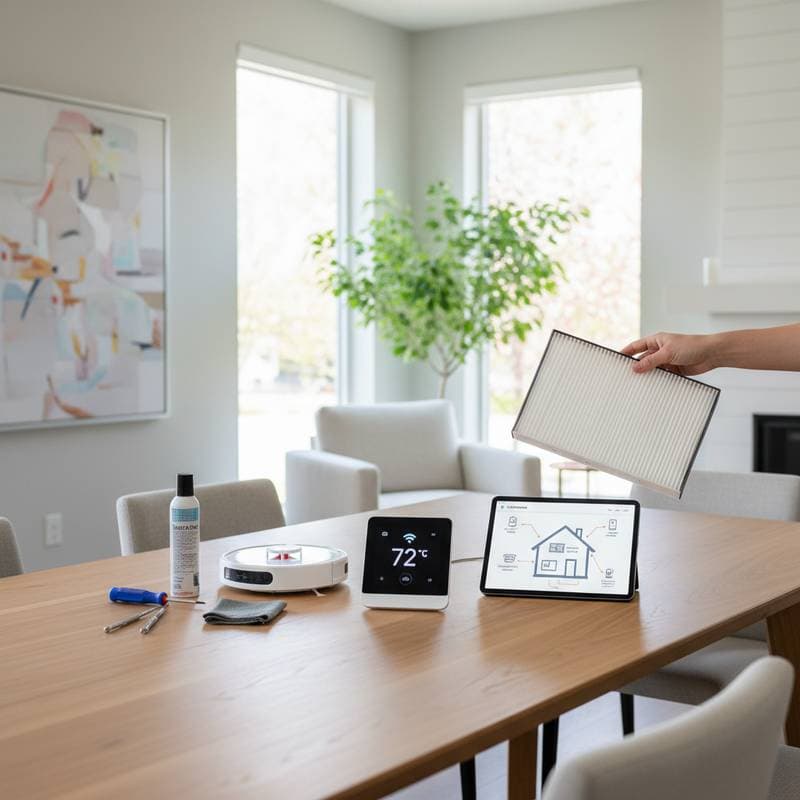
Spring Tune-Ups for HVAC and Smart Home Efficiency
As temperatures rise and fresh air returns, homes require attention to their essential systems. Spring serves as the optimal period for HVAC maintenance and smart home adjustments. These efforts reduce utility expenses, prolong equipment life, and enhance overall home performance. The following guide presents a structured plan to ready systems for summer demands while aligning technology with comfort needs.
Why Spring Maintenance Matters
HVAC systems endure heavy use through winter, leading to clogged filters, miscalibrated thermostats, and overlooked smart components. Such issues result in elevated bills and inconsistent temperatures by spring. Integrating smart home verifications with HVAC care promotes seamless interaction between mechanical and digital elements. This approach yields reliable function, notable energy reductions, and minimized disruptions during high-demand periods.
The Essential HVAC Spring Checklist
Focus first on core components through thorough cleaning, examination, and verification. These measures maintain optimal HVAC operation and alleviate strain on vulnerable parts.
1. Replace Air Filters
Dirty filters impede airflow and compel the system to labor excessively. Swap out disposable filters or rinse reusable versions every one to three months. Basic filters range from 10 to 30 dollars, whereas advanced high-efficiency options, priced up to 50 dollars, trap finer particles and elevate air quality.
2. Clean Outdoor Units
Clear leaves, branches, and accumulated debris from the condenser. Gently hose the coils to eliminate grime. Preserve a minimum two-foot clearance surrounding the unit to facilitate airflow. These actions avert overheating and boost efficiency.
3. Inspect Ductwork
Duct leaks squander as much as 20 percent of treated air. Apply mastic sealant or aluminum tape to seal observable fissures. Homeowners manage minor repairs, yet professional sealing, costing 300 to 500 dollars, markedly enhances air distribution.
4. Test Thermostat Accuracy
Contrast the thermostat display against a trusted thermometer. Recalibrate or substitute the unit if discrepancies surpass two degrees. For intelligent models, perform a connectivity assessment to confirm app and Wi-Fi compatibility.
5. Check Refrigerant Lines
Evidence of frost or oily spots on lines signals potential leaks. Refrain from personal refrigerant handling. Engage a certified technician for repairs, which generally cost 150 to 400 dollars based on issue extent.
Smart Home Systems to Include in Your Tune-Up
Installed smart devices frequently receive neglect after initial setup, yet spring demands performance confirmation. These digital tools either optimize HVAC functions or introduce inefficiencies if ignored.
1. Recalibrate Smart Thermostats
Intelligent thermostats adapt to habits, but seasonal shifts disrupt patterns. Reprogram schedules to reflect spring and summer rhythms. Activate conservation features and validate geofencing alignment with routines.
2. Update Firmware on Connected Devices
Obsolete firmware triggers connectivity failures and erroneous readings. Scan for updates on vents, sensors, and monitors. Device apps typically support automatic installations.
3. Reconnect Voice Assistants and Hubs
Network alterations or resets sever links. Conduct tests on hubs like Alexa, Google Home, or Apple HomeKit. Reauthorize disconnected items to reinstate automations.
4. Review Automation Routines
Verify that sequences for blinds, fans, or lights accommodate changing light cycles. For instance, program shades to block midday sun and lessen cooling demands.
5. Audit Energy Monitoring Tools
Smart plugs and panels record consumption, though reviews remain rare. Analyze data to identify high-usage items. Disconnect or upgrade standby power hogs.
Cost and Time Expectations
Professional HVAC servicing ranges from 75 to 200 dollars, covering evaluations, cleanings, and tests. Additional services like duct work or refrigerant adjustments raise expenses, yet recoup investments via energy savings in short order. Smart home tasks demand primarily effort, with two to three hours allocated for software refreshes, schedule adjustments, and link confirmations.
Professional vs. DIY Decisions
Certain maintenance elements suit independent handling, while others necessitate expertise. The table below guides choices based on complexity and safety.
| Task | DIY Feasibility | Professional Needed | Risk Level |
|---|---|---|---|
| Filter replacement | Easy | No | Low |
| Duct inspection | Moderate | Sometimes | Medium |
| Refrigerant refills | No | Yes | High |
| Smart thermostat reprogramming | Easy | No | Low |
| Wiring repair | No | Yes | High |
| Firmware updates | Easy | No | Low |
Summon a qualified HVAC specialist for electrical or refrigerant needs, as these involve regulated tools and protocols. For persistent smart device glitches post-updates, reach out to manufacturer assistance.
Troubleshooting Common Issues
Uneven Cooling
Examine obstructed vents or soiled filters initially. Persistent room variations warrant duct checks and smart vent functionality reviews.
System Short Cycling
Repeated cycling points to soiled evaporator coils, poor thermostat positioning, or refrigerant shortages. Clean coils with care and relocate units from heat exposure.
Wi-Fi Dropouts in Smart Devices
Restart the router and ensure 2.4 GHz band availability, essential for device stability. Install mesh extenders for signal challenges in dense areas or lower levels.
Seasonal Timing and Preventive Care
Initiate maintenance prior to prolonged warmth. Early completion readies air conditioning for immediate use and permits timely part swaps if defects appear. Extend vigilance year-round by logging filter swaps, calibrations, and updates. Such records accelerate issue resolution and bolster warranty processes.
Long-Term Benefits
Consistent upkeep extends HVAC durability by years and trims energy consumption by up to 15 percent, per efficiency studies. Smart integrations further curb excess operation. Combined, these practices foster responsive homes that balance lifestyle demands with steady comfort.
Making It Happen
Dedicate a weekend to integrated system assessments. Commence outside with condenser and duct work, then proceed indoors for calibrations and updates. Maintain a notebook or app log to record accomplishments.