
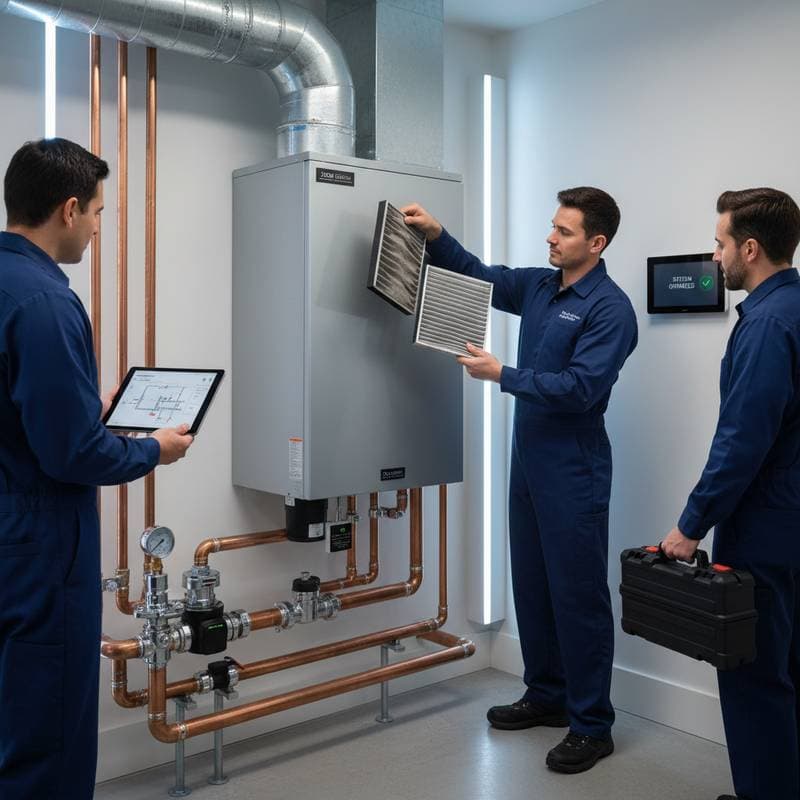
Spring HVAC Preparation: Avoid Summer Breakdowns and Ensure Comfort
Home comfort systems function as an interconnected network. HVAC and plumbing components regulate temperature, humidity, and water supply. Preventive maintenance at the appropriate season maintains efficiency across these elements.
Adopt this structured three-phase approach for thorough preparation:
- Inspection and Assessment: Detect visible and concealed problems before they worsen.
- Cleaning and Optimization: Eliminate debris, accumulations, and performance hindrances that burden equipment.
- Testing and Calibration: Confirm system functionality under conditions that simulate summer demands.
Annual spring application of this method stabilizes energy expenses and avoids urgent service interventions, which frequently surpass several hundred dollars in cost.
Thermostat Calibration and Air Balance
Verify Temperature Precision
Activate cooling mode on the thermostat and measure the indicated temperature against a separate indoor thermometer positioned close by. Discrepancies exceeding two degrees suggest sensor inaccuracies. Smart thermostats often feature automatic calibration options, whereas older mechanical units may necessitate manual adjustments or substitutions.
Enhance Airflow Uniformity
Imbalanced cooling frequently results from obstructed vents or ductwork discrepancies. Ensure all supply and return vents remain fully open, and confirm that furnishings or carpeting do not impede access. Persistent warmth in certain areas warrants a specialist evaluation of ducts for leaks or obstructions. Professional duct cleaning and sealing services generally range from three hundred to six hundred dollars.
Plumbing Readiness: Avoid Seasonal Disruptions
HVAC manages air quality, yet plumbing supports essential functions such as chilled beverages, refreshing showers, and outdoor watering. Spring evaluations confirm unobstructed and secure water delivery.
Examine for Concealed Leaks
Survey areas beneath sinks, adjacent to toilets, and near the water heater for signs of dampness or deterioration. A minor seepage can squander substantial water volumes each day and inflict unseen harm to building materials.
Conduct a simple assessment by shutting off all water outlets and observing the water meter. Continued movement of the meter dial indicates an undetected leak. Remediation for small leaks costs between one hundred and three hundred dollars, whereas extensive pipe problems may surpass one thousand dollars.
Drain and Refresh the Water Heater
Accumulated sediment within the water heater diminishes operational efficiency and accelerates wear. Connect a garden hose to the drain valve, route it to an appropriate disposal site, and flush the contents until the outflow appears clear. Subsequently, refill the unit and inspect for any seepage.
Units that show age or emit unusual rumbling sounds benefit from expert examination to assess scaling or corrosion inside the tank.
Evaluate Exterior Water Outlets and Connections
Activate outdoor faucets previously isolated for winter protection. Monitor for diminished pressure or seepage near the controls. Renew deteriorated washers or seals to curb unnecessary water loss.
Unaddressed freeze-related ruptures in lines lead to replacement expenses of one hundred to two hundred fifty dollars, influenced by location and access challenges.
System Integration for Comprehensive Efficiency
HVAC and plumbing elements influence one another in ways that extend beyond initial perceptions. Excess moisture from plumbing failures burdens air conditioning operations, and inadequate airflow promotes moisture collection on piping.
Implement these coordinated measures to sustain equilibrium:
- Add a Central Dehumidification Unit: This controls excess humidity, benefiting air quality and pipe durability.
- Inspect Insulation Around Chilled Lines: Shield exposed sections to halt condensation that resembles leakage.
- Track Humidity Within the Home: Maintain levels from thirty to fifty percent to support comfort and equipment reliability.
Resolving Frequent Challenges
Inconsistent Cooling: Examine air filters for clogs, vents for barriers, and ducts for escapes. Employ a digital thermometer to identify specific temperature variations.
Leaking Condensate Drainage: Clear blockages in the line and introduce a vinegar mixture on a monthly basis to inhibit algal development.
Reduced Water Pressure Housewide: Review the primary shut-off and measure pressure at various fixtures. Uniform low readings point to a faulty pressure regulator requiring renewal.
Unusual Scents from Air Outlets: Microbial proliferation in the evaporator coil or collection tray often causes this. Apply specialized cleaning solutions or arrange for technician intervention.
Essential Strategies for Effective Maintenance
Replace air filters in HVAC systems at the onset of each season to uphold performance standards.
Mark all shut-off valves clearly for rapid location in crises.
Maintain a detailed record of maintenance activities, including dates of checks, component updates, and professional services.
Incorporate programmable thermostats to minimize cooling demands when the home stands empty.
Organize user manuals for plumbing and HVAC in a dedicated, accessible folder.
Achieve Enduring Home Comfort Through Proactive Care
Consistent spring preparations fortify HVAC and plumbing against summer rigors. These steps not only avert disruptions but also promote energy savings and prolonged equipment life. Homeowners who invest time in these practices enjoy uninterrupted comfort and financial predictability throughout the year.