
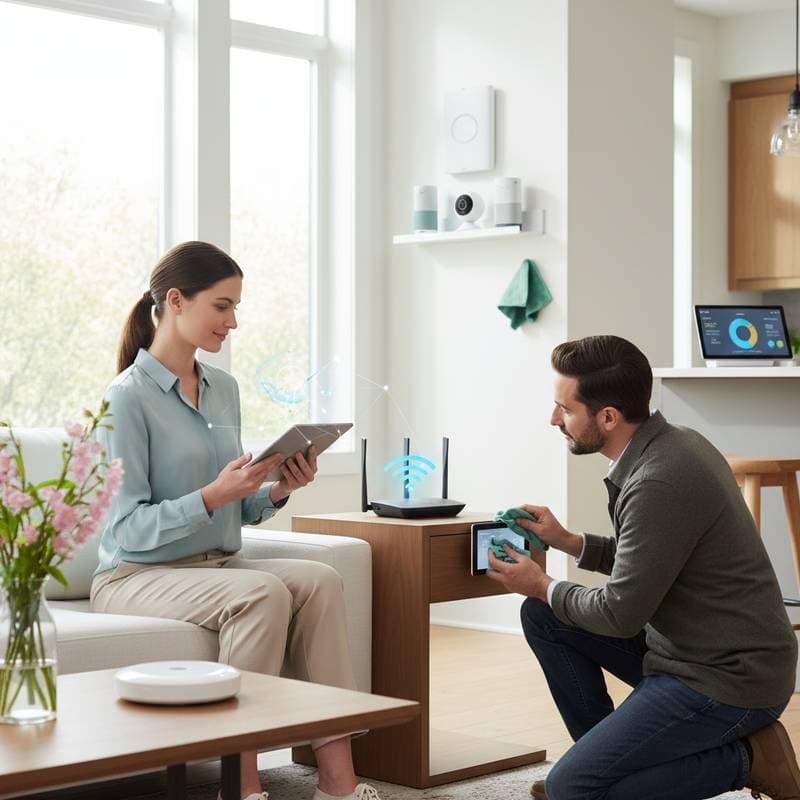
Essential Spring Maintenance for Your Smart Home Network
Spring arrives with opportunities to rejuvenate the systems that power modern living. Smart homes depend on interconnected devices for convenience, security, and efficiency. This season provides an ideal moment to assess and optimize the network backbone, ensuring reliable performance through the year.
Assess and Optimize Network Performance
A robust wireless network forms the foundation of any smart home. Begin by conducting a comprehensive speed test using a dedicated mobile application, such as those provided by internet service providers. Identify areas with poor coverage, often caused by structural changes or increased device load. Consider installing a mesh Wi-Fi system if dead zones persist; these units typically cost between 150 and 300 dollars and distribute signals evenly across larger spaces. To refresh the existing setup, power down the primary router for at least 30 seconds, which clears temporary data buildup. Reconnect devices sequentially, testing each for stable connectivity to smart lights, security cameras, and climate controls.
Mesh systems enhance device communication by creating multiple access points. For homes exceeding 2,000 square feet, select models with at least three nodes for comprehensive coverage. During reconnection, prioritize high-bandwidth devices like streaming media players to prevent network congestion.
Maintain Sensor Accuracy Through Cleaning and Calibration
Sensors in smart homes detect motion, temperature, and air quality, but environmental factors like dust accumulation and humidity fluctuations can impair their function. Use a soft microfiber cloth lightly dampened with distilled water to gently clean surfaces, avoiding harsh chemicals that might damage electronics. Access the companion application to monitor battery status; low power often leads to erratic readings. Replacement batteries, commonly CR123A or AA types, cost under 10 dollars each and extend operational life.
Recalibration restores precision, particularly for thermostats and humidity sensors affected by winter dryness. Most platforms offer built-in tools: navigate to device settings and initiate a reset, allowing the sensor to baseline against current conditions over 24 hours. For optimal results, perform manual adjustments in a controlled environment, such as a room with known temperature readings from a separate thermometer. This process minimizes errors in automated responses, like fan activation or alert triggers.
Update Firmware and Bolster Security Measures
Software updates address bugs, improve compatibility, and patch security gaps in smart devices. Dedicate a specific time, such as a weekend afternoon, to verify versions across all components, including voice-activated assistants and outdoor controllers. Connect each device to its management app and search for available patches; apply them sequentially to avoid overwhelming the network. Outdated systems expose homes to risks like unauthorized access, which recent reports indicate affects millions of users annually.
Enhance protection by enabling two-factor authentication on the central hub, requiring a secondary verification code for logins. Implement a password manager application to generate and store complex credentials, reducing reliance on easily guessed phrases. If family members share control, create individual user profiles within the hub to limit access scopes and track activity logs. Regular audits of connected devices reveal unfamiliar entries, prompting immediate disconnection and investigation.
Adjust Appliances for Spring Energy Savings
As temperatures rise, smart appliances demand adjustments to align with new usage patterns. Inspect refrigerators by cleaning condenser coils located at the rear, a task that improves cooling efficiency and prevents overworking the compressor. Examine washing machines for balanced loads through app diagnostics, which optimize water and electricity use. For heating, ventilation, and air conditioning units, replace or clean filters monthly during peak seasons to maintain airflow.
Review energy consumption data via integrated dashboards to pinpoint high-usage periods. Recalibrate smart thermostats to learn updated schedules, potentially lowering bills by 10 percent through precise temperature setbacks. Daylight sensors in lighting systems should adapt to extended hours; lower activation thresholds to 50 lux for evening use, conserving power without sacrificing illumination. These tweaks ensure appliances operate at peak efficiency, supporting sustainable habits.
Verify and Enhance Safety Integrations
Safety devices like smoke alarms and carbon monoxide detectors integrate seamlessly with smart ecosystems for rapid notifications. Beyond routine button tests, simulate scenarios by using canned smoke or safe CO sources to confirm alert transmission to smartphones and wearables. Ensure the hub processes these signals without delay, adjusting notification preferences for critical versus minor events.
For door locks and cameras, update firmware to incorporate the latest encryption standards. Clear obstructions from outdoor camera lenses with a lens cloth, then test motion detection at various distances up to 30 feet. Verify that video feeds stream in high definition during both day and night modes. These checks prepare systems for summer vulnerabilities, such as open windows or increased foot traffic.
Practical Strategies for Ongoing Management
- Assign unique labels to each network-connected device via the router interface, facilitating quick identification during diagnostics.
- Establish automated reminders for quarterly reviews through calendar apps or built-in smart routines.
- Maintain a centralized storage area stocked with spare batteries, cables, and mounting hardware for immediate replacements.
- Compile a digital repository of serial numbers, purchase dates, and warranty information, accessible to all household members.
Incorporate compatibility checks when adding new devices, ensuring they support your existing protocols like Zigbee or Z-Wave. This prevents fragmentation and maintains a unified ecosystem.
Achieve Lasting Reliability in Your Smart Home
Consistent maintenance transforms a smart home from a collection of gadgets into an intuitive extension of daily life. By addressing network stability, sensor precision, and security now, homeowners secure uninterrupted functionality amid seasonal shifts. These efforts yield not only operational smoothness but also long-term savings and peace of mind, allowing technology to enhance rather than complicate routines.