
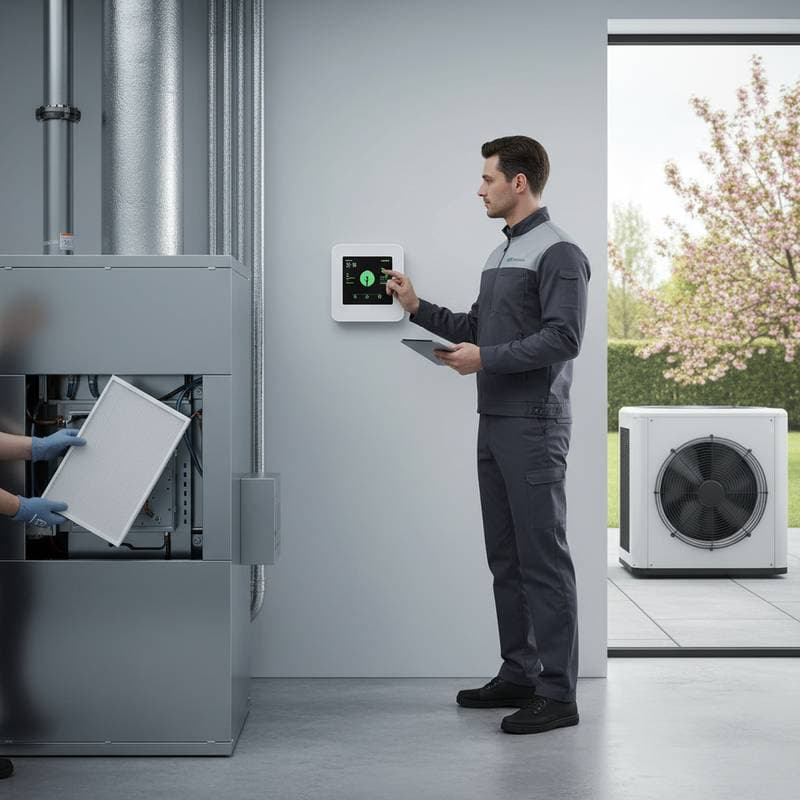
Spring Revival: Revitalizing Your HVAC and Smart Home Systems
The arrival of spring's first warm breezes marks more than the end of winter. It presents an ideal opportunity to restore your home's essential systems to optimal performance. While many homeowners prioritize visible tasks like window cleaning or patio preparation, the true enhancements occur in the background. A properly maintained heating, ventilation, and air conditioning (HVAC) system paired with a synchronized smart home setup delivers balanced comfort, operational efficiency, and subtle luxury without drawing attention to itself.
Creating Seamless Indoor Harmony
Picture entering your living room on a temperate afternoon. The temperature maintains an ideal balance, neither overly warm nor excessively cool. As sunlight streams in, the thermostat responds automatically, and smart blinds descend precisely to diffuse harsh light on your workspace. This level of coordination does not occur spontaneously. It results from deliberate seasonal maintenance and targeted system adjustments that align technology with daily needs.
Essential HVAC Maintenance Steps
Following a winter of intensive operation, your HVAC system requires thorough preparation for upcoming seasonal changes. Begin with fundamental inspections and cleaning to ensure reliable function.
- Replace air filters promptly. Fresh filters enhance airflow, boost energy efficiency, and safeguard internal parts from premature wear. Standard replacements cost between 10 and 20 dollars, while high-efficiency models range up to 50 dollars and capture finer particles for superior air quality.
- Examine vents and registers closely. Accumulated dust or obstructions force the system to work harder, leading to uneven heating or cooling. Vacuum thoroughly and redirect airflow to address any hot or cold spots in rooms.
- Clean condenser coils on outdoor units. Clear away leaves, branches, and dirt that accumulate over time. Apply a specialized coil cleaner or a gentle detergent mixed with water to remove residue, thereby improving heat transfer and system performance.
- Inspect refrigerant lines for issues. Search for signs of corrosion, leaks, or unusual frost buildup. Handling refrigerant demands professional expertise due to regulatory requirements, so contact a certified technician if problems arise.
Engaging a qualified professional for a comprehensive tune-up generally costs 100 to 300 dollars, varying by region and equipment complexity. Such services yield substantial benefits, including reduced utility expenses, prolonged system longevity, and healthier indoor environments through better filtration.
Realigning Your Smart Home Network
Winter months often lead to disruptions in smart home functionality, such as outdated software or connectivity glitches. Use spring as a reset period to synchronize devices and restore smooth operation.
- Update firmware across all devices. Smart thermostats, lighting controllers, and security panels frequently issue updates that optimize energy use, resolve bugs, and improve interoperability with other gadgets.
- Recalibrate environmental sensors. Over time, sensors for temperature, motion, and humidity may lose accuracy. Perform recalibration following manufacturer guidelines to guarantee precise automation triggers.
- Review and refine device permissions. Evaluate access levels for connected apps and devices to eliminate unnecessary entries, thereby bolstering network security against potential vulnerabilities.
- Verify automation sequences. Simulate everyday scenarios to test responses from lights, climate controls, and appliances, identifying and correcting any delays or failures.
Should connectivity issues persist, evaluate your router's capabilities or introduce mesh network extenders. A robust Wi-Fi foundation underpins the reliability of all smart home features.
Optimizing for Energy Savings and Comfort
Achieving energy efficiency extends beyond cost reduction; it promotes environmental responsibility. Implement precise modifications to minimize consumption while preserving desired indoor conditions.
- Customize thermostat programming. Activate learning algorithms in smart models to adapt to occupancy patterns. A modest two-degree shift in settings can lower energy use by approximately 5 percent without noticeable discomfort.
- Identify and seal air leaks. Conduct inspections around windows, doors, and duct connections. Professional duct sealing, priced from 300 to 800 dollars, enhances distribution efficiency and prevents conditioned air loss.
- Enhance insulation in key areas. Inconsistent room temperatures often stem from inadequate barriers. Adding insulation to attics or walls stabilizes climate control and eases the load on your HVAC unit.
- Implement zoning controls. Utilize smart vents or multi-zone thermostats to direct heating and cooling to occupied spaces only, avoiding unnecessary operation in unused areas.
These targeted upgrades typically recoup their costs within two to three seasons via decreased bills and less frequent repairs.
Prioritizing Safety in System Care
Homeowners can manage routine tasks like filter swaps and surface cleaning effectively. However, indicators such as unusual sounds, irregular airflow, or odors resembling burning warrant immediate professional evaluation. Certified technicians assess wiring, refrigerant charges, and gas combustion processes to mitigate risks.
For smart systems, confirm the integrity of surge protectors and uninterruptible power supplies. Investing in these safeguards, often under 100 dollars, averts disruptions and protects against power fluctuations that could corrupt data or harm hardware.
Extending System Capabilities
With revitalized HVAC and smart components, observe enhancements in air purity, intuitive controls, and modest bill reductions. These outcomes reflect the value of preventive measures over emergency fixes.
For those inspired by the results, explore further integrations. Incorporate air quality monitors to measure pollutants and humidity in real time, or add occupancy detectors to automate lighting based on presence. Such additions work in tandem with HVAC functions to prioritize health, efficiency, and personalized comfort.
Sustaining Peak Performance Year-Round
Ongoing upkeep simplifies long-term success. Swap filters every one to three months based on usage, refresh vents with each season, and book annual professional servicing. For smart elements, schedule quarterly checks on connections and updates.
An optimized system transcends basic climate regulation. It fosters assurance that your living space collaborates seamlessly with your routine, delivering sustained ease and reliability throughout the seasons.