
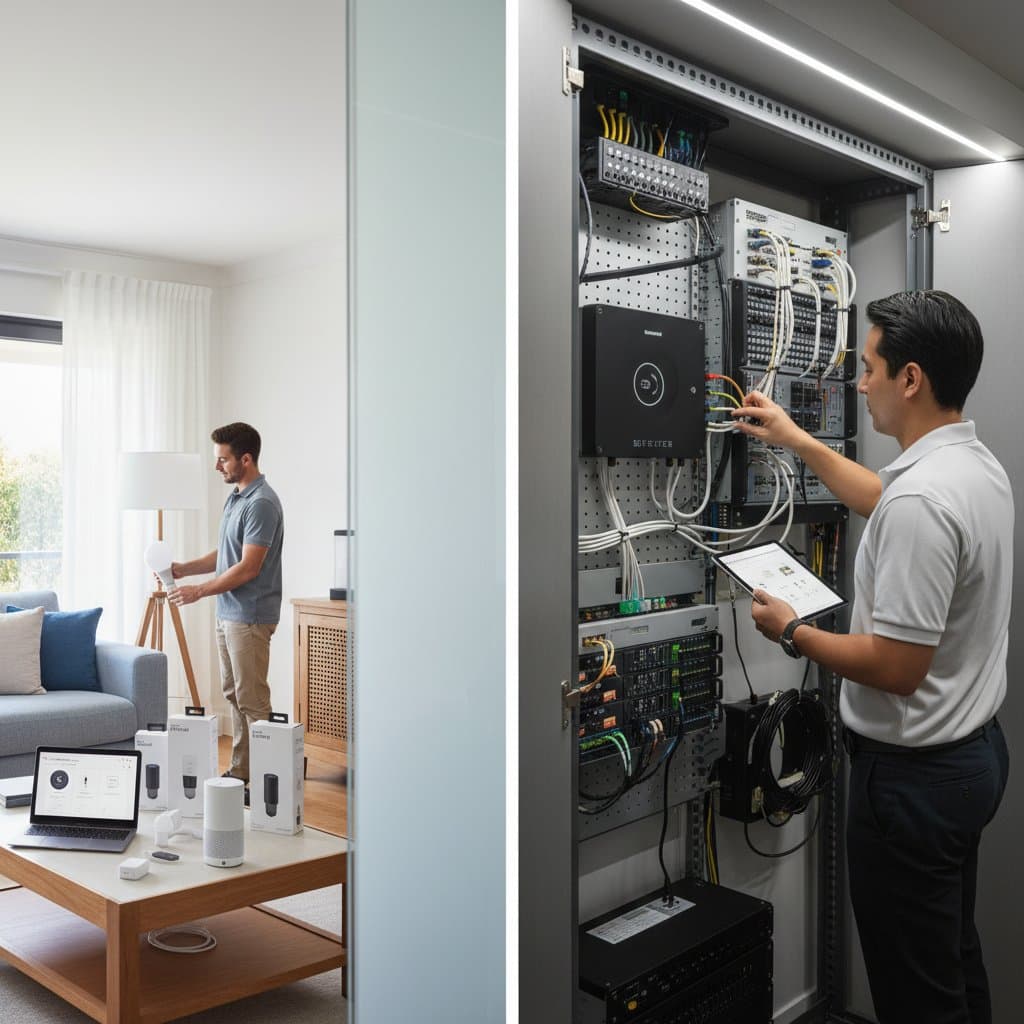
Intelligent Lighting Solutions
Smart bulbs and plugs serve as an accessible introduction to home automation for many residents. These items connect via reliable Wi-Fi and require setup through a dedicated mobile application. Consider these options for a fundamental configuration:
- Smart bulbs: Insert into a standard socket, link to Wi-Fi, and integrate with your preferred platform.
- Smart switches: These replace conventional wall switches, so disconnect power at the breaker before proceeding.
- Smart plugs: Perfect for controlling lamps, appliances like coffee makers, or seasonal decorations.
Typical expenses: Between $15 and $60 for each bulb or switch, varying by manufacturer and capabilities.
Installation duration: Under one hour for most units.
Expert recommendation: Select devices from one ecosystem, such as Google Home, Amazon Alexa, or Apple HomeKit, to minimize future integration problems.
Voice-Activated Speakers and Displays
Smart assistants function as plug-and-play hubs for voice commands. They need only an electrical outlet, Wi-Fi access, and brief app-based configuration. After setup, these devices coordinate operations across your smart home network.
Level of difficulty for DIY: Straightforward.
Price spectrum: From $40 to $200, based on sound performance and display dimensions.
Placement advice: Position units in open spaces for optimal voice recognition, and steer clear of enclosed areas that distort audio.
Scenarios That Warrant Professional Assistance
Certain installations appear simple at first glance, yet a single error can disrupt your internet connection or breach building regulations. Engaging certified installers or electricians guarantees safety and performance, especially for integrations tied to your home's core systems.
Comprehensive Home Automation Networks
Systems that unify lighting, heating, ventilation, air conditioning, entertainment, and security under one controller demand expert configuration. These often incorporate custom cabling, sophisticated scripting, and synchronization among numerous components.
Advantages of professional services:
- Tailored scripting for voice interactions and automated sequences.
- Neatly installed panels and hidden conduits for a polished appearance.
- Ongoing assistance with firmware upgrades and issue resolution.
Expense overview: $2,000 to $15,000, scaled to the project's scope and selected technology.
You can initiate with personal installations and later enlist experts to unify components into a cohesive system, preserving your initial investments.
Automated Irrigation and Exterior Electrical Setups
Outdoor smart technologies endure weather elements, including humidity and temperature fluctuations, alongside electrical vulnerabilities. Basic timers that plug into outlets work well for independent efforts, but connections to irrigation controls or exterior power sources necessitate professional handling.
Reasons to involve specialists:
- Adherence to regional standards for water usage and electricity.
- Avoidance of reverse flow risks that could pollute municipal supplies.
- Safeguards against moisture-induced shorts or failures.
Budget estimate: $400 to $1,200, influenced by landscape dimensions and sectional divisions.
Upkeep suggestion: Schedule annual reviews to verify sensor accuracy and valve operations.
Budgeting and Scheduling Considerations
Establishing a practical financial plan clarifies your objectives for home enhancements. The following table summarizes common expenditures for typical projects:
| Project Category | DIY Expense Range | Professional Installation Cost | Estimated Time |
|---|---|---|---|
| Intelligent Lighting | $15–$60 per unit | $100–$250 per unit | 1–2 hours |
| Smart Thermostat | $120–$300 | $250–$500 | 1–3 hours |
| Smart Door Locks | $150–$300 | $100–$250 | 1–2 hours |
| Security Cameras | $80–$400 per unit | $150–$400 per unit | 2–4 hours |
| Full Automation System | System-dependent | $2,000–$15,000 | Multiple days |
Factors like geographic location and equipment specifications affect these figures. Confirm device interoperability prior to buying to sidestep unnecessary expenses.
Developing Proficiency Over Time
Smart home innovations excel in their modular nature. Initiate with basic elements to grasp how automation aligns with your routines. As skills develop, advance to advanced configurations that benefit from expert involvement.
Strategies to enhance your knowledge include:
- Participating in regional maker groups or virtual forums for advice on common issues.
- Enrolling in brief workshops focused on wiring safety and network fundamentals.
- Testing preset scenarios, such as evening shutdowns or vacancy simulations, to link devices seamlessly.
Each achievement fosters progress, evolving your residence into an adaptive environment attuned to your preferences.
Optimizing Daily Integration
An effective smart home operates subtly, enhancing comfort without intrusion. Focus on configurations that support your habits seamlessly. Fine-tune illumination to complement daylight patterns, align temperature controls with occupancy, and deploy detectors for effortless resource management.
With consistent adjustments, your setup transcends mere gadgets. It mirrors your lifestyle, adapting to movements and promoting restful spaces. Regardless of whether you handled installations independently or collaborated with specialists, the outcome delivers a supportive living environment that evolves alongside you.