
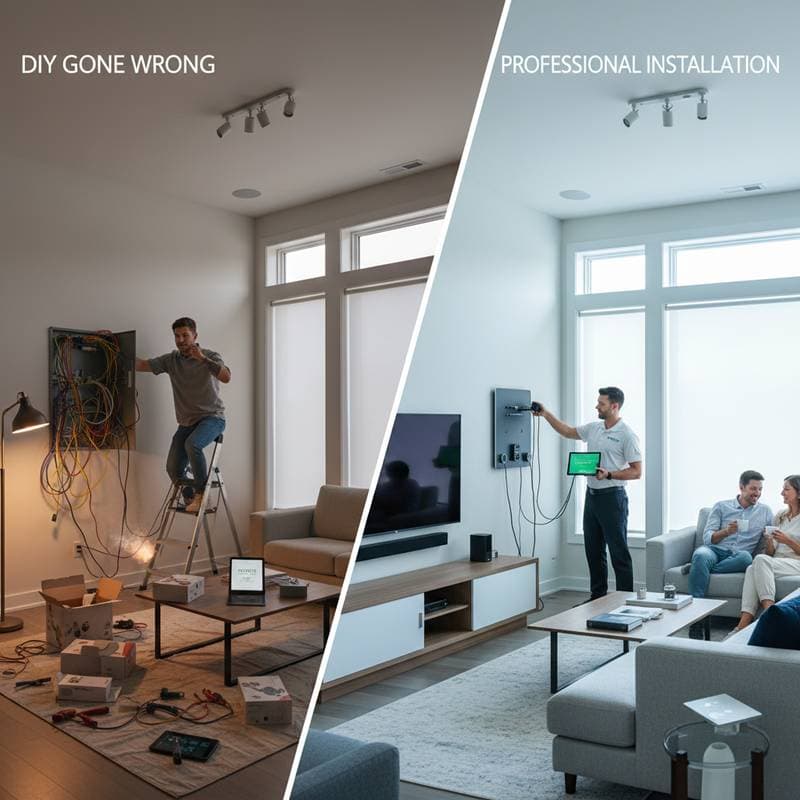
Why Smart Home Projects Require Licensed Professionals
Many homeowners encounter challenges when installing smart thermostats or voice-activated light switches, often facing unexpected technical issues. These upgrades deliver convenience, energy efficiency, and modern appeal, yet the installation process demands more than simple setup. Although numerous devices promote straightforward self-installation, certain projects necessitate the involvement of licensed professionals to achieve safety and effectiveness.
Essential Benefits of Professional Installation
Licensed electricians and contractors guarantee that smart devices operate safely and efficiently. Errors in do-it-yourself efforts may invalidate warranties or lead to substantial electrical damage. Professional installation costs generally fall between $150 and $1,200, varying with project scope.
Integrated setups, such as smart electrical panels, climate control systems, or security networks, demand adherence to building codes and precise configuration. Engaging qualified experts minimizes hazards, enhances system dependability, and elevates property resale value.
The following sections examine the reasons professional assistance serves as a critical component for smart home initiatives.
Risks Associated with Do-It-Yourself Approaches
Homeowners frequently begin with modest upgrades, only to discover that these evolve into complex electrical modifications. Typical challenges encompass:
- Smart light switches that depend on neutral wires, absent in numerous older residences, necessitating rewiring or the addition of junction boxes.
- Smart thermostats linked to legacy heating, ventilation, and air conditioning systems, where improper connections damage control boards costing several hundred dollars to repair.
- Security systems requiring low-voltage cabling and adequate circuit safeguards to satisfy local safety regulations.
- Smart electrical panels or subpanels involving high-voltage integrations, which licensed electricians must install to comply with inspection criteria.
The boundary between routine upgrades and electrical alterations blurs easily. Modifications to wiring or load distribution typically mandate professional oversight under local rules. Unauthorized work may jeopardize homeowner insurance coverage or result in inspection failures during property sales.
To mitigate these issues, professionals assess existing infrastructure beforehand, identifying potential incompatibilities and recommending solutions like upgrading service panels or installing dedicated circuits.
Adhering to Safety Codes and Standards
Local authorities establish precise guidelines for residential wiring, grounding, and amperage capacities. Smart home technologies introduce additional intricacies by merging electrical and digital elements. Licensed electricians verify that installations align with these standards and secure necessary approvals.
For example, smart outlets and switches paired with high-demand appliances require appropriate amperage ratings. Circuit overloads generate heat buildup and potential fire risks. Experts select suitable wire gauges, breakers, and connectors to maintain system integrity.
Professionals also determine permit requirements. Certain jurisdictions mandate approvals for hardwired smart devices, particularly those integrated with electrical panels, heating systems, or security frameworks. Non-compliance may halt projects or complicate insurance processes.
Beyond initial setup, electricians conduct load calculations to prevent future overloads, especially as homeowners expand their smart ecosystems with additional devices.
Indicators for Engaging a Licensed Electrician
Not every smart device installation demands expert intervention, but specific circumstances signal the need for professional services:
- Projects that entail hardwiring into the home's electrical framework.
- Instructions from manufacturers specifying qualified personnel only.
- Integrations with heating, ventilation, air conditioning units, security panels, or primary electrical panels.
- Requirements for new wiring, neutral conductors, or circuit expansions.
- Installations intended to remain eligible for warranty protection or insurance coverage.
In cases of doubt, request a professional consultation. Electricians often provide fixed-fee evaluations or detailed estimates, allowing homeowners to avoid expensive errors through informed planning.
During consultations, experts review blueprints, test circuits, and outline integration strategies, ensuring compatibility with existing smart hubs or networks.
Balancing Professional Expertise with Homeowner Involvement
Homeowners retain opportunities for active participation alongside licensed professionals. Individuals may manage preliminary configurations, such as app setups or device synchronizations, while experts handle wiring and system linkages. This collaborative method controls expenses and fosters engagement without compromising safety.
Such involvement offers educational value. Observing professional techniques reveals wiring pathways, breaker identifications, and safe troubleshooting methods for minor adjustments.
To optimize this balance, select electricians experienced in smart technologies, who can demonstrate tools like voltage testers or network analyzers, empowering homeowners with practical knowledge.
Sustaining Smart Home Performance
After proper installation, smart systems benefit from regular upkeep to preserve optimal operation. Homeowners should monitor firmware updates, replace batteries, and verify network connections. Periodic professional inspections prove beneficial, particularly following system expansions.
Licensed electricians deliver maintenance services, confirming ongoing efficiency and regulatory adherence. For property sales, records from certified installations enhance buyer trust and support higher appraisals.
Establish a maintenance schedule, including annual checks for wear on connections or compatibility issues with new device releases, to extend system longevity.
Steps to Implement Your Smart Home Vision
Individuals drawn to connected living yet daunted by technical demands represent ideal candidates for smart technologies. Commence with uncomplicated plug-in options, then enlist licensed professionals for electrical or security integrations.
Research certified electricians through local directories or associations, prioritizing those with smart home certifications. Obtain multiple quotes, review portfolios of past projects, and confirm licensing status to secure reliable outcomes.
This strategic approach yields a secure, efficient smart home that aligns with long-term needs and enhances daily living.