
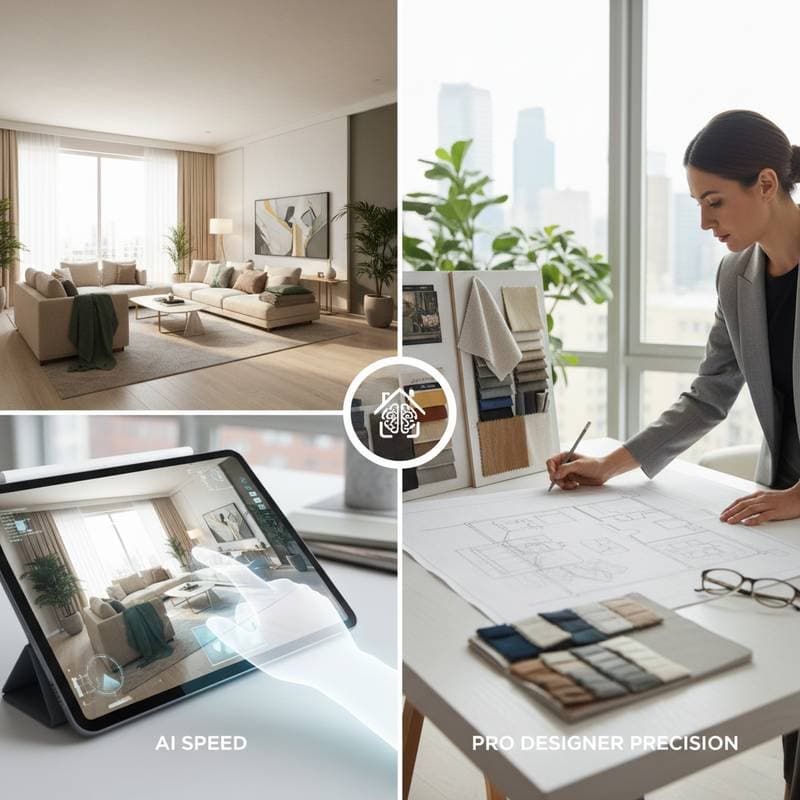
AI Tools vs Professional Designers: Prioritizing Speed or Precision?
Home design decisions often hinge on a fundamental choice: rapid ideation through artificial intelligence or meticulous execution by seasoned professionals. Virtual platforms enable swift visualizations and revisions at minimal cost, whereas experts deliver tailored solutions grounded in regulatory knowledge and practical foresight. The optimal strategy frequently integrates both, leveraging technology for initial exploration and human expertise for refined implementation.
Advantages of AI Design Tools for Rapid Planning
Artificial intelligence has evolved into a robust aid for home design, transforming basic applications into comprehensive planning aids. Users can upload images of existing spaces to generate immediate suggestions for layouts, color schemes, and furniture placements. This process allows experimentation with multiple options in mere minutes, eliminating the need for physical rearrangements during the brainstorming phase.
Subscription fees for these tools typically range from no cost for basic versions to several hundred dollars annually for advanced functionalities. Features often encompass intuitive drag-and-drop editors, extensive virtual libraries of furnishings, and realistic rendering capabilities that mimic natural light and material finishes. Such tools prove invaluable for homeowners embarking on preliminary sketches or stylistic trials.
However, limitations persist. AI systems may misjudge spatial dimensions or overlook essential factors like load-bearing walls and wiring regulations. Consequently, a visually appealing digital kitchen design might encounter unforeseen challenges during actual construction, underscoring the need for supplementary verification.
Benefits of Professional Designers for Accurate Outcomes
Engaging a professional designer introduces a level of sophistication unattainable through software alone. These specialists possess formal training to evaluate harmony, functionality, and adherence to building norms in each proposal. Beyond aesthetic selections, they oversee vendor relationships, secure cost-effective procurements, and forecast how initial choices influence durability and property enhancement.
Compensation structures differ, with hourly rates commonly spanning fifty to two hundred dollars or higher, or a fixed percentage of the overall budget. This expenditure secures comprehensive services, including precise on-site measurements, seamless collaboration with builders, and assurance of regulatory compliance. Professionals frequently unlock exclusive supplier networks, yielding savings and options beyond standard retail availability.
The primary challenge lies in duration. Complete projects demand multiple consultations, iterative adjustments, and formal sign-offs, potentially extending over weeks. For those seeking prompt gratification, this methodical approach may appear protracted, yet it yields superior results in scenarios prioritizing longevity, security, and unified aesthetics.
Integrating AI and Professional Input for Optimal Results
A growing number of homeowners adopt a combined methodology to maximize efficiency. Initial AI explorations help define aesthetic preferences and financial parameters, providing a clear brief for subsequent professional involvement. Digital prototypes of palettes, configurations, and illuminations serve as starting points, which experts then adapt to site-specific realities.
This fusion minimizes expenses and accelerates timelines without sacrificing quality. To determine the suitable path, consider these essential inquiries:
- What outcome do you seek? A superficial update or a substantial enhancement?
- What scope defines the endeavor? Simple repositioning of items or alterations to architecture?
- How much exactitude do you require? Conceptual visuals or detailed, regulation-aligned plans?
Structural modifications or electrical integrations necessitate certified oversight, as AI cannot supplant inspections or normative requirements. In contrast, decorative refreshes, furnishing arrangements, or trend investigations benefit greatly from digital assistance.
Executing a Cohesive Home Transformation
The most effective designs emerge from purposeful collaboration between innovation and proficiency. Initiate with AI to uncover viable concepts, then entrust refinements to specialists who ensure practicality and endurance. This balanced tactic produces residences that embody personal vision, uphold safety protocols, and maintain elegance over time, ultimately delivering both efficiency and excellence in your living environment.