
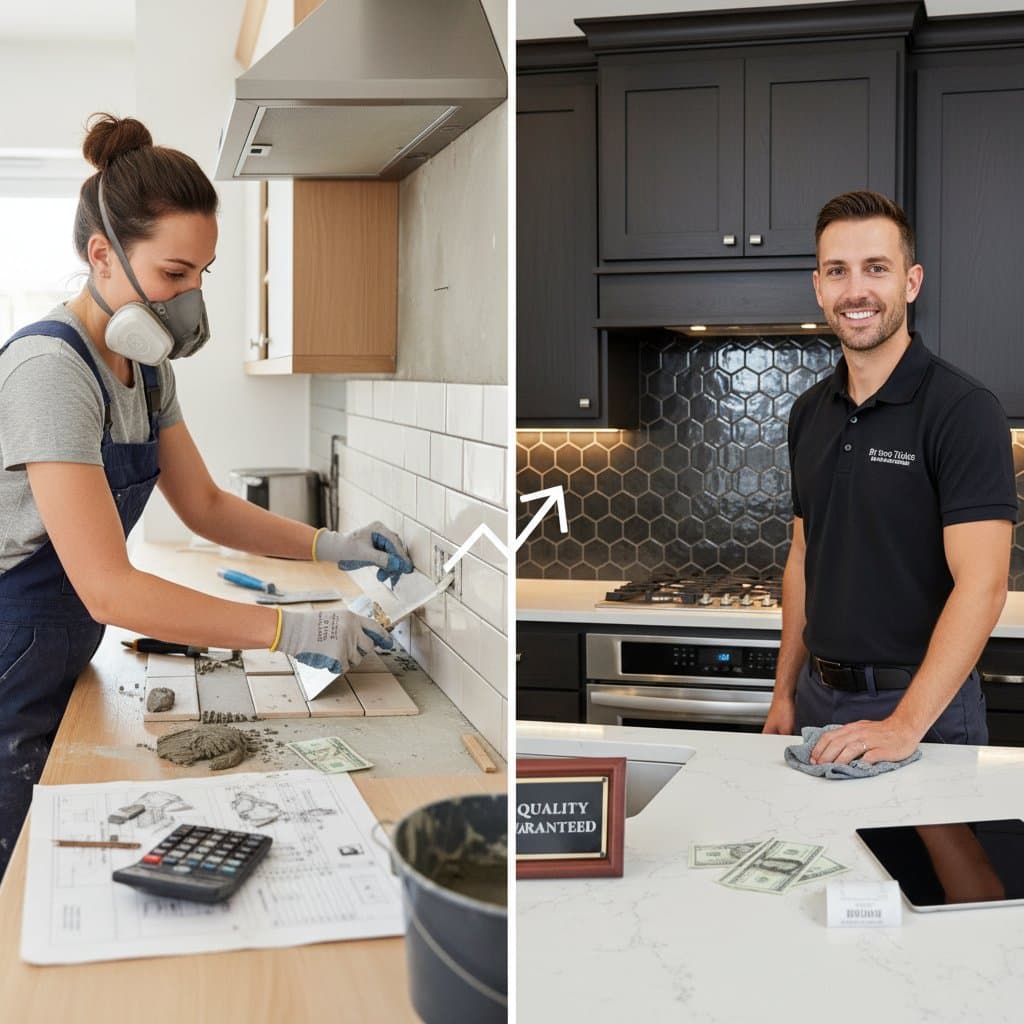
DIY Backsplash vs. Professional Installation: Identifying True Savings
Homeowners often consider a backsplash upgrade to enhance kitchen functionality and style. Installing tiles yourself presents an opportunity to reduce expenses significantly, typically by $150 to $500 compared to professional rates. However, these savings materialize only through careful planning; otherwise, errors can lead to additional costs that negate initial gains.
Many individuals view a bare wall behind the counter and imagine a straightforward tile application. This project appeals to weekend warriors seeking visible improvements. Before purchasing materials, evaluate the financial implications, potential complications, and circumstances where expert assistance proves more economical over time.
Assessing Project Complexity
Backsplash installation appears straightforward at first glance, but challenges arise with precise cuts around electrical outlets or adjustments for irregular surfaces. Difficulty levels depend on selected tiles and desired patterns, influencing both time commitment and error risk.
Beginner-Friendly Choices
Certain options suit those new to tiling, allowing practice with minimal consequences.
- Peel-and-stick tiles: These require no grout or mortar; simply align and press into place, making them suitable for temporary solutions or rental properties.
- Mosaic sheets: Pre-assembled on mesh backings, they facilitate quick application and reduce concerns over individual piece alignment.
- Subway tiles: Their rectangular shape and running bond pattern conceal minor imperfections in spacing or leveling.
These selections build confidence while delivering professional results without advanced tools.
Challenging Selections for Experienced Users
More demanding materials demand greater precision to achieve seamless outcomes.
- Natural stone or marble tiles: These weigh more and absorb liquids, necessitating robust adhesives and periodic sealing to prevent stains.
- Large-format tiles: Installation requires exact measurements and flat substrates to avoid lippage, or raised edges between pieces.
- Intricate patterns like herringbone or chevron: These involve diagonal cuts and uniform gaps, often resulting in material waste for novices.
For such projects, professionals ensure uniformity and minimize rework, preserving material investments.
Ensuring Quality and Durability
Beyond aesthetics, a backsplash shields walls from splashes, oils, and spills, maintaining kitchen hygiene. Substandard work invites problems like detaching tiles, deteriorating grout, or underlying moisture damage.
Frequent DIY Errors to Avoid
Preparation oversights and technique flaws commonly undermine results.
- Inadequate surface preparation: Glossy paint or residue prevents adhesive from adhering securely, leading to failures over time.
- Wrong adhesive selection: Mastic suits light tiles, but heavy options require thin-set mortar for lasting hold.
- Inconsistent spacing: Gaps that vary cause optical distortions, complicating later corrections.
- Rushing the curing process: Premature grouting weakens joints, promoting cracks from daily use.
Professionals often provide warranties covering at least one year, offering assurance against such issues and supporting home value.
Evaluating Long-Term Financial Benefits
Consider a scenario where DIY materials cost $300, versus a $1,000 professional bid, yielding $700 in immediate savings. If the installation endures five years without intervention, the advantage holds. Repairs costing $400 after mere months, however, eliminate that benefit entirely.
Influences on Sustained Performance
Several elements determine how well the project withstands wear.
- Tile durability: Budget varieties may fade or fracture sooner under heat and impact.
- Precision in execution: Clean edges and straight lines enhance visual appeal and facilitate cleaning.
- Ongoing care routines: Regular sealing and gentle cleaning prolong service life.
Expert installations frequently outlast hasty efforts by decades, requiring little maintenance and justifying the premium for enduring quality.
Scenarios Favoring Professional Services
Opt for hired expertise in these situations to safeguard results.
- Layouts featuring numerous outlets, edges, or detailed designs that demand specialized tools.
- Premium materials such as glass or marble, prone to breakage during amateur handling.
- Substrates with bumps, cracks, or prior damage needing leveling compounds.
- Upcoming property sales, where impeccable finishes boost marketability.
- Priorities on efficiency and reliable outcomes without personal labor.
Contractors with licenses also include liability insurance, protecting against accidents or structural issues during the process.
Preserving Your Backsplash Investment
After completion, routine upkeep sustains appearance and function. Select pH-neutral cleaners and microfiber cloths to wipe surfaces daily, steering clear of abrasives that harm finishes.
Reapply grout sealant annually to block liquid penetration and discoloration. Promptly repair any fissures or voids in joints to halt water ingress, which might escalate to mold or drywall replacement. For absorbent stones, employ tailored sealants that preserve natural hues without altering texture.
Deciding and Executing Your Backsplash Upgrade
Weigh your skills, timeline, and budget to choose the optimal path. Beginners benefit from simple materials and online tutorials for guided practice. Those tackling complex designs gain from consulting local pros for quotes and advice.
Start by measuring the area accurately: length times height in square feet, adding 10 percent for cuts and breakage. Source supplies from reputable suppliers, verifying compatibility between tiles and adhesives. With thorough preparation, your backsplash delivers lasting protection and style, enhancing the heart of your home without unnecessary expense.