
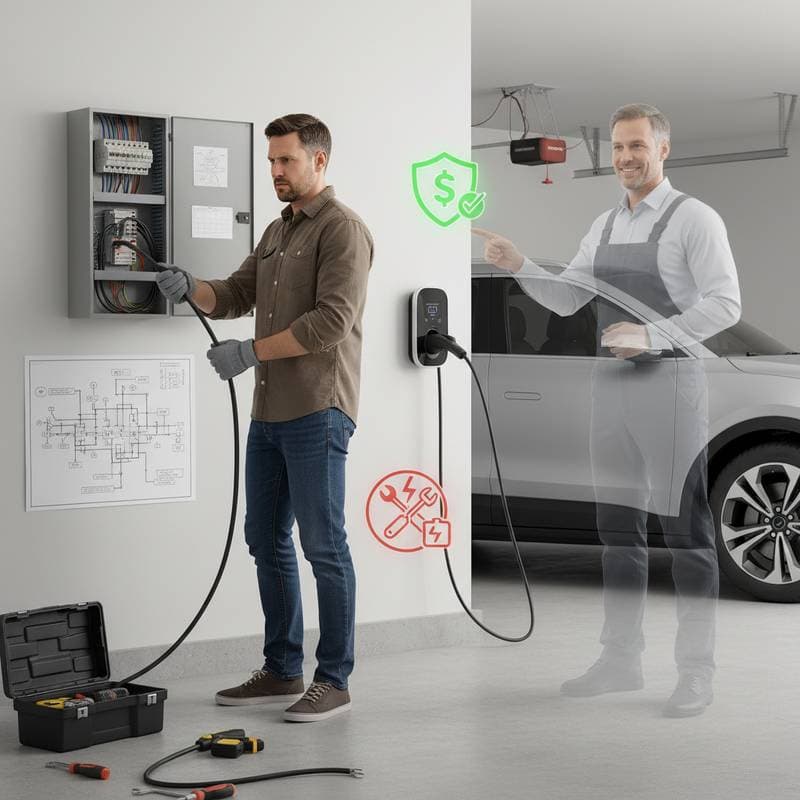
EV Charger DIY: Big Savings or Hidden Dangers?
When the first electric vehicle arrives in a driveway, excitement builds quickly. The quiet operation, freedom from gas stations, and contribution to sustainable living create an immediate appeal. However, practical concerns soon arise, particularly regarding home charging. Many homeowners consider installing an EV charger themselves to save money, but this choice involves electrical complexities, safety risks, and potential long-term costs that demand careful evaluation.
The Appeal of DIY EV Charger Installation
Completing a DIY project brings a sense of accomplishment. Homeowners who have handled tasks like installing light fixtures or building decks often view an EV charger as a similar challenge. The equipment appears straightforward: a wall unit, cable, and wiring connections. Tutorials online suggest simplicity, and avoiding professional labor fees of several hundred dollars adds to the attraction.
Behind the surface lies greater intricacy. EV chargers require a 240-volt dedicated circuit, unlike standard household wiring. Proper matching of wiring, conduit, and breakers to the charger's needs prevents hazards such as fires or insurance issues. Homeowners benefit from assessing these elements before starting.
Analyzing Installation Costs
Professional installation of a Level 2 charger ranges from $1,000 to $2,500, covering the unit priced at $400 to $900 plus labor, permits, and materials. A DIY method might cut costs by $500 to $1,200 if tools and expertise exist. These savings assume no surprises, which proves rare.
Additional expenses often emerge, including electrical panel upgrades at $800 to $2,000, trenching for garages at $300 to $1,200, permits and inspections at $100 to $300, and breakers with wiring at $150 to $400. A full breaker box or inadequate existing lines can transform a simple task into an extended effort, diminishing expected benefits.
Meeting Electrical Requirements
Level 2 chargers demand 30 to 50 amps, necessitating a dedicated circuit with appropriate wire gauge and breaker ratings. Older homes rarely accommodate such loads without modifications, and even newer structures face constraints from shared high-power appliances.
Electricians examine critical aspects before proceeding:
- Panel capacity to support added load.
- Wire gauge to avoid overheating.
- Breaker rating aligned with charger draw.
- Ground fault protection per code standards.
- Location ensuring cable access and weather protection.
These considerations ensure reliable operation and safety. Errors in any area risk fires or equipment damage.
Prioritizing Safety and Regulatory Compliance
Electrical codes protect against hazards, and EV installations follow rigorous rules. Local authorities mandate permits and inspections for high-voltage work. Noncompliance leads to fines or denied insurance claims.
Deviations from standards, such as improper grounding or undersized wires, generate heat within walls. Prolonged charger use amplifies dangers. The National Electrical Code outlines requirements for grounding, conduit, clearances, and labeling in residential settings.
Trained electricians apply these rules accurately. DIY efforts risk overlooking key provisions, creating vulnerabilities that surface over time.
Consequences of Installation Errors
A DIY charger might function initially, charging vehicles overnight without issues. Problems arise later, such as frequent breaker trips or shutdowns during use. Troubleshooting without specialized equipment proves challenging and costly.
Wiring faults often require professional fixes exceeding original professional fees. Manufacturers typically demand proof of licensed installation for warranty claims. Insurers similarly exclude coverage for unpermitted work, exposing owners to full repair or replacement expenses.
These repercussions extend beyond immediate finances, manifesting as ongoing risks and diminished value from the project.
Scenarios for Viable DIY Installation
Certain situations suit DIY approaches. Individuals with electrical backgrounds, such as those experienced in subpanel wiring, possess the skills needed. Plug-in Level 2 chargers with pre-wired cords connect to existing 240-volt outlets, like those for dryers, if properly rated.
Success depends on these prerequisites:
- Dedicated circuit for the outlet.
- Matching wire gauge and breaker to charger needs.
- Compatible voltage ratings for outlet and charger.
- Securing permits and inspections.
Even then, an electrician consultation before activation offers reassurance at minimal cost.
Advantages of Professional Installation
Beyond compliance, professionals enhance system efficiency. They select optimal locations to shorten cables, reduce hazards, and shield from elements. Connections to efficient electrical paths minimize losses and panel stress.
Forward-thinking designs accommodate future EV advancements, incorporating upgrade-ready conduit and wiring. This preparation avoids repeated disruptions and expenses as technology progresses.
Evaluating Return on Investment
DIY and professional options differ in cost and durability. A licensed setup endures longer, charges more efficiently, and preserves warranties, yielding better long-term value.
Optimized installations accelerate charging, easing battery wear and energy use. These improvements recoup portions of higher upfront costs through time savings and reliability.
In contrast, flawed DIY work slows performance or causes inconsistencies, shortening equipment life. Such outcomes undermine initial economies.
Impact on Property Value and Coverage
A certified EV charger boosts home appeal. Prospective buyers value charging readiness, particularly in areas with high EV adoption. Agents promote these features, but only documented installations qualify.
Undocumented DIY versions prompt buyer concerns during inspections, possibly lowering offers or requiring removal. Insurers reward permitted upgrades with potential premium reductions for efficiency, a benefit unavailable to informal setups.
Supporting Sustainable Practices
EV charging advances environmental goals by cutting emissions. Durable materials like copper wiring promote longevity and efficiency. Smart chargers enable off-peak scheduling to ease grid demands.
Professionals integrate these elements effectively, linking to home automation, adding monitors, or preparing for solar ties. Reliable execution maximizes ecological impact without reliability trade-offs.
Practical Strategies for Homeowners
Those pursuing DIY should adopt these measures:
- Conduct a load calculation to verify home capacity.
- Select premium components for safety and performance.
- Adhere strictly to manufacturer guidelines.
- Label all elements for clarity in future reviews.
- Arrange an independent inspection for validation.
Maximizing Home Charging Benefits
A well-executed EV charger enhances daily routines and property worth. It delivers convenient, efficient power while aligning with green living. Whether through professional expertise or cautious DIY, informed choices ensure safety, savings, and satisfaction for years ahead.