
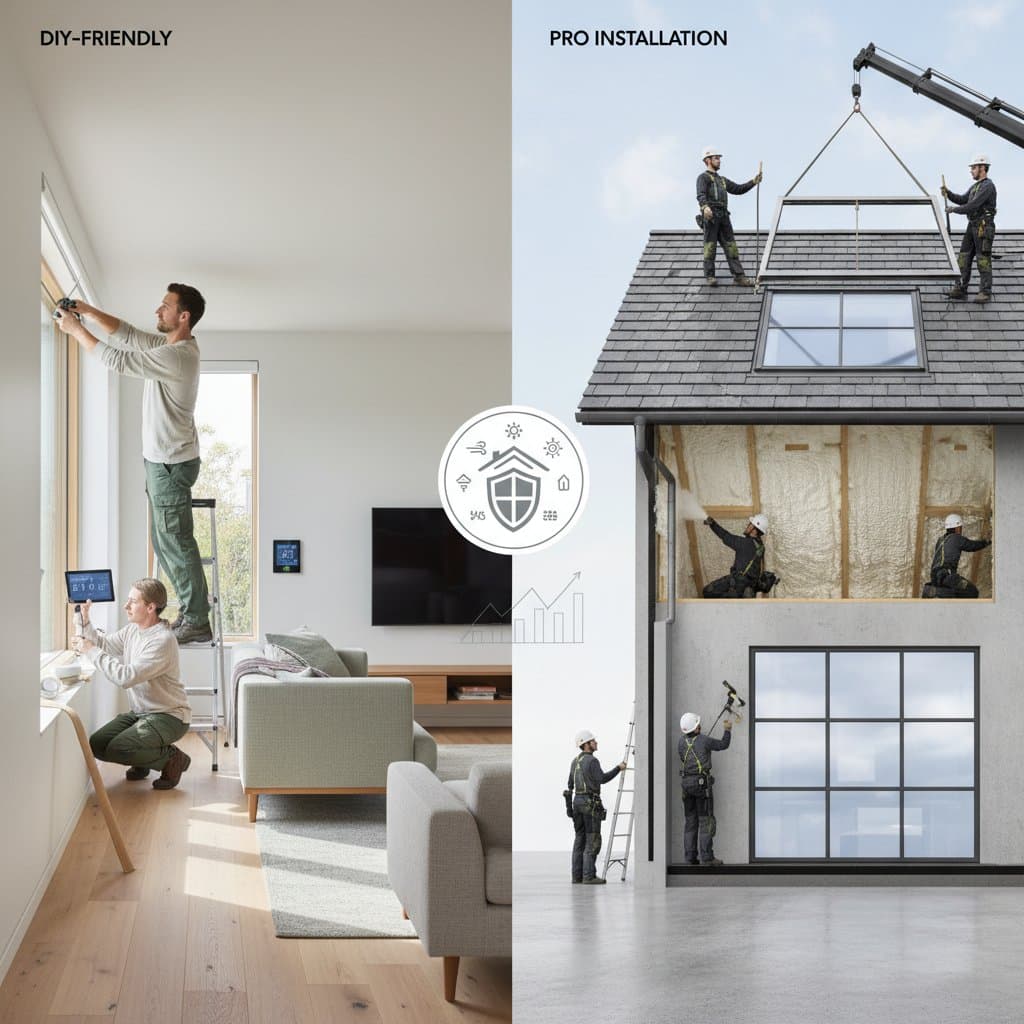
DIY or Pro: Climate-Proof Your Home
Water seeping under the back door during a storm may seem like a one-time issue at first. A simple cleanup with towels suffices initially. Repeated occurrences signal a larger problem. Weather patterns shift, and homes require adaptation to remain secure. Climate-proofing emerges as an essential measure rather than an optional enhancement. Decisions between self-managed tasks and professional services hinge on project scale, expenses, and tolerance for potential errors. The ultimate aim involves constructing a residence that remains dry, energy-efficient, and protected against environmental challenges.
Roof Reinforcement: DIY Versus Professional Approaches
The roof serves as the primary barrier against weather elements. Indicators of weakness include absent shingles, faulty flashing, or drooping gutters. Homeowners can address minor issues through do-it-yourself methods, such as clearing accumulated debris, patching minor cracks with sealant, and fitting gutter guards. Material expenses for these tasks range from 100 to 400 dollars, influenced by roof dimensions.
Structural deterioration demands expert evaluation. Qualified roofers assess and install impact-resistant shingles or durable metal panels designed for high winds. A complete roof replacement involves labor and materials costing 7,000 to 15,000 dollars, varying by residence size and local pricing. Such upgrades yield benefits like reduced insurance rates and minimized urgent repairs. In regions prone to coastal storms or strong gusts, regulations mandate specialized fastening techniques, which only certified professionals execute correctly.
Insulation and Energy Efficiency: Balancing Self-Help with Expert Installation
Inadequate insulation contributes to escalating utility costs. Drafts and temperature fluctuations diminish comfort and increase heating or cooling demands. Accessible improvements for individuals include applying weather stripping to doors, caulking gaps near windows, and using spray foam on pipe entries. These modifications require under 200 dollars in supplies and yield immediate reductions in energy loss.
Extensive efforts, such as insulating attics or walls, benefit from contractor expertise. Specialists apply blown-in cellulose or advanced spray foam to reach concealed spaces. Pricing falls between 2 and 4 dollars per square foot, contingent on product type and location. Enhanced insulation lowers energy consumption, maintains consistent indoor climates during severe conditions, and eases the burden on heating, ventilation, and air conditioning units.
Exterior Materials and Siding Options
The exterior facade functions as both an aesthetic feature and a protective layer. Traditional wood siding offers appeal but falters against humidity and pests. Alternatives like vinyl or fiber cement provide superior durability. Seasoned homeowners manage repainting or sealing wood surfaces independently, with material costs of 1 to 2 dollars per square foot.
Comprehensive siding overhauls necessitate professional involvement for accurate fitting and sealing. Fiber cement, resistant to flames and moisture, requires specialized tools and precautions during installation. Total expenses for such projects span 10,000 to 25,000 dollars, based on property scale and design intricacies. Results include prolonged service life with minimal upkeep and heightened defense against gales and precipitation.
Landscaping and Site Management for Resilience
Protective measures extend to surrounding landscapes. Drainage patterns, vegetation selections, and water flow dynamics influence overall stability. Individuals undertake tasks like sloping soil to divert moisture from foundations, incorporating native plants tolerant of dry spells, or installing gravel channels for runoff control. These initiatives demand moderate labor and 300 to 800 dollars in resources.
Complex sites with persistent flooding or soil loss require landscape architects. They design integrated features such as rain gardens, porous paving, and water retention basins. Although investments surpass 10,000 dollars, these enhancements safeguard property and structure alike. Additional advantages encompass elevated visual appeal, merging utility with design elegance.
Budgeting and Phased Implementation Strategies
Effective financial planning for these upgrades prioritizes critical weaknesses. Initiate with a comprehensive energy audit or structural review, priced at 150 to 500 dollars. These evaluations pinpoint inefficiencies and risks. Develop a staged plan thereafter, targeting urgent zones like roofing and bases before advancing to enhancements in insulation and automated controls.
Those with limited funds benefit from gradual adjustments. Basic actions, including draft sealing and gutter upkeep, prolong the durability of core systems. Distributing efforts over multiple seasons controls expenditures while ensuring consistent advancement.
- Conduct an initial inspection to identify priorities.
- Allocate funds starting with high-impact, low-cost fixes.
- Track expenses and savings to refine future phases.
Maintaining Climate-Resilient Features
Sustained performance relies on routine upkeep after implementation. Schedule gutter cleaning quarterly, examine seals and caulking yearly, and verify sump pump operations. Maintain records of modifications, guarantees, and assessments. This paperwork enhances resale potential and anticipates component wear.
Ongoing attention fosters a deeper bond with the property. Witnessing resilience during adverse weather instills confidence. Each enhancement bolsters not only physical integrity but also personal assurance.