
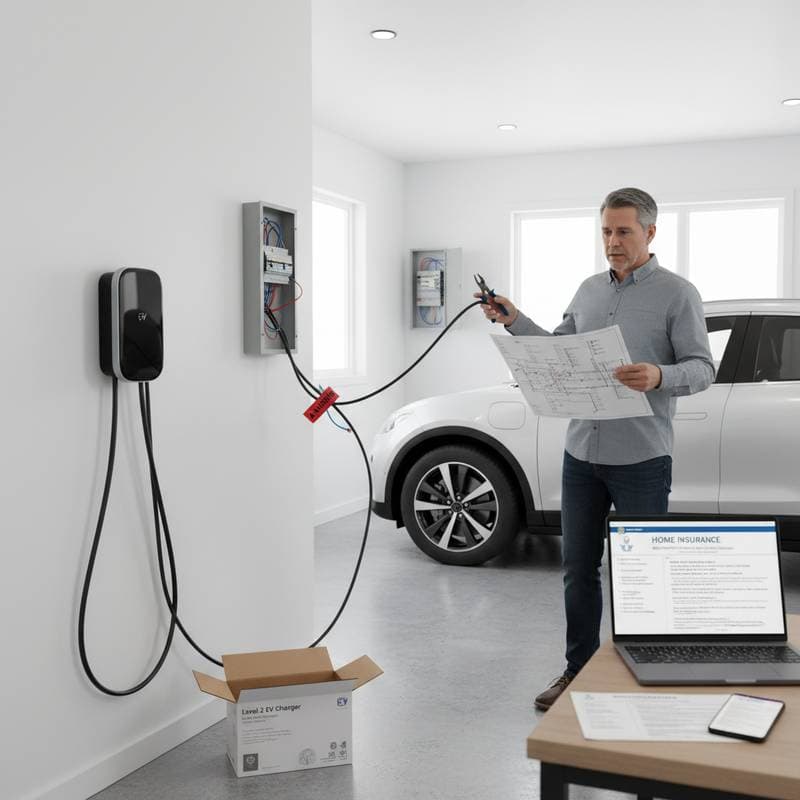
The Hidden Dangers of DIY EV Charger Installs
Homeowners who adopt electric vehicles often seek the convenience of overnight charging at home. Setting up an EV charger seems like a simple extension of basic electrical work, particularly for those with some hands-on experience. However, these installations involve complex electrical demands that exceed typical appliance connections, posing risks to safety, property, and vehicle performance.
This article examines the overlooked hazards of self-installation, clarifies the scope of professional services, and identifies scenarios where expert involvement proves indispensable.
Cost Reality: DIY Savings vs. Long-Term Risk
Homeowners frequently pursue DIY projects to reduce expenses. Professional EV charger installations typically cost between $600 and $2,000, influenced by factors such as the distance from the electrical panel, required wiring upgrades, and the charger's power rating. Individuals may anticipate halving these figures through self-installation, yet unforeseen complications can erase such gains and incur greater costs.
| Installation Type | Estimated Cost Range | Risk Level | Long-Term Value |
|---|---|---|---|
| DIY without permit | $200 - $600 | High | Low, potential insurance void |
| DIY with permit | $400 - $900 | Moderate | Medium, still potential safety issues |
| Licensed electrician | $600 - $2,000 | Low | High, meets code and warranty standards |
Certified electricians assess the home's electrical panel to confirm it supports the added load from the charger. They identify necessary upgrades, such as installing a dedicated 240-volt circuit or enhancing the service entrance capacity, and deliver precise estimates upfront. This approach avoids future disruptions like frequent breaker trips or complete system overhauls.
Code and Insurance Implications
All electrical alterations in residences require adherence to established standards. The National Electrical Code outlines precise specifications for EV charging equipment, including appropriate circuit breaker amperage, conductor gauge for current flow, and integrated ground fault circuit interrupter protection. Local authorities enforce these through mandatory permits and inspections to maintain uniform safety levels.
Undertaking an EV charger installation without obtaining a permit or undergoing inspection invites multiple consequences.
- Insurance denial: In the event of a fire traced to an unauthorized electrical modification, insurers may decline coverage for related damages.
- Resale complications: Prospective buyers or appraisers often uncover non-compliant work during due diligence, requiring remediation at the seller's expense before closing.
- Warranty issues: Certain automakers stipulate documented professional installation as a condition for honoring warranties on onboard charging components.
Addressing these regulatory aspects, though administrative in nature, shields owners from legal exposure and sustains the installation's reliability throughout its service life.
Choosing the Right Installer
Selecting a qualified professional demands careful evaluation. Prioritize electricians holding certifications in EV infrastructure from recognized bodies, along with experience in your chosen charger's model. During initial discussions, pose targeted inquiries to gauge their expertise.
- Do you hold a current license and liability insurance specific to residential EV installations?
- Will you manage the full permitting procedure, including coordination with municipal inspectors?
- Can you perform a detailed load analysis on my electrical panel to determine upgrade needs?
- Does your service include a workmanship warranty, typically spanning one to five years?
Established professionals incorporate comprehensive services into their proposals, such as pre-installation site assessments, compliance documentation, and final functionality tests. These elements guarantee the charger's optimal performance while fulfilling criteria for insurance eligibility and future property transfers.
Maintaining Your Investment
An EV charger functions as a durable electrical component integral to daily routines. To preserve its efficacy, arrange periodic professional evaluations every two to three years, focusing on connection integrity, insulation condition, and grounding effectiveness. Maintain the installation site by clearing debris, ensuring ventilation, and prohibiting the use of makeshift extensions or incompatible adapters.
Regular upkeep not only extends equipment lifespan but also mitigates risks of degradation that could compromise household safety.
Steps to Secure Professional Installation
Begin the process by researching local electricians through verified directories or referrals from EV owners. Request multiple quotes that detail scope, timeline, and compliance assurances. Once selected, coordinate with the installer to prepare your space, such as designating a sheltered outdoor location or garage outlet proximity to the panel. This collaboration ensures a seamless transition to reliable home charging, maximizing the benefits of your electric vehicle without compromising your home's integrity.