
AI Tools vs Designers: 2026 Cost Showdown Revealed
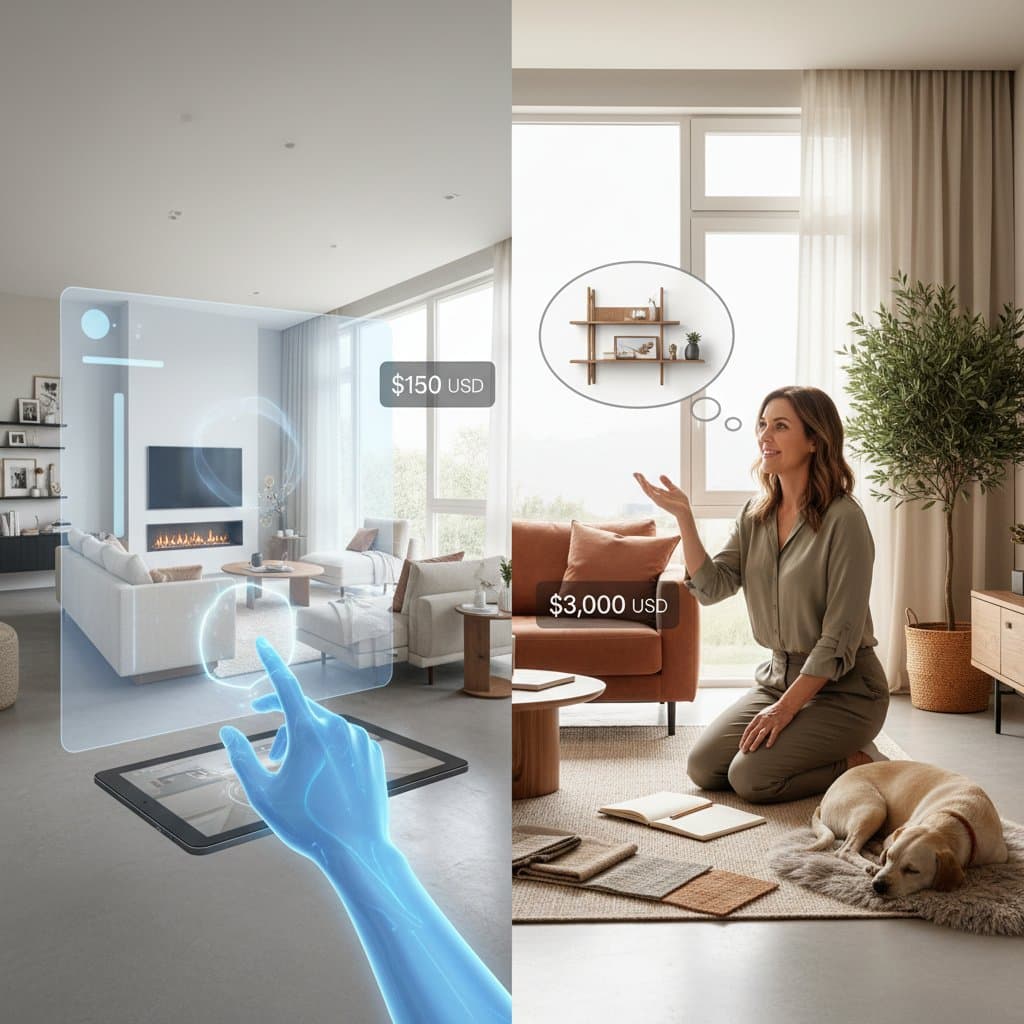
When homeowners envision redesigning a living room, they often consider two options: collaborating with a professional designer on fabric selections or manipulating digital furniture icons on a tablet. Each method offers transformation, but they vary significantly in cost, creative output, and emotional impact. The rise of AI design tools has transformed interior design approaches for homeowners. Services once reserved for the affluent now face competition from algorithms that produce mood boards, color schemes, and spatial layouts in seconds. The key question focuses on value: which choice provides the greatest return on investment.
The New Design Battlefield
Several years ago, engaging an interior designer represented the pinnacle of creating a refined, unified aesthetic. This personalized service carried a substantial expense. Professionals generally bill between $75 and $250 per hour, or 10 to 25 percent of the overall project budget. For a typical home project, expenses frequently range from $3,000 to $8,000.
AI-powered design platforms have disrupted this landscape with accessible pricing structures. Subscriptions begin at $15 to $60 per month, while one-time purchases for premium features fall between $200 and $500. These systems deliver rapid room visualizations, recommendations for furniture sourcing, and augmented reality simulations that allow users to preview changes without physical alterations.
The financial disparity proves compelling, yet distinctions extend further. AI functions as a swift, accurate digital assistant, whereas human designers contribute intuition, narrative depth, and emotional insight that algorithms have yet to replicate fully.
How AI Tools Transform Design Planning
Consider uploading a photograph of a dining room to an AI platform. In moments, the system generates several layout options, proposes lighting modifications, and recommends furniture arrangements. Users switch effortlessly between styles, such as Scandinavian minimalism or coastal elegance. The tool evaluates proportions, incorporates natural lighting effects, and indicates optimal plant positions for equilibrium.
Budget-conscious homeowners gain empowerment through this prompt responsiveness. They avoid fees for multiple revision cycles by testing variations independently. Leading AI tools incorporate direct shopping integrations with retailers, enabling purchases of precise items from the interface.
A standard AI subscription costs less than a single designer consultation, rendering it ideal for modest undertakings like bedroom updates or rental enhancements.
The Value of Human Design Expertise
AI excels in efficiency and accessibility, but it frequently overlooks nuanced human elements. Designers discern personality traits, daily routines, and emotional preferences, converting them into practical elegance. Upon entering a home, a designer observes details beyond a camera's reach, such as afternoon light patterns or navigation challenges in tight corridors during routine tasks.
Professionals also handle coordination. They liaise with contractors, procure bespoke materials, and align every aspect with financial and scheduling constraints. This knowledge minimizes errors, particularly in extensive renovations that involve electrical or plumbing modifications.
Such oversight justifies the investment. Expertly designed interiors can boost property values by 10 to 15 percent, per housing market studies. A $5,000 design fee might generate tens of thousands in future resale benefits. AI visualizations impress aesthetically but seldom address regulations, structural constraints, or implementation order, domains where designers excel.
Cost Comparison Breakdown
Examine a living room renovation budgeted at $10,000 to grasp the monetary contrast.
AI Tool Path:
- Software fee (one-time): $300
- Furniture and decor: $9,000
- Miscellaneous updates: $700
Total: $10,000
Designer Path:
- Design fee (20 percent of project): $2,000
- Furniture and decor: $7,500
- Miscellaneous updates: $500
Total: $10,000
Surface-level totals appear equivalent. Allocation reveals the variance: AI directs more funds toward tangible elements, while designers allocate portions to guidance, resolution, and seamless delivery.
Guidance proves invaluable during unforeseen challenges. Designers foresee issues like fabric degradation from sunlight exposure or a sofa impeding pathways. AI might miss these, incurring additional expenses subsequently.
Hybrid Approaches Gaining Ground
Homeowners increasingly combine AI with professional input. Designers incorporate AI for visualizations, streamlining creativity. This fusion provides digital rapidity alongside expert supervision.
For instance, a designer employs AI for initial concepts, accelerating ideation and curbing hours. Clients test notions pre-commitment, conserving resources. Certain studios provide virtual packages from $200 to $800, merging visuals with advice. This strategy mitigates risks while upholding standards.
Sustainability and Long-Term Value
Both options prioritize eco-conscious selections, though methods diverge. AI suggests sustainable items from databases, like bamboo or recycled textiles. Designers leverage local suppliers and craftspeople for authentic, waste-reducing choices such as reclaimed timber or pre-owned pieces.
Sustainability encompasses durability beyond materials. Designers foresee family evolution and craft flexible areas. AI advances in forecasting but depends on user data over experiential wisdom.
Safety and Practical Considerations
Home improvement safety demands attention that AI cannot assure completely. Platforms offer measurements and planning aids, yet they substitute neither for certified experts nor code-savvy professionals. Electrical, plumbing, or structural work requires licensed consultation.
For AI-guided DIY efforts, verify dimensions meticulously before custom orders. Digital designs may seem perfect yet overlook real anomalies like sloped floors or surface inconsistencies.
Living with Your Design
Post-completion, daily habitation evaluates effectiveness. AI spaces dazzle visually but risk impersonality without warmth. Designers infuse resonance via textures, illumination layers, and intuitive arrangements.
Some relish AI-enabled experimentation; others value collaborative security. Selection hinges on temperament, schedule, and error tolerance. Design accessibility expands universally, granting control, knowledge, and agency through human or machine means.
Steps to Choose Your Design Path
Assess project scope: opt for AI on simple refreshes, designers for complex overhauls. Test AI platforms with free trials to gauge fit. For hybrids, seek firms offering integrated services. Budget wisely, factoring long-term gains. Begin small to build confidence, ensuring your space reflects vision and viability.