
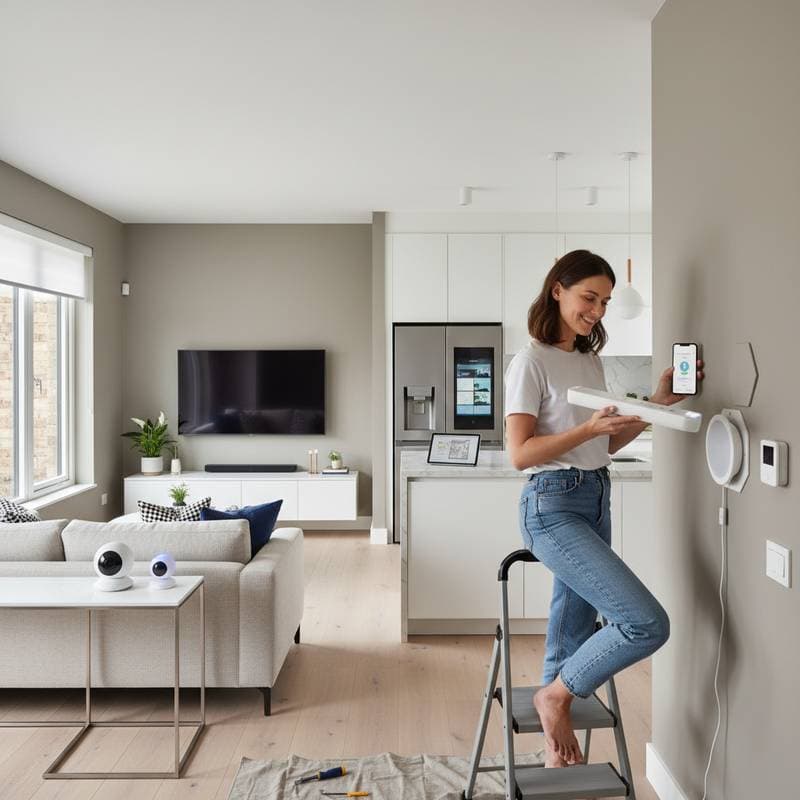
Introduction to Effortless Smart Home Transformations
Modern technology allows homeowners to integrate smart features without complex electrical work. Devices that operate on batteries, low voltage, or simple plugs eliminate the need for professional intervention. This approach suits beginners and ensures safe, reversible upgrades that enhance daily living.
Before starting any project, assess your home's electrical setup. If wiring appears outdated or intricate, consult a professional for verification. Focus on battery-powered or Wi-Fi-enabled options to avoid tampering with existing circuits.
Smart Lighting: Illuminate Without Rewiring
Smart bulbs and plugs transform ordinary lights into responsive systems. These devices connect via Wi-Fi or hubs, allowing control through smartphone apps or voice commands. They adjust brightness, color, and schedules to match your routine.
Installation Steps:
- Select bulbs compatible with your preferred ecosystem, such as those supporting Alexa or Google Assistant.
- Screw bulbs into existing fixtures or plug smart plugs into outlets.
- Download the manufacturer's app, create an account, and follow on-screen prompts to pair devices with your network.
Practical Applications:
- Schedule lights to simulate occupancy during vacations, deterring potential intruders.
- Dim lights automatically in the evening to promote relaxation.
- Integrate with motion sensors for hands-free operation in hallways or garages.
Budget and Timeline:
A starter kit with four bulbs costs around $50 to $100. Complete setup requires 20 to 30 minutes, including testing multiple rooms.
Benefits Over Time:
Energy-efficient LEDs in smart bulbs reduce electricity bills by up to 80 percent compared to incandescent options. Longevity extends to 25,000 hours, minimizing replacements and maintenance.
Thermostats: Optimize Comfort and Savings
Programmable smart thermostats learn your habits and adjust temperatures remotely. Battery-operated models or those using existing wiring with adapters fit most homes without major modifications.
Installation Process:
Remove the old thermostat faceplate carefully, noting wire positions. Attach the new base using the provided screws, reconnect wires as labeled, and snap on the display. The app guides calibration and integration with heating or cooling systems.
Usage Examples:
- Receive alerts for unusual temperature spikes, preventing energy waste from forgotten adjustments.
- Set geofencing to warm the house upon your arrival home.
- Track usage reports to identify efficiency improvements.
Cost and Effort:
Models range from $100 to $250. Installation takes 30 to 45 minutes, with apps providing video tutorials for confidence.
Sustained Advantages:
Homeowners report 10 to 20 percent savings on heating and cooling costs annually. These devices also improve indoor air quality through precise humidity control.
Security Systems: Protect with Plug-and-Play Vigilance
Wireless cameras and doorbells offer real-time monitoring without drilling or cabling. Battery-powered units mount easily and send notifications to your phone.
Setup Guide:
- Charge the device and mount it using adhesive strips or screws on doors, windows, or exteriors.
- Connect to Wi-Fi via the app and position for optimal coverage.
- Customize motion zones and sensitivity to reduce false alerts.
Real-World Scenarios:
- View live feeds from doorbells to greet visitors or packages securely.
- Record events triggered by activity, storing footage in the cloud or locally.
- Integrate with lights for illuminated deterrence at night.
Investment and Speed:
A basic camera kit starts at $80. Setup per device lasts 15 to 25 minutes.
Ongoing Security Gains:
Enhanced surveillance lowers burglary risks by 300 percent, according to industry studies. Cloud storage ensures access to footage even if devices are removed.
Smart Sensors: Compact Tools for Prevention
Motion, water leak, and contact sensors deliver proactive alerts for potential issues. These small, wireless units adhere to surfaces and communicate via your home network.
Installation Method:
Peel adhesive backing or use included screws to position sensors. Pair them through the app, assigning locations and linking to actions like notifications or automations.
Key Implementations:
- Place water sensors under sinks or near appliances to detect leaks early.
- Install motion sensors in entryways to activate lights or alarms.
- Use window and door contacts to monitor openings and secure the perimeter.
Pricing and Duration:
Each sensor costs $20 to $50. Pairing and testing take under 15 minutes.
Enduring Protection:
Early detection averts water damage costing thousands in repairs. In flood-prone areas, these sensors integrate with shut-off valves for automated responses.
Essential Strategies for Seamless Integration
Approach upgrades methodically to maximize effectiveness. Select devices within one ecosystem for unified control.
- Begin with foundational elements, such as plugs or bulbs, to build familiarity.
- Verify interoperability with your router and assistants like Siri or Alexa.
- Strengthen network security by updating router firmware and using strong passwords.
- Schedule firmware checks quarterly to address performance issues.
- Organize device names logically, such as 'Kitchen Light' or 'Front Door Sensor,' for intuitive commands.
Sustaining Your Connected Home System
Routine checks ensure reliability in your smart setup. Inspect batteries quarterly and clean components to maintain accuracy.
Test all sensors and cameras monthly to confirm functionality. Update apps and devices promptly to incorporate new features and security enhancements.
Upon selling your property, reset systems via manufacturer portals to transfer access cleanly. Documented smart features appeal to buyers, often increasing market value by highlighting modern conveniences and efficiency.