
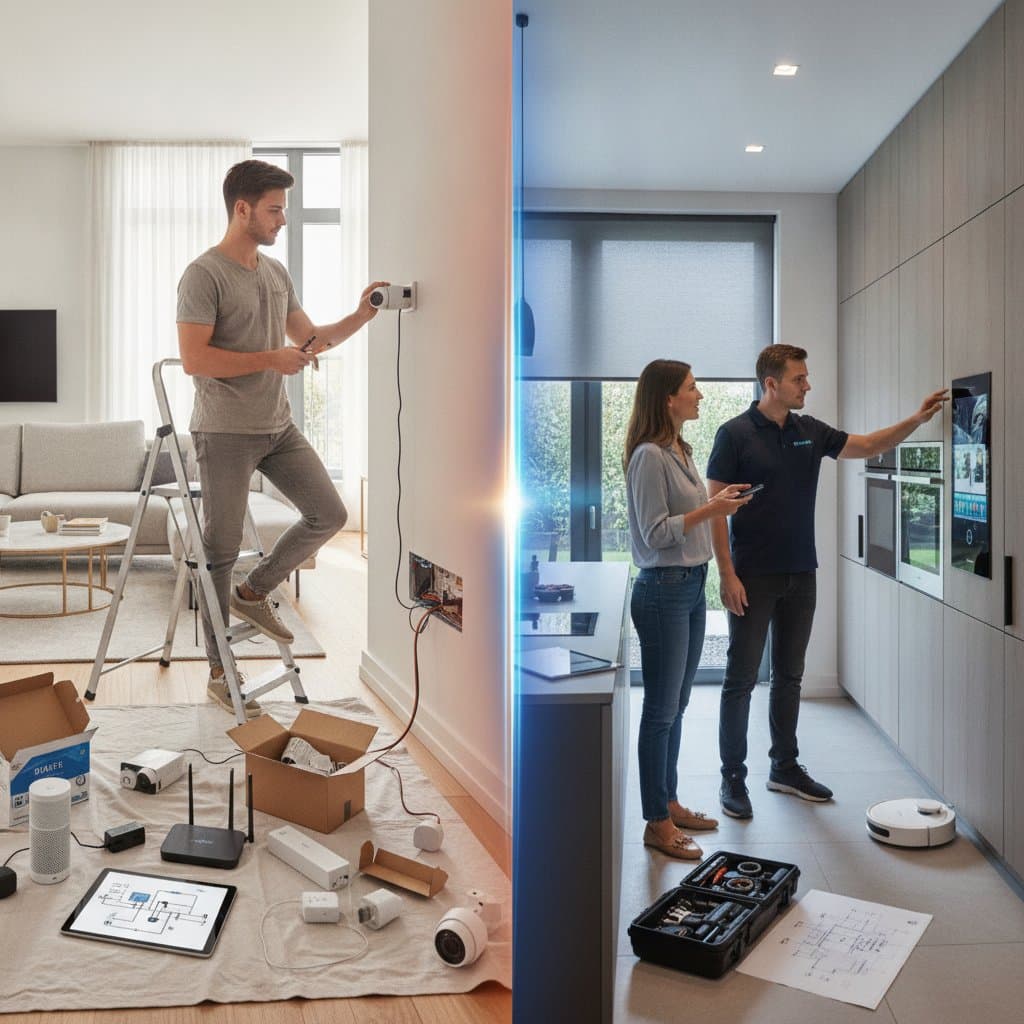
Smart Home Setup: Choosing Between DIY and Professional Installation
Understanding Your Options for Smart Home Technology
Many homeowners encounter frustration during initial device connections, such as with a new thermostat. The choice between managing installation independently or engaging specialists hinges on available budget, technical familiarity, and desired system scale.
Benefits of Smart Home Automation
Smart home systems deliver convenience alongside improved security. Properly configured setups can lower energy expenses by as much as 15 percent and support higher resale values. These networks oversee heating, cooling, lighting, locks, and irrigation through coordinated controls.
Exploring the DIY Path
Independent installation supports incremental additions without hourly service charges. Many components, including plugs and bulbs, operate through straightforward application instructions.
Devices well suited to this method include:
- Smart plugs and outlets
- Wi-Fi or Bluetooth light bulbs
- Voice assistants such as Amazon Echo or Google Nest
- Thermostats accompanied by setup guides
- Wireless security cameras
Typical project expenses fall between 50 and 500 dollars. Connectivity gaps, brand conflicts, and configuration oversights remain possible.
Challenges that may appear include:
- Signal loss in areas with weak coverage
- Platform mismatches across manufacturers
- Exposure from inadequate password practices
- Extended periods required for troubleshooting
Advantages of Professional Installation
Specialists align equipment with existing wiring and network conditions. Entry-level projects begin around 1200 dollars and incorporate design review plus follow-up assistance.
Services provided encompass:
- Layout evaluations that match devices to room conditions
- Concealed cabling and fixed mounting
- Centralized interfaces that reduce separate applications
- Direct access to repair support
Systems built on platforms such as Control4 or Lutron emphasize future expansion and stability.
Comparing Costs and Features
| Feature | DIY Smart Home | Professional Smart Home |
|---|---|---|
| Average Cost Range | 200 to 1000 | 1200 to 10000+ |
| Setup Time | 1 hour to several days | 1 to 2 days (handled for you) |
| Technical Skill Needed | Moderate | Minimal |
| Ongoing Maintenance | Self-managed | Professional support |
| Customization Level | Limited | Fully customizable |
| Warranty & Support | Manufacturer only | Installer and manufacturer |
Smaller projects involving lighting and locks align with independent efforts. Integrated control of blinds, climate, and entertainment favors specialist involvement.
Deciding on the Right Approach
Independent work fits individuals who enjoy technical experimentation and maintain reliable wireless coverage throughout the property.
Professional coordination benefits larger residences or users who prioritize immediate reliability and ongoing assistance.
Preventing Common Errors
Assess wireless strength in every room before purchasing equipment.
Confirm that selected devices share compatible platforms or assistants.
Apply distinct passwords and enable two-factor authentication on all accounts.
Verify circuit capacity for any hardwired components.
Select hubs capable of accepting additional devices without full replacement.
Combining Methods for Optimal Results
Many owners begin with basic independent items and later request specialist integration for security or climate controls. This sequence controls expenses while securing dependable performance on critical functions.
Steps for a Successful Project
Outline intended device locations on a simple floor plan.
Apply clear labels to each component during initial configuration.
Export application settings regularly for backup purposes.
Establish a monthly reminder to install firmware updates.
Maintain a record of all connections and settings for reference during expansions.
Maintaining Long-Term Performance
Consistent attention to security settings and software updates preserves system reliability over time.