
Building Climate Resilience: A 2026 Homeowner's Guide
Homeowners across regions have faced unexpected challenges from intensifying storms and erratic temperatures. Structures designed decades ago often prove inadequate against these shifts. Targeted upgrades offer a reliable way to enhance durability, efficiency, and livability.
This guide provides a structured approach to climate-resilient modifications. It balances immediate actions with strategic investments, empowering you to safeguard your property while elevating daily comfort and environmental responsibility.
Core Principles of Climate-Resilient Construction
Climate-resilient design emphasizes practical adaptations over advanced innovations. It prioritizes systems and materials that endure environmental pressures while preserving functionality. The focus remains on ensuring safety, efficiency, and ease of maintenance amid changing conditions.
Three key principles guide these efforts: prevention, adaptation, and recovery. Prevention identifies vulnerabilities through routine assessments to avert issues. Adaptation selects robust components that flex with weather extremes. Recovery incorporates features that allow swift restoration after events, minimizing downtime and costs.
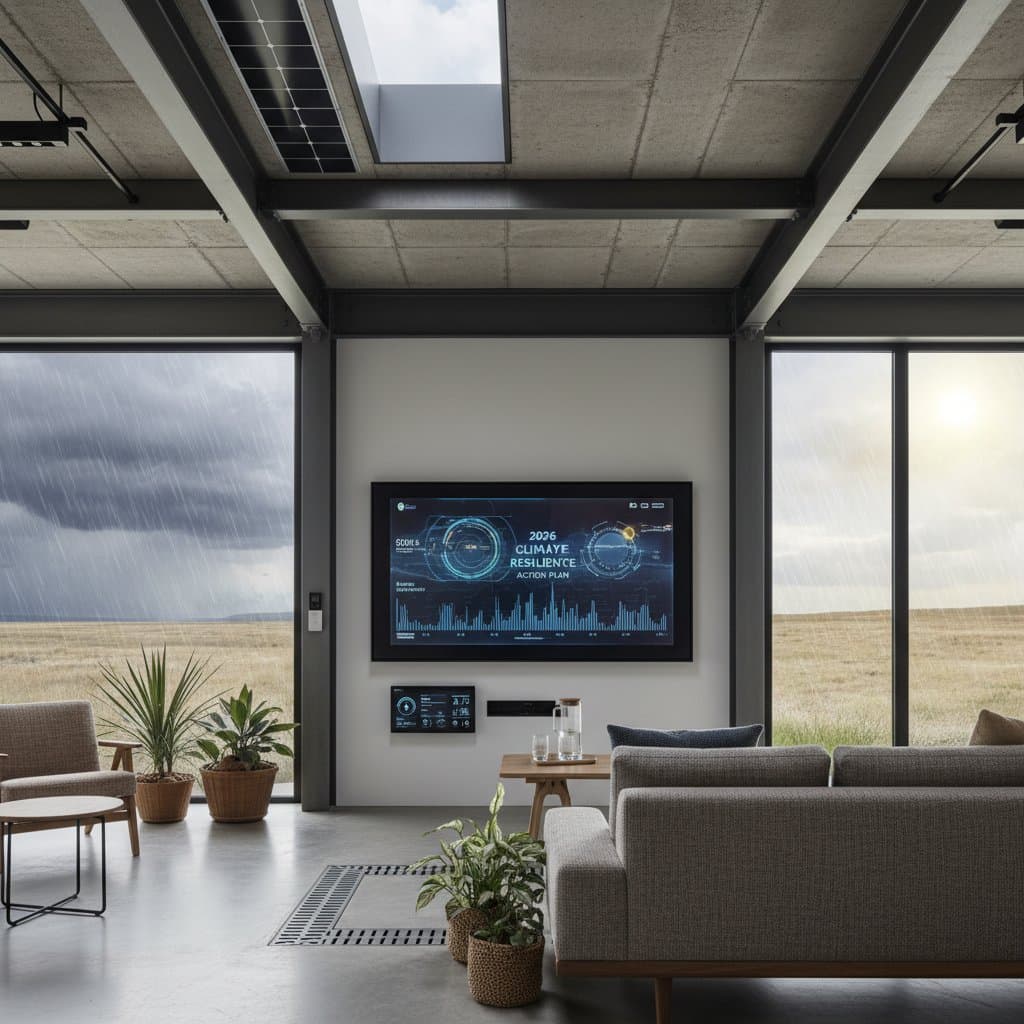
Consider a residence equipped with a durable metal roof, fortified foundation sealing, and optimized airflow systems. Such elements not only repel heavy precipitation but also maintain operations during outages. Each enhancement contributes cumulatively, forming a cohesive defense against uncertainty.
Effective Water Management Strategies
Water infiltration ranks among the costliest home repairs, yet proactive measures can eliminate most risks. Comprehensive drainage and humidity controls convert potential liabilities into strengths.
Enhancing Foundation Protection
Evaluate the slope of soil surrounding your foundation to direct water outward. A French drain or perimeter channel installation ranges from $1,000 to $4,000, varying by site scale and ground composition.
For interior safeguards, equip basements with a sump pump featuring battery reserves. Installation costs $1,500 to $3,000, yet it averts damages that could exceed $50,000 in severe scenarios.
Integrating Landscape for Water Control
Incorporate rain gardens, porous paving, and storage cisterns to manage excess runoff and bolster biodiversity. Assemble a rain garden in a single weekend with indigenous vegetation, stones, and organic layers for less than $1,000.
Opt for permeable driveway surfaces at $8 to $15 per square foot to eliminate standing water and mitigate freeze-thaw cycles. These choices stabilize surrounding soil temperatures and reduce erosion.
Selecting Enduring and Eco-Friendly Materials
Resilient upgrades enhance rather than compromise visual harmony. Sustainable options often gain character with age while outperforming traditional alternatives in longevity.
Resilient Exterior and Interior Surfaces
Select low-maintenance exteriors like recycled polymer decking, which defies decay and sun exposure unlike untreated timber. Apply lime-based or mineral coatings to stonework for vapor-permeable barriers that prevent condensation buildup.
For interiors, install cork or bamboo underlayments as eco-conscious substitutes for synthetic tiles. These materials withstand moisture fluctuations and provide natural thermal regulation.
Incorporating Passive Efficiency Features
Leverage passive solar orientation and natural airflow to lessen energy demands. Apply heat-reflective films to glazing, erect strategic awnings, or position deciduous trees southward and westward to cut air-conditioning needs by up to 30 percent.
These modifications typically incur lower expenses than powered alternatives and simultaneously refine architectural aesthetics.
Essential Implementation Advice
- Conduct a thorough property audit to pinpoint structural vulnerabilities prior to any expenditures.
- Engage certified experts for electrical, framing, and roofing interventions to ensure compliance and safety.
- Sequence projects logically, pairing simple tasks like caulking frames with comprehensive efforts such as re-roofing.
- Maintain records of all enhancements, including visuals and invoices, to qualify for insurance incentives.
- Evaluate options based on durability and end-of-life recyclability, beyond initial pricing.
Sustaining Resilience Through Routine Care
After initial implementations, consistent upkeep fortifies your efforts. Perform quarterly reviews of joints, downspouts, and runoff routes to address wear early.
Clean HVAC filters regularly and track usage via digital monitors. Minor tweaks, such as adjusting climate controls or updating seals, sustain performance over decades.
Reassess policy terms post-upgrades. Detailed records of fortifications can decrease rates and accelerate reimbursements following incidents.
Experiencing the Benefits of Resilience
A fortified home delivers tangible improvements in air quality, thermal stability, and overall assurance. These changes extend beyond defense to foster a harmonious living environment.
Such preparations embody proactive ownership in an era of flux. Initiate with a single modification, observe its effects, and progressively strengthen your sanctuary.