
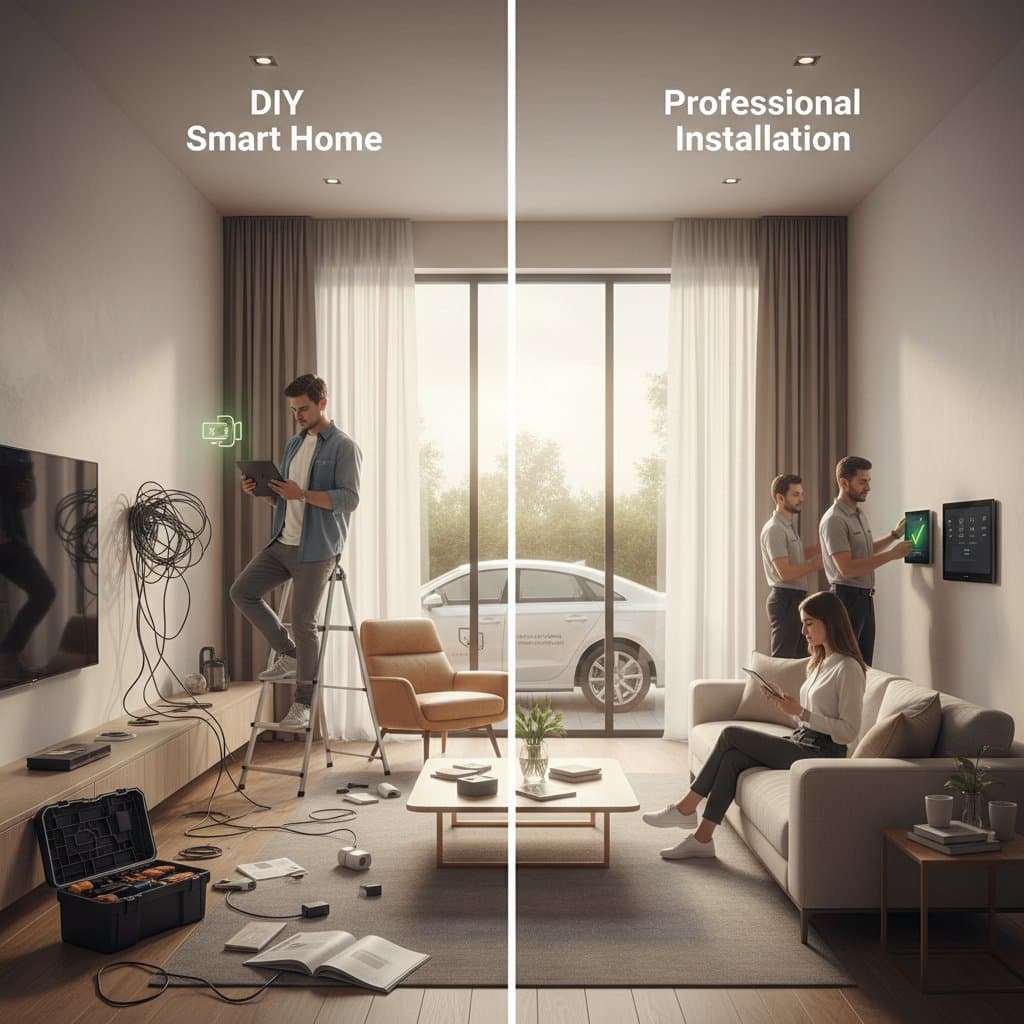
Surprising Costs: DIY vs Pro Smart Home Setup
On a quiet Saturday morning, you might hold a sleek smart thermostat, eager to modernize your home. The packaging highlights straightforward installation and potential energy savings. Yet, as you review setup instructions and wiring diagrams, the option of hiring a professional becomes more attractive. The core question involves not only capability for self-installation but also wisdom in pursuing it. Beyond the upfront price, genuine expenses of smart home systems emerge in aspects that many overlook.
The Allure of Doing It Yourself
The do-it-yourself method starts with enthusiasm and exploration. Items such as smart plugs, bulbs, and basic security cameras install in less than one hour using few tools. Homeowners frequently gain satisfaction from linking devices and observing rooms react to voice or app directives. For limited projects, this method functions effectively.
Typical DIY starter setups include:
- Smart thermostat: $100 to $250
- Smart lighting kits: $60 to $200 per room
- Smart doorbell camera: $100 to $300
- Wi-Fi hubs or bridges: $50 to $150
A basic self-managed system totals approximately $500 to $1,200, based on device quantity and brand standards. Flexibility and oversight represent key advantages. Individuals expand gradually, test various platforms, and acquire useful abilities.
However, concealed expenses surface with advanced devices. Intricate connections, erratic app synchronization, and Wi-Fi range constraints transform a brief endeavor into extended problem-solving sessions spanning weeks.
When Professional Help Pays Off
Expert smart home specialists offer knowledge surpassing mere product familiarity. They create interconnected networks that operate fluidly, merging lighting, temperature regulation, media, and protection into a single control panel. Installations proceed swiftly, neatly, and securely, especially for setups needing wiring or network enhancements.
Typical professional installation packages include:
- Basic automation setup: $1,500 to $3,000
- Whole-home security and lighting integration: $4,000 to $8,000
- Full luxury automation with voice control and centralized hubs: $10,000 and up
These figures encompass labor and advisory services, emphasizing payment for proficiency alongside equipment. Such systems typically feature guarantees, distant assistance, and ongoing upkeep plans. For residents intending long-term occupancy, this outlay yields benefits via dependability and increased property appeal.
The True Cost of Compatibility
Self-managed smart home arrangements frequently encounter synchronization challenges invisible until post-purchase. A motion detector from one manufacturer might fail to interface properly with another's central unit. Alternatively, a smart thermostat could resist linking to legacy heating systems. Each minor discord demands hours of irritation or extra acquisitions for cohesion.
Experts evaluate a residence's layout, wireless coverage, and current wiring prior to proceeding. They guarantee component dialogue via uniform standards like Zigbee, Z-Wave, or Wi-Fi protocols. This foresight averts divided control applications and faulty automation sequences.
Purchasers acquiring items incrementally often incur $300 to $700 more for connectors, extenders, or enhanced routers to secure the network. Specialists incorporate such foundations initially, rendering their elevated starting expense reasonable.
Time as a Hidden Expense
Do-it-yourself smart home initiatives commonly undervalue setup, diagnosis, and revision durations. Aligning numerous devices, associating them with a primary application, and sustaining software requires full weekends. Every producer's interface presents unique challenges, and minor errors trigger repetitive failures or connection losses.
Expert configurations shorten this period significantly. A qualified technician finishes an entire residence automation in one day. Savings extend beyond hours to tranquility. Individuals evade the experimentation loop typical after personal setups.
To gauge expenses, value personal time. Twenty hours on investigation, placement, and resolution at $25 hourly equals $500 in unseen effort. Including this with equipment prices substantially diminishes the disparity between self and expert methods.
Safety and Security Considerations
Although most self-install devices prioritize ease, connecting a thermostat or switch exposes electrical frameworks. Errors lead to circuit failures or equipment harm. Licensed professionals manage connections adhering to safety norms and regional regulations.
Digital protection represents another neglected element. Numerous residents attach devices straight to home networks without isolation from vital information. Experts establish protected setups segregating intelligent components, minimizing breach risks. This feature ranges from $300 to $800 yet delivers assurance against privacy threats in automation.
Environmental and Long-Term Value
Regarding sustainability, both approaches promote energy conservation, though enduring effects hinge on accurate adjustment. An improperly placed smart thermostat squanders more power than conserved. Specialists optimize via presence detectors and flexible timetables, potentially lowering utility bills by 10 to 20 percent over years.
Components and hardware influence ecology as well. Experts suggest premium items with fixable parts. Self-enthusiasts select economical options demanding early substitution. Factoring full lifecycle, expert systems with robust elements prove more eco-friendly and economical.
Troubleshooting Common Issues
Even meticulously designed smart homes face disruptions. Wireless disruptions, obsolete software, or application revisions interrupt sequences. Self-managers turn to internet communities or iterative corrections. Expert arrangements supply aid agreements for distant or on-site resolutions.
For self-maintained networks, maintain a record of configurations, access codes, and version notes to prevent disarray. Organize devices by producer or platform for easier oversight. Perform routine software checks and enforce robust credentials to sidestep frequent breakdowns.
Building on Your Skills
Technology and project enthusiasts benefit from initiating with self-managed devices. Commence modestly using plugs, illuminators, or vocal aides before complex mergers. Progressively broaden as familiarity with family patterns develops. This strategy controls expenses while fostering mastery of elements.
Residents desiring integrated polish gain from expert placement for superior steadiness and ease. Retain personal input through software directives or subsequent minor additions. Methods support rather than oppose each other.
Making It Happen
For either path, deliberate preparation proves essential. Identify goals such as ease, safeguard, power reduction, or media oversight. Outline priority areas and investigate compatible products. Weigh comprehensive costs encompassing time, implements, and enhancements.
When selecting experts, seek initial property reviews. Inquire on upkeep aid, assurance details, and growth possibilities. Forthright providers detail charges and supply system records.
Self-path followers invest in superior devices backed by active user bases and consistent revisions. Secure networks, tag connections, and note procedures. Confidence and knowledge accumulate beyond the endeavor.
Smart home creation transcends gadgets. It shapes responsive spaces aligned with routines, principles, and evolution.