
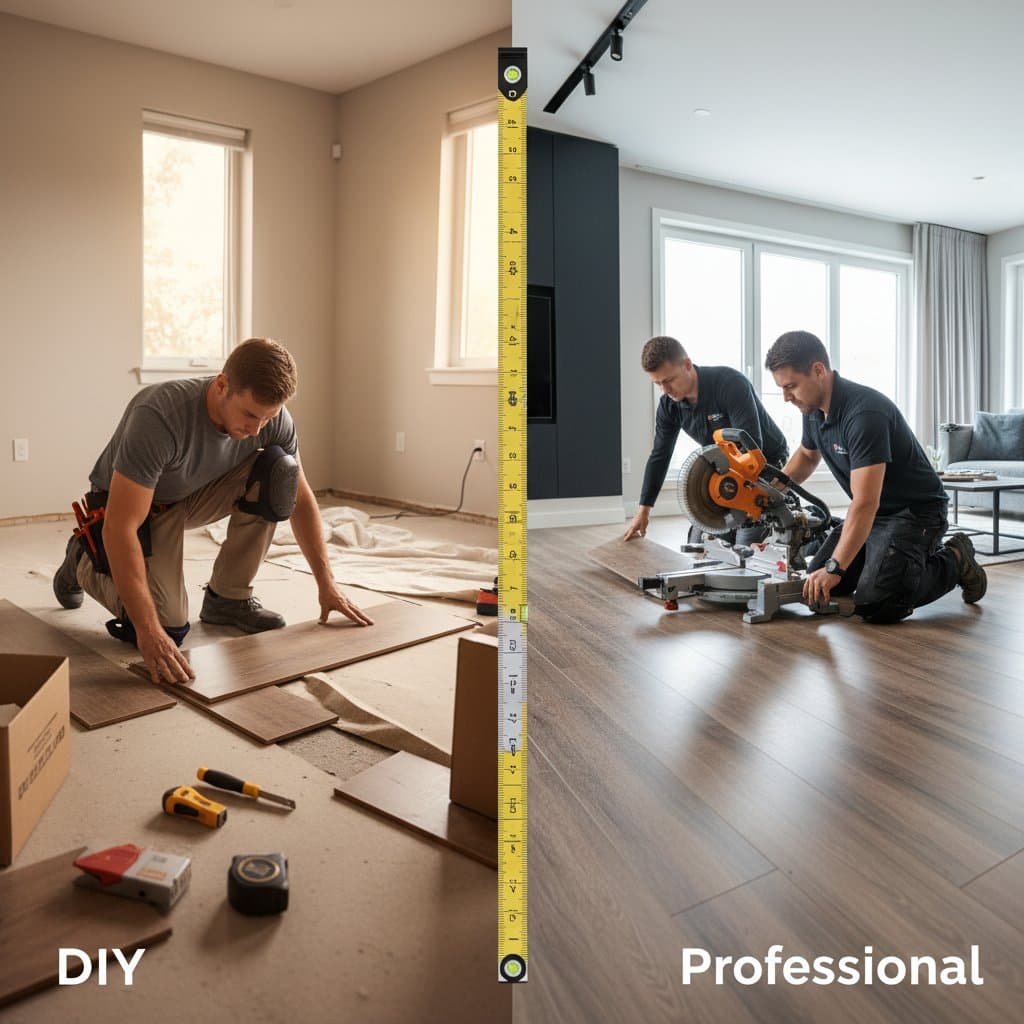
Should You Tackle LVP Installation Yourself or Hire Help?
The decision to install luxury vinyl plank (LVP) flooring yourself or hire a professional hinges on several key factors. LVP appeals to homeowners due to its resilience against wear, cost-effectiveness, and simple upkeep. This guide explores the advantages and drawbacks of each approach, helping you evaluate based on your experience, schedule, and financial resources.
Understanding the Basics of LVP Installation
LVP flooring connects via a tongue-and-groove mechanism that allows planks to lock securely without adhesives or fasteners. This floating system works over various subfloors, simplifying the process compared to traditional options. However, success relies on thorough subfloor preparation and precise layout; uneven surfaces or misaligned starting rows can lead to gaps, creaking, or uneven seams over time.
For those attempting a DIY installation, the tools remain basic: a utility knife for cuts, a measuring tape for accuracy, spacers for gaps, and a tapping block to secure joints. Precision proves essential, as even minor errors in the initial rows can compound across the entire space. Beginners should review manufacturer guidelines closely to avoid common pitfalls like inadequate acclimation periods.
Cost Comparison: DIY vs. Professional Installation
Many homeowners opt for DIY to control expenses, with LVP materials ranging from two to five dollars per square foot. Hiring a professional adds two to four dollars per square foot in labor costs, potentially totaling hundreds or thousands for larger areas. These savings appeal upfront, yet they carry risks if issues arise.
Poor installation might result in plank separation, buckling from moisture, or visible defects, with repair costs often exceeding initial professional fees. Experts provide workmanship warranties that safeguard against such problems, adding value for resale or long-term durability. Consider total ownership costs, including potential fixes, when weighing options.
When DIY Makes Sense
DIY installation suits certain scenarios where conditions align with your capabilities. Consider proceeding if you possess foundational skills in carpentry or similar trades. Smaller, straightforward spaces like rectangular bedrooms or hallways minimize complex cuts and reduce overwhelm.
Floating LVP systems prove more forgiving for novices than glue-down varieties, which demand flawless surfaces. Ensure you allocate sufficient time for acclimating planks to room conditions, typically 48 hours, and verify the subfloor's cleanliness, dryness, and levelness using a straightedge and moisture meter. Starting small builds proficiency while limiting exposure to errors.
When to Hire a Professional
Complex projects benefit from professional expertise to achieve optimal results. Opt for hired help in multi-room layouts or areas with irregular shapes that require intricate patterning. Transitions between flooring types, such as thresholds or stairs, demand specialized techniques to ensure seamless integration.
Subfloors needing leveling compounds, repairs, or accommodations for radiant heating systems fall outside typical DIY scope. Moisture-heavy environments like bathrooms require vapor barriers and precise sealing to prevent warping. Professionals navigate these challenges efficiently, preserving manufacturer warranties and completing work in days rather than weeks.
Pro Tips for Success
Apply these strategies regardless of your installation method to enhance outcomes. Purchase at least 10 percent extra material to cover cuts, defects, and future replacements. Maintain consistent expansion gaps of one-quarter inch along walls using spacers, allowing for natural movement.
- Verify alignment every three to four rows by measuring from the starting wall to keep the layout square.
- Clear dust and debris after each section to protect the locking mechanisms from grit-induced damage.
- In damp areas, apply silicone caulk to edges and transitions for added moisture resistance.
These steps promote a stable, long-lasting floor.
Maintaining Your Investment
Routine care keeps LVP flooring performing at its best with minimal effort. Vacuum or sweep daily to remove dirt that could scratch the surface, and address spills immediately with a damp cloth. Steer clear of abrasive cleaners or steam mops, as they may compromise the protective layer.
Place protective pads under furniture legs to prevent dents, and use area rugs in high-traffic zones to distribute wear. While most LVP resists water effectively, avoid prolonged exposure to standing liquids, which could seep into seams. Proper maintenance extends the lifespan, often 15 to 25 years, ensuring your floors retain their appeal and functionality.
Selecting DIY or professional installation ultimately safeguards your home's value and comfort. Match your approach to the project's demands for results that endure. A well-installed LVP floor delivers lasting beauty and practicality tailored to your lifestyle.