
AI vs Contractors: Who Designs Better Remodels?
If you have ever stood in your kitchen wondering whether to remove a wall or repaint the cabinets, you know how complex remodeling decisions can be. AI powered design tools promise to simplify those choices with instant visualizations and cost breakdowns. Professional contractors still bring experience, intuition, and craftsmanship that no algorithm can fully replicate. The question many homeowners face today is not whether to remodel, but who should lead the design process.
This comparison explores what each option offers, where each excels, and how to combine them for an efficient and beautiful result.
The Contractor Advantage: Experience, Safety, and Craftsmanship
Professional contractors operate in the real world of materials, permits, and unpredictable challenges. They bring context, field tested knowledge, and an understanding of how local conditions affect both design and durability.
What Contractors Deliver That AI Cannot
-
Real world feasibility. A contractor evaluates your home structure, foundation, and mechanical systems before suggesting design changes. They can identify load bearing walls, outdated electrical circuits, or water damage that could derail a plan.
-
Code compliance and safety. Licensed contractors know regional building regulations and safety codes. They handle permits and inspections to ensure every modification is legal and safe.
-
Custom solutions. Experienced contractors think creatively about space limitations and family habits. They can modify standard plans to accommodate accessibility features, pet zones, or built in storage.
-
Quality control. Contractors supervise materials, workmanship, and timing. They can spot alignment issues or finish inconsistencies long before a homeowner might notice them.
When Human Expertise Outshines Algorithms
Imagine an AI tool suggesting an open concept kitchen that removes a wall containing major electrical wiring. A contractor would immediately recognize the risk and propose a workaround that maintains design flow without compromising structural safety. Human intuition, built over years of hands on work, enables quick pivots that keep a project both beautiful and compliant.
Hybrid Remodeling: The Practical Approach
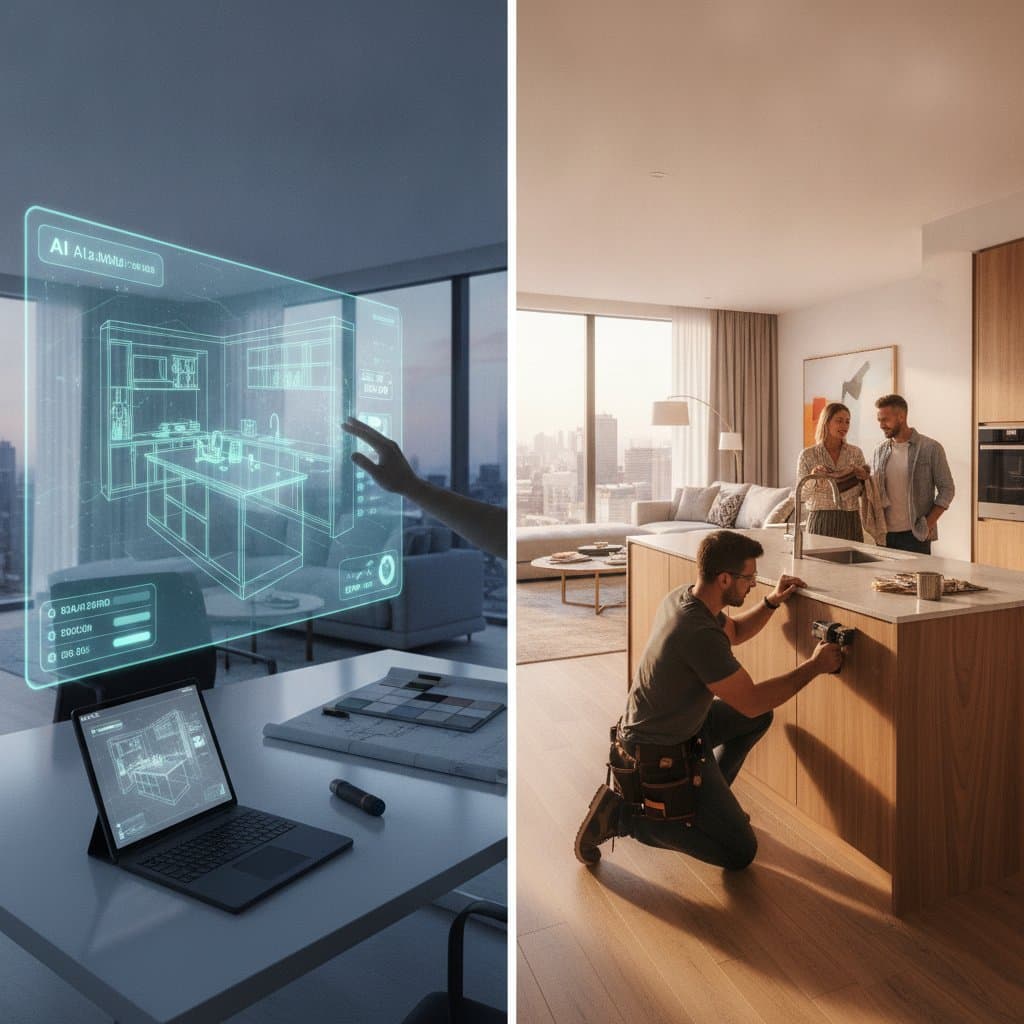
The smartest homeowners are no longer choosing between AI and contractors. They are using both strategically. AI provides the creative playground, while contractors bring the technical expertise to make those ideas real.
How to Build a Hybrid Workflow
-
Use AI for concept development. Start with digital tools to explore layout changes, color combinations, and decor styles. This early stage helps clarify your vision before spending money on professional consultations.
-
Validate plans with a contractor. Once you have a preferred AI design, share it with a contractor. They can identify structural or logistical challenges and recommend adjustments that maintain design intent while ensuring safety.
-
Combine data with experience. Use cost estimates as a baseline. Your contractor can refine them using local pricing, availability, and labor timelines. This creates a more realistic budget that balances aspiration with practicality.
-
Manage construction with human oversight. Even if AI tools help track progress or suggest material substitutions, rely on your contractor for final quality checks. A skilled human eye remains essential to prevent costly mistakes.
Safety and Professional Oversight
No matter how advanced AI becomes, safety should never be automated. Any project involving structural changes, electrical rewiring, or plumbing reroutes requires licensed oversight. Contractors carry insurance that protects both you and their workers. AI platforms do not accept liability for errors or accidents during construction. Always verify credentials, request references, and confirm that your project meets all local code requirements before breaking ground.
Implementing a Combined Strategy
The best remodels today combine digital intelligence with human craftsmanship. AI accelerates planning, visualizes possibilities, and keeps budgets transparent. Contractors bring precision, accountability, and the tactile skills that turn digital renderings into lasting spaces.
If you want to experiment with design ideas without immediate financial commitment, start with AI. Upload room photos, test color palettes, and explore layout changes. When you are ready to move from concept to construction, bring in a contractor who can validate and refine your plan.
This partnership transforms remodeling from a guessing game into a structured process backed by data and real world expertise. You gain the creativity of digital tools, the reassurance of professional oversight, and the satisfaction of seeing your vision come to life exactly as you imagined it.