
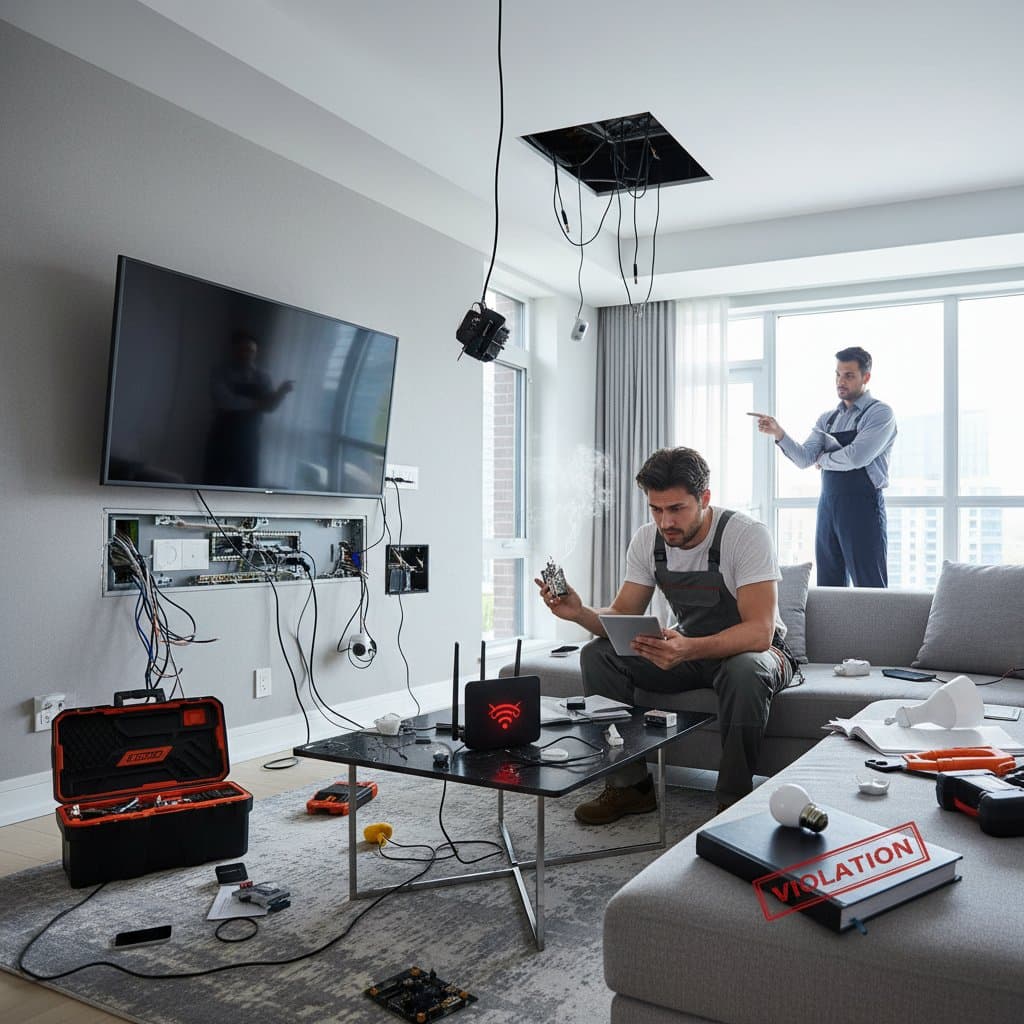
The Costly DIY Mistakes in Smart Home Installs
Homeowners often undertake smart home installations with the expectation of straightforward convenience. However, improper execution can result in significant financial setbacks and safety risks. This guide examines prevalent errors, their consequences, and practical strategies to prevent them, ensuring a secure and efficient smart home setup.
Understanding the Hidden Complexity of Smart Devices
Smart devices appear simple to install, yet they demand precise integration with existing home systems. Compatibility issues arise frequently when combining products from different manufacturers, leading to malfunctioning setups and unnecessary expenses. For instance, pairing a smart thermostat with an outdated heating, ventilation, and air conditioning system requires verifying wiring compatibility to avoid operational failures.
Incompatible components, such as a mismatched doorbell transformer, can damage circuits and necessitate repairs costing several hundred dollars. Manufacturers frequently invalidate warranties for self-installed devices that deviate from specified guidelines. Thorough research into device specifications before purchase prevents these avoidable complications.
Electrical and Wiring Errors: High Risks and High Costs
Electrical missteps rank among the most hazardous aspects of smart home DIY projects. Many older residences lack neutral wires essential for smart switches and thermostats, prompting some to improvise with unsuitable adapters. Such actions may trigger circuit breakers or cause overheating, potentially leading to fires or equipment destruction.
Professional intervention to install a neutral wire or assess circuit suitability typically ranges from 100 to 200 dollars per hour. This expense pales in comparison to the thousands required for rectifying fire damage or replacing affected systems. Before proceeding, evaluate the electrical panel's capacity, as multiple devices contribute to continuous standby power consumption.
Essential Safety Checklist for Wiring Tasks:
- Deactivate power at the breaker box prior to any wire handling.
- Verify the voltage requirements of both the device and the circuit.
- Employ a non-contact voltage tester to confirm the absence of electricity.
- Consult the wiring diagram provided for the exact device model.
- Clearly label all wires before disconnection.
Uncertainty at any stage warrants immediate professional consultation. A brief inspection visit offers substantial protection against severe repercussions.
Network Security Lapses: Protecting Against Digital Threats
Neglecting network security during smart home setup exposes households to cyber vulnerabilities. Default passwords and unupdated firmware create entry points for unauthorized access to cameras, locks, and personal information. The repercussions extend beyond device compromise to include identity theft and substantial financial losses.
Implementing robust security measures requires minimal time but yields enduring benefits. Begin by altering all factory-set credentials upon device activation. Firmware updates patch known exploits, while strong router passwords and WPA3 encryption fortify the overall network.
Key Security Enhancements:
- Update all default usernames and passwords right after setup.
- Activate automatic firmware updates across all connected devices.
- Select a robust, unique password for the router and implement WPA3 protocol.
- Establish a dedicated guest network for visitors and less secure items.
- Deactivate remote access functions that remain unused.
These practices safeguard investments in smart technology and preserve privacy without additional costs.
Managing Power Loads to Prevent Overload Issues
Accumulating smart devices on a single circuit often exceeds its design limits, particularly in homes with aging infrastructure. Standby power from lights, plugs, and chargers accumulates, resulting in frequent breaker trips or accelerated wear on wiring and appliances. Proactive load assessment mitigates these problems effectively.
Calculate the total wattage of devices on each circuit and ensure it stays below 80 percent of the circuit's rated capacity. Redistribution across multiple circuits or breaker upgrades may prove necessary for expansive setups. An electrician can conduct a comprehensive load evaluation for approximately 150 dollars, averting future disruptions and extending system longevity.
Recognizing When Professional Expertise Is Essential
Certain smart home enhancements surpass the scope of typical DIY efforts. Projects involving high-voltage connections, heating system integrations, or comprehensive electrical modifications necessitate licensed professionals. Similarly, setups linked to insurance policies or advanced security systems benefit from expert installation.
Rates for certified smart home specialists generally fall between 75 and 150 dollars per hour. Comprehensive projects spanning multiple areas may total 1,000 to 3,000 dollars, encompassing compliance with building codes, warranty assurances, and reliable performance. Investing in such services eliminates risks and ensures seamless operation.
Strategies for a Successful Smart Home Implementation
Effective planning forms the foundation of any smart home project. Define clear objectives and select devices within a unified ecosystem to minimize integration challenges. Allocate budget for ancillary elements like network enhancements and potential consultations.
Safety remains paramount; adhere strictly to electrical protocols without exception. Treat network security as integral to every installation, securing each device individually. Commence with modest implementations, such as a single room, to gain familiarity before scaling up. Awareness of personal limitations guides decisions toward professional assistance when required, fostering a reliable and enjoyable smart environment.