
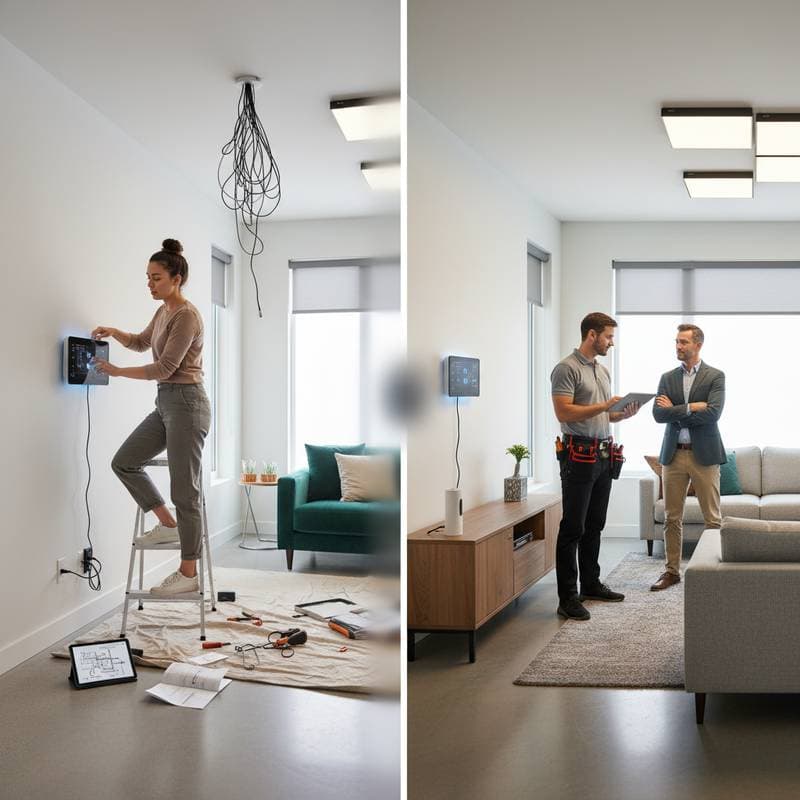
Navigating DIY and Professional Help in Smart Home Upgrades
The appeal of managing lights, thermostats, and security systems via a smartphone application draws many homeowners into smart home enhancements. These upgrades represent a rapidly expanding segment of home improvement, driven by prospects of greater convenience and reduced energy consumption. Individuals who have attempted device installations recognize the challenges, akin to assembling a puzzle lacking essential components. Although initial savings from DIY approaches exist, errors frequently escalate into substantial future expenses. Recognizing the domains where professionals excel enables informed choices about self-managed tasks versus those requiring expert involvement.
Ideal Scenarios for DIY Smart Home Installations
Homeowners can confidently manage modest smart home projects. Devices such as smart speakers, LED bulbs, and Wi-Fi-enabled plugs feature straightforward plug-and-play functionality. Installation typically requires under one hour and involves expenditures ranging from 20 to 100 dollars per unit, with minimal tools like a basic screwdriver.
These entry-level options suit beginners exploring home automation. They provide insight into how platforms like Amazon Alexa or Google Home integrate with existing Wi-Fi networks. Users also develop skills in resolving common connectivity problems, preparing for potential system expansions.
For instance, replacing standard bulbs with smart variants involves simply screwing them into existing fixtures and pairing via a mobile application. Such steps build familiarity without risking structural modifications.
Common Pitfalls in Advanced DIY Efforts
Challenges arise when transitioning to installations involving wiring or multi-system integrations. A smart thermostat installation appears simple initially, but incompatibility with the home's HVAC setup can emerge unexpectedly. Incorrect wiring may harm the furnace control board, necessitating repairs costing 400 to 800 dollars.
Smart security systems and door locks present further risks. Improper encryption configurations invite exploitation by cybercriminals, compromising personal data. Even slight setup errors can disrupt communication between devices and central hubs, resulting in partially operational systems and ongoing troubleshooting demands.
Homeowners often overlook factors like signal interference from household appliances, which exacerbates these issues. Without specialized knowledge, diagnosing such problems proves time-consuming and ineffective.
The Value of Professional Installation Services
Licensed electricians and certified automation specialists offer practical experience with intricate electrical frameworks that online videos cannot replicate. They evaluate existing wiring, detect compatibility concerns in advance, and verify adherence to local building codes. Hourly rates for such services range from 75 to 150 dollars, yet the investment averts damages, warranty invalidations, and potential hazards.
Experts utilize advanced diagnostic equipment to pinpoint issues like circuit overloads, Wi-Fi dead zones, or electromagnetic interference. Addressing these proactively prevents cascading failures across the network. For example, a professional might recommend mesh network extenders to ensure reliable coverage in larger homes.
In complex setups, such as integrating smart lighting with whole-home audio systems, professionals ensure seamless interoperability. This level of precision minimizes downtime and maximizes device longevity.
Strategies for Balancing Expenses, Autonomy, and Functionality
Approach smart home development as a modular construction, handling perimeter elements independently while seeking assistance for core integrations. A combined strategy proves effective: manage plug-in devices personally, then engage experts for wired installations or synchronized ecosystems.
Budget-conscious individuals benefit from incremental implementation. Begin with lighting and outlet controls, accumulating savings before advancing to thermostats, cameras, or locks. This method allows testing compatibility gradually, reducing overall risk.
Consider total ownership costs, including potential energy savings from optimized devices. Professionals can perform energy audits during installation, identifying opportunities for efficiency gains that offset service fees.
Prioritizing Electrical Safety in Every Project
Electrical precautions demand constant attention. Deactivate power at the main breaker before any wiring contact, and employ a voltage tester to verify circuit deactivation. Uncertainty warrants immediate professional consultation; many electricians provide preliminary assessments to review plans and evaluate wiring capacity.
Adhering to safety protocols prevents shocks, fires, or equipment failures. For homes with outdated electrical panels, professionals may advise upgrades to support increased smart device loads, ensuring long-term reliability.
Essential Tips for Effective Smart Home Implementation
-
Develop a comprehensive blueprint. Identify target rooms for automation and select compatible devices within a unified ecosystem.
-
Label wires meticulously. Apply adhesive tape to mark connections during removal of switches or outlets, facilitating accurate reassembly.
-
Record installations thoroughly. Capture photographs of wiring configurations and device positions to streamline future maintenance.
-
Verify functionality incrementally. Activate and test each component before proceeding, isolating issues early to maintain project momentum.
-
Research device certifications. Opt for products meeting standards like UL or Zigbee for enhanced interoperability and security.
Optimizing and Maintaining Your Smart Home System
With installations complete, the advantages become evident: automated lighting upon arrival, precise climate control, and robust security measures enhance daily life. Regular upkeep sustains these benefits. Update device firmware promptly to patch vulnerabilities, inspect connections monthly, and adjust routines to align with changing family dynamics.
Over time, monitor performance metrics through companion applications, such as energy usage reports. This ongoing evaluation allows refinements, ensuring the system evolves with household needs and delivers sustained value.