
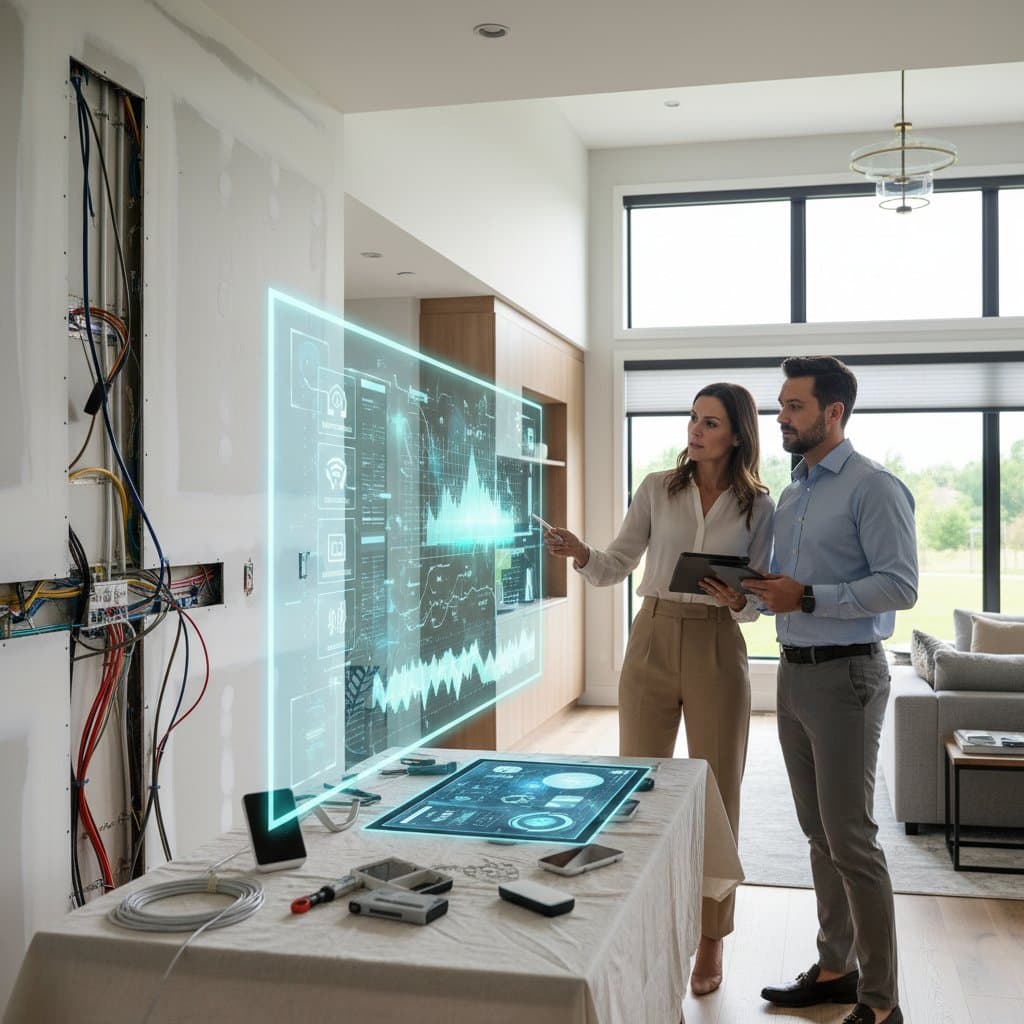
Understanding Smart Home Remodeling Costs in 2026
Smart home remodeling transforms ordinary residences into efficient, connected spaces. In 2026, advancements in automation and connectivity drive demand, but costs require careful planning. This guide breaks down expenses across key categories to help homeowners budget effectively.
Initial investments often surprise newcomers to smart tech. Devices alone represent only a portion of the total outlay. Infrastructure upgrades and professional services form the foundation for reliable performance.
Core Cost Components
Devices and Hardware
The visible elements of a smart home include hubs, sensors, thermostats, and locks. Entry-level setups start at $500 for basic voice assistants and smart bulbs. Mid-range systems with cameras and doorbells reach $2,000 to $5,000, depending on brand and features.
High-end options, such as integrated entertainment systems or advanced robotics, exceed $10,000. Factor in compatibility; mismatched devices increase long-term expenses through replacements. Select scalable platforms like those from established manufacturers to avoid obsolescence.
Infrastructure Upgrades
Reliable connectivity underpins every smart feature. Upgrading to mesh Wi-Fi networks costs $200 to $800, covering multiple nodes for whole-home coverage. Ethernet backbones for critical devices add $500 to $1,500 in cabling and switches.
Electrical enhancements, including smart panels or dedicated circuits, range from $1,000 to $3,000. These ensure stable power for high-demand appliances. Without such foundations, systems falter during peak usage, leading to frustration and additional repairs.
Integration and Installation
Seamless operation demands expert integration. Professional services for wiring, app configuration, and device pairing cost $1,500 to $4,000 for a standard three-bedroom home. DIY approaches save money but risk errors that compromise functionality.
Custom programming for routines, like automated lighting sequences, adds $500 to $2,000. In 2026, AI-driven calibration tools reduce some labor, yet complex setups still benefit from certified technicians. Integration costs prove less visible but remain critical for user experience. Without proper setup, homeowners manage multiple incompatible apps.
Safety, Security, and Legal Considerations
Smart infrastructure extends beyond convenience to encompass safety and compliance. Electrical standards, privacy protections, and regulatory requirements guide remodel decisions.
Electrical and Building Codes
Modifications to wiring or new circuit additions must adhere to local electrical codes. Low-voltage components, such as sensors and hubs, often necessitate inspections during structural changes. Verify permit requirements for significant rewiring or panel upgrades. Engage licensed electricians to maintain compliance and preserve insurance validity.
Inspections prevent hazards like overloads in aging homes. Updated codes in 2026 emphasize energy-efficient wiring, potentially qualifying for rebates. Professional oversight minimizes downtime and ensures systems operate as intended.
Cybersecurity and Data Privacy
Connected devices link personal information to external networks. Features like cameras, locks, and assistants introduce risks if unsecured. Implement these measures to strengthen defenses:
- Replace default passwords upon installation.
- Enable two-factor authentication across accounts.
- Update firmware on routers and devices promptly.
- Refrain from using public Wi-Fi for remote access.
Specialized installers configure isolated networks, separating smart elements from personal devices. This segmentation limits breach impacts. Regular audits reveal vulnerabilities before they escalate.
Insurance Implications
Automation influences policy premiums. Insurers provide reductions for verified security monitoring or sensor-based leak detection. Professional installation documentation supports these claims.
Contact providers to confirm eligibility for discounts, which can offset 5 to 15 percent of annual costs. Unsecured systems may raise rates due to heightened risk. Maintain records to streamline verification processes.
Long-Term Value and Resale Considerations
Technology enhances marketability, yet strategic choices determine lasting benefits. Focus on upgrades that deliver reliability and ease.
What Adds Value
Security suites boost safety perceptions and exterior appeal. Automated lighting and climate systems attract eco-aware purchasers. Modern appliances convey contemporary sophistication without excess intricacy.
Properties featuring cohesive automation command 3 to 5 percent premiums over similar non-equipped homes in urban areas. Prioritize features that streamline routines and cut operational costs. Such investments yield returns through reduced utility bills and appeal to tech-savvy demographics.
What Does Not Always Pay Off
Excessive personalization deters buyers. Proprietary systems with niche apps or demanding upkeep alienate prospects. Opt for universal brands and intuitive interfaces in resale-focused projects.
Niche gadgets, like specialized pet feeders, rarely recoup costs. Balance innovation with broad compatibility to maximize appeal. Simplicity ensures the home feels welcoming rather than intimidating.
Pro Tips for Success
Effective remodels emphasize adaptability, protection, and manageability. Apply these strategies to optimize outcomes.
-
Conduct connectivity assessments early. Identify signal weak spots to inform device placement.
-
Limit brand diversity. Uniform ecosystems enhance stability and troubleshooting.
-
Document circuits and cabling clearly. This facilitates future adjustments or repairs.
-
Schedule expert reviews. Initial consultations validate DIY efforts for safety and efficiency.
-
Perform routine firmware checks. Neglect here accounts for most failures and exposures.
-
Budget 20 percent extra for unforeseen integrations. Scalability prevents costly overhauls.
Maintaining Your Investment
Preserve documentation of setups, receipts, and guarantees. These records validate adherence to standards and support claims during sales or incidents.
Ongoing care sustains performance and security. Annual professional inspections, costing $200 to $500, detect issues proactively. The true expense of smart remodeling lies in creating a responsive, secure haven that enriches daily life and secures future gains.