
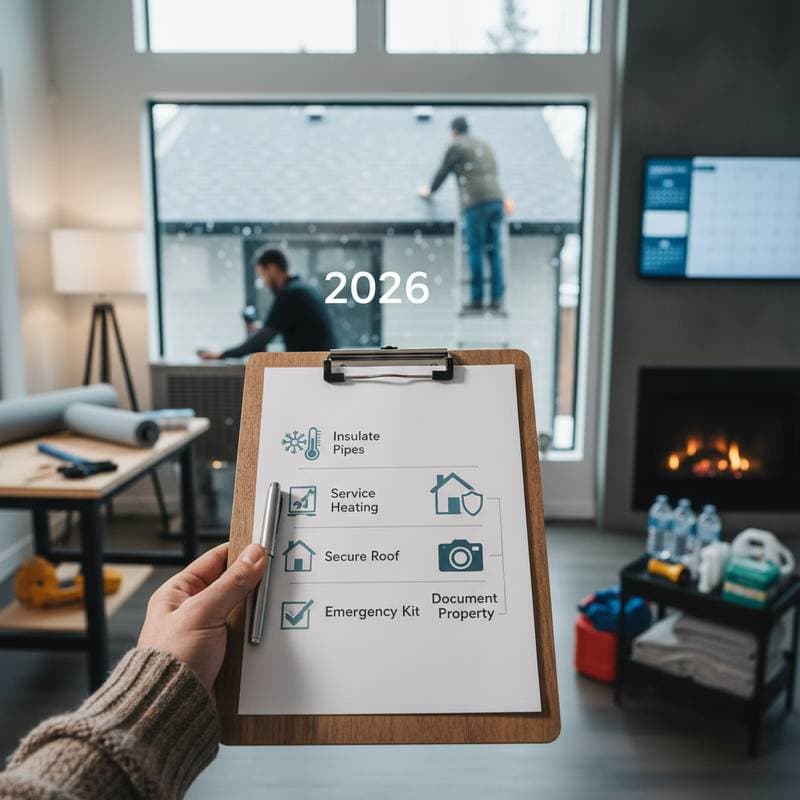
Winter Storm Checklist to Safeguard Your Home
Preparation provides the key to protecting your home from winter storms. Freezing temperatures combined with heavy snow and ice can cause significant damage if systems remain unprepared. Most issues prove preventable through targeted actions. This guide outlines practical steps that address structural integrity, heating reliability, and insurance readiness while respecting budget constraints.
Strengthen Your Home’s Structure
The exterior elements of your home endure the most severe winter conditions. Begin with a thorough inspection to identify vulnerabilities early. These measures help maintain stability and reduce the risk of water intrusion or structural failure.
-
Roof Inspection
Examine the roof for missing shingles, damaged flashing, or areas showing signs of sagging. Ice accumulation exacerbates existing weaknesses, potentially leading to leaks or collapses. Hire a professional roofer for an inspection, which typically costs $150 to $400; this investment often prevents repairs that exceed several thousand dollars. -
Gutter Maintenance
Remove accumulated leaves, debris, and any buildup to ensure proper drainage of melting snow. Blocked gutters lead to ice dams, which force water beneath shingles and into the home. Professional cleaning services charge under $200 for average homes, or perform the task yourself using a sturdy ladder, gloves, and a scoop tool. -
Foundation Seal Check
Inspect the perimeter of your foundation for visible cracks, gaps, or separations. Apply weatherproof caulk or expandable foam sealant to close these openings. Such seals retain interior warmth and block moisture that could freeze and widen fissures over time. -
Outdoor Structures
Anchor or store items such as sheds, patio furniture, and grills to withstand high winds. Loose objects become hazards during gusts, capable of damaging windows or siding. Relocate lightweight pieces indoors or secure them with robust straps and weights.
Maintain Heat and Power Systems
Reliable heating forms the foundation of winter comfort and safety. Regular maintenance ensures systems operate efficiently and reduces the chance of failures during extreme cold.
-
Furnace and Boiler Service
Arrange for a professional technician to perform a tune-up prior to the onset of cold weather. Fees range from $100 to $250 based on the system. This service verifies proper combustion, replaces dirty filters, and optimizes performance to avoid breakdowns. -
Chimney and Fireplace Prep
Schedule a cleaning to remove creosote deposits and inspect the damper mechanism. Chimney sweeps charge approximately $150 for this work. Clear pathways prevent dangerous backdrafts, smoke infiltration, or chimney fires. -
Test Backup Power Sources
Operate portable generators in open outdoor areas, distant from windows and ventilation intakes. Store reserve fuel in approved containers away from living spaces. For whole-house units, engage a specialist for annual servicing to guarantee operation of essentials like heating and refrigeration during outages. -
Inspect Carbon Monoxide Detectors
Install fresh batteries and test each device for functionality. Increased reliance on heating appliances heightens the risk of carbon monoxide buildup if vents become obstructed.
Insurance and Documentation
Solid records strengthen your position in the event of storm-related claims. Proactive documentation demonstrates due diligence and supports reimbursement requests.
-
Photograph Key Areas
Capture high-resolution images of the roof, exterior siding, basement, and major interior spaces. Include timestamps and notes on any pre-existing conditions. -
Keep Receipts
Retain invoices for all preventive maintenance and upgrades. Many insurers offer partial coverage for such expenses when they mitigate potential storm damage. -
Review Coverage
Examine your policy for limitations related to ice, wind, flooding, or power interruptions. Consider adding endorsements to address any identified shortcomings.
Pro Tips for Effective Preparation
-
Plan Early: Stock up on supplies like salt for walkways, insulation materials for pipes, and fuel for generators before demand surges in stores.
-
Label Valves and Breakers: Mark shut-off valves and electrical panels clearly to facilitate quick responses during emergencies.
-
Use Smart Thermostats: Install programmable devices to regulate temperatures efficiently and avoid unnecessary energy consumption.
-
Check Neighbors: Extend assistance to elderly or mobility-challenged individuals nearby by incorporating their needs into your preparation routine.
Post-Storm Inspection and Recovery
After a storm subsides, conduct a systematic review of your property. Assess gutters for lingering ice, examine attic insulation for signs of dampness, and verify sump pump functionality. Address any moisture promptly to avert mold growth. Replenish emergency kits and revisit this checklist annually to sustain readiness.
Winter storms present challenges, yet consistent preparation equips you to manage them effectively. These steps preserve your home's integrity, promote safety, and deliver lasting security against seasonal threats.