
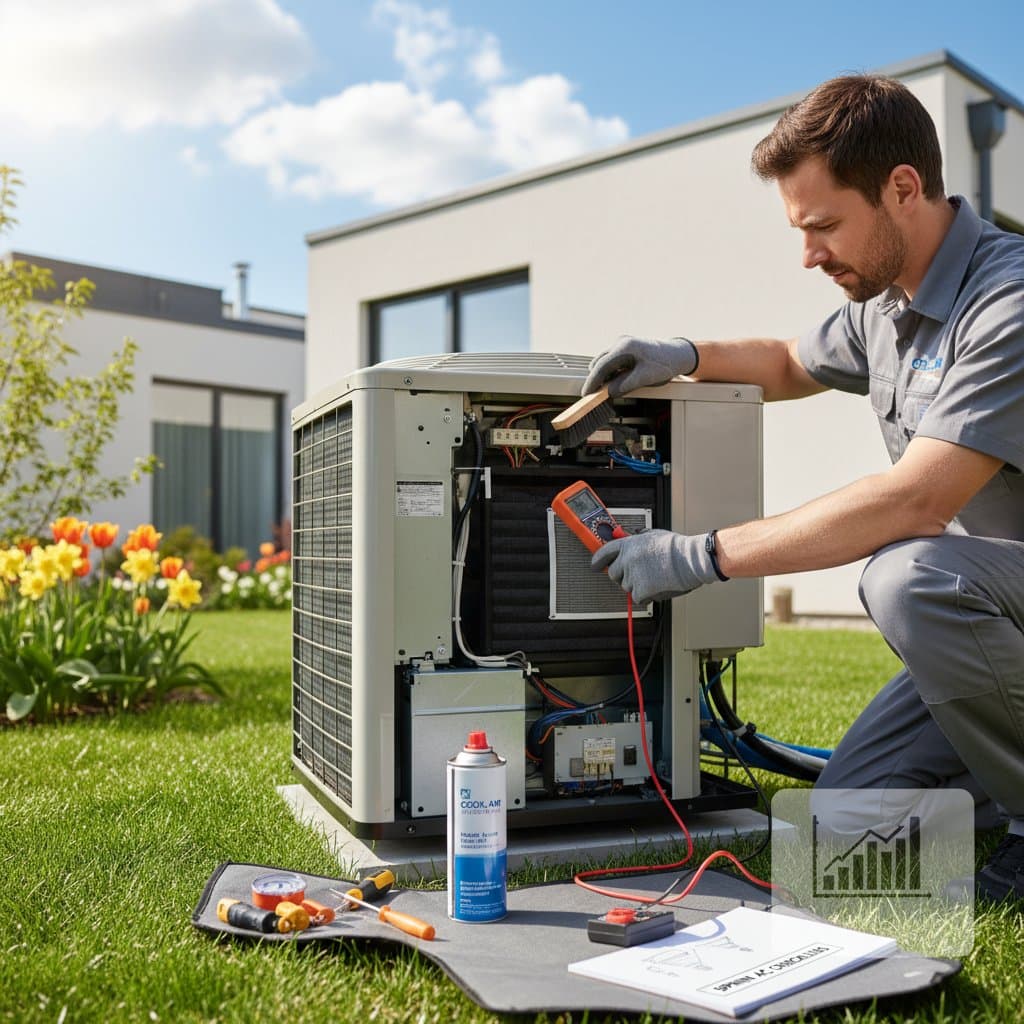
The Essential Spring Tune-Up to Avoid Costly AC Repairs
As spring warmth arrives, homeowners often test their air conditioning systems for the season. The steady operation of the unit signals reliable comfort ahead. However, silence, odd noises, or ineffective cooling frequently result from neglected maintenance. A comprehensive spring tune-up addresses these risks proactively.
This service goes beyond routine tasks. It optimizes performance, prolongs system longevity, and prevents disruptions during the hottest months. Technicians complete the work in a few hours, delivering benefits that endure through summer.
Key Components of a Spring AC Tune-Up
Homeowners can perform basic upkeep, yet a thorough evaluation demands expert involvement. The following outlines standard procedures in a full service.
1. Replace or Clean Air Filters
Dirty filters restrict airflow and increase energy use. They rank as the primary reason for reduced efficiency. Standard fiberglass options cost about ten dollars, whereas pleated high-efficiency filters range up to thirty dollars. Swap or clean them every one to three months in cooling periods. Such maintenance enhances indoor air quality and eases the load on the system.
2. Clean Condenser Coils
The exterior unit's coils dissipate heat from indoors. Debris like dirt or pollen forces the system to operate longer for adequate cooling. Disconnect power before clearing vegetation and rinsing coils with a low-pressure hose. High force risks damaging fins. Professionals charge eighty to one hundred fifty dollars for intensive cleaning, which typically recoups costs via reduced utility bills.
3. Inspect the Condensate Drain Line
This line expels condensation produced during operation. Obstructions lead to indoor leaks or automatic shutdowns. Flush the line with a cup of white vinegar to inhibit algae. Persistent water accumulation or damp smells warrant a specialist to unclog it completely.
4. Verify Refrigerant Levels
Insufficient refrigerant signals leaks or incorrect charging. It diminishes cooling power and threatens the compressor. Experts gauge pressures and add refrigerant as required. Costs vary from one hundred fifty to four hundred dollars based on refrigerant type. Early detection averts compressor failures that exceed one thousand dollars.
5. Examine Electrical Components and Thermostat
Faulty wiring or capacitors provoke unreliable starts. Technicians secure connections, check relays, and measure voltages for safe function. They also adjust thermostats for precise readings. Outdated models benefit from replacement with programmable or smart versions that conserve energy.
6. Lubricate Moving Parts
Fans and motors require oil to minimize friction. Neglect accelerates wear and overheating. Regular lubrication doubles the service life of these components.
Prioritizing Safety and Expert Guidance
Basic cleaning suits many homeowners, but refrigerant management and electrical diagnostics demand certification. Professionals adhere to regulations and employ precise tools. DIY attempts on advanced tasks may invalidate warranties or pose dangers.
For aging units with frequent issues, request a full assessment. Newer high-efficiency models often yield greater savings than ongoing fixes for obsolete equipment.
Resolving Early-Season Challenges
Preventive steps minimize problems, though initial activations may reveal concerns.
- Reduced airflow: Inspect filters and vents for blockages.
- Ineffective cooling: Confirm outdoor unit activity and thermostat settings.
- Strange sounds: Investigate for unsecured elements or wiring faults.
- Short cycles: Suspect low refrigerant or sensor malfunctions.
Prompt action on these signs limits escalation and preserves efficiency.
Steps to Sustain Optimal AC Performance
Clear vegetation from the outdoor unit's vicinity regularly.
Replace filters consistently during peak usage months.
Arrange annual spring inspections with qualified technicians.
Monitor utility statements to detect efficiency drops swiftly.
These practices protect your investment and ensure consistent comfort.