
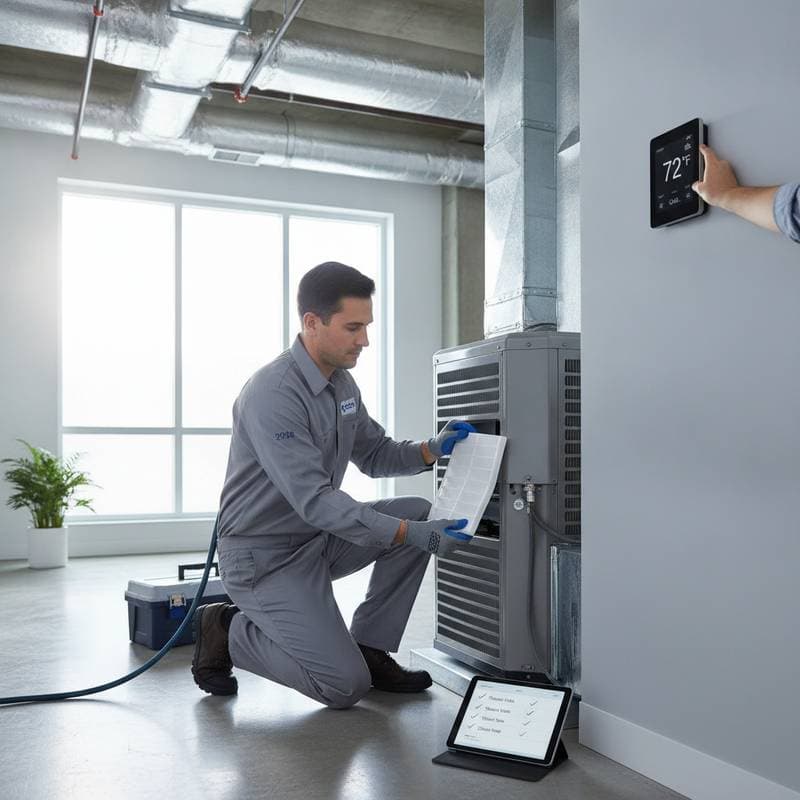
Spring HVAC Checks That Prevent Costly System Failures
If you have ever switched your thermostat to cool on the first warm day only to hear silence or feel warm air, you understand the frustration that follows. HVAC repairs often prove expensive. Peak season wait times add further stress. A few targeted spring maintenance steps can maintain smooth operation, lower energy costs, and prolong equipment life. This checklist helps you identify minor problems before they become major expenses.
Why Spring Maintenance Matters
Spring falls between peak heating and cooling periods. The system experiences less demand, which creates an opportunity for inspection and cleaning. Scheduling service proves easier during this window. Replacement parts remain available without the pressure of extreme weather. Consistent spring care also improves indoor air quality and operating efficiency.
Professional spring inspections typically range from 75 to 200 dollars. Basic DIY tasks require less than 50 dollars in materials. These investments help avoid repairs that start at 500 dollars for compressor work and exceed 5000 dollars for full system replacement.
Clean the Outdoor Condenser Unit
The outdoor condenser releases heat from the home. Winter debris often blocks airflow through the fins. Spring cleaning restores efficient performance ahead of summer demand.
- Disconnect power to the unit.
- Clear leaves, twigs, and clippings from the base.
- Rinse fins gently with a garden hose.
- Straighten bent fins with a fin comb.
- Maintain two feet of clearance around the unit.
Basic cleaning takes thirty minutes or less and costs little when you already own a hose. Avoid pressure washers and strong chemicals that can damage the fins.
Verify Thermostat Operation
An inaccurate thermostat forces the HVAC system to work harder than necessary. Simple tests confirm proper function before summer begins.
- Lower the setting several degrees and confirm the system responds.
- Install fresh batteries in battery powered models.
- Evaluate a smart thermostat upgrade for automated scheduling.
Battery replacement costs nothing. A new smart model ranges from 100 to 250 dollars and can cut annual energy use by up to ten percent.
Inspect Electrical Connections and Safety Controls
Loose wiring creates risks of shorts, tripped breakers, and fire hazards. Spring provides the right moment to secure connections before continuous operation.
- Shut off power at the source.
- Examine visible wires for damage or corrosion.
- Tighten accessible terminal screws.
- Arrange professional voltage and safety switch testing.
Homeowners uncomfortable with electrical work should hire a licensed technician. Professional electrical checks cost 100 to 150 dollars.
Examine Belts and Blower Components
Worn belts on belt driven blowers can cause sudden shutdowns. Dust buildup on the blower wheel reduces airflow and increases noise.
- Measure belt tension and inspect for cracks.
- Replace damaged belts at once.
- Remove debris from the blower wheel.
Replacement belts cost 10 to 25 dollars. The task requires about thirty minutes and results in quieter, more consistent airflow.
Perform a Complete System Test
After cleaning and inspection, restore power and run a full cycle. This step confirms that all components function together correctly.
- Listen for rattling, grinding, or other unusual sounds.
- Confirm even airflow from every vent.
- Verify that the outdoor fan and compressor cycle properly.
- Monitor temperature changes for accurate control.
Short cycling or uneven temperatures signal the need for professional service. Early attention prevents small faults from affecting the entire system.
Additional Steps That Protect Performance
Routine maintenance also supports safety and reduces utility expenses. Clean systems lower the chance of carbon monoxide leaks and allergen circulation. Well maintained equipment can operate up to twenty five percent more efficiently. Lower fuel consumption reduces both costs and environmental impact.
Track all service dates in a maintenance log. Add insulation and weatherstripping to reduce system workload. Install surge protection to guard circuit boards. Use ceiling fans set counterclockwise during warm months to improve air distribution. Book professional visits early to avoid peak season delays.
Protect Long Term Comfort and Budget
Completing these spring tasks prepares the home for warmer weather while safeguarding equipment value. Consistent attention produces fewer emergency repairs and steadier monthly bills. Homeowners who perform the work themselves or hire professionals both benefit from regular care. When the first warm days arrive, the system responds reliably and keeps indoor conditions comfortable without unexpected expenses.