
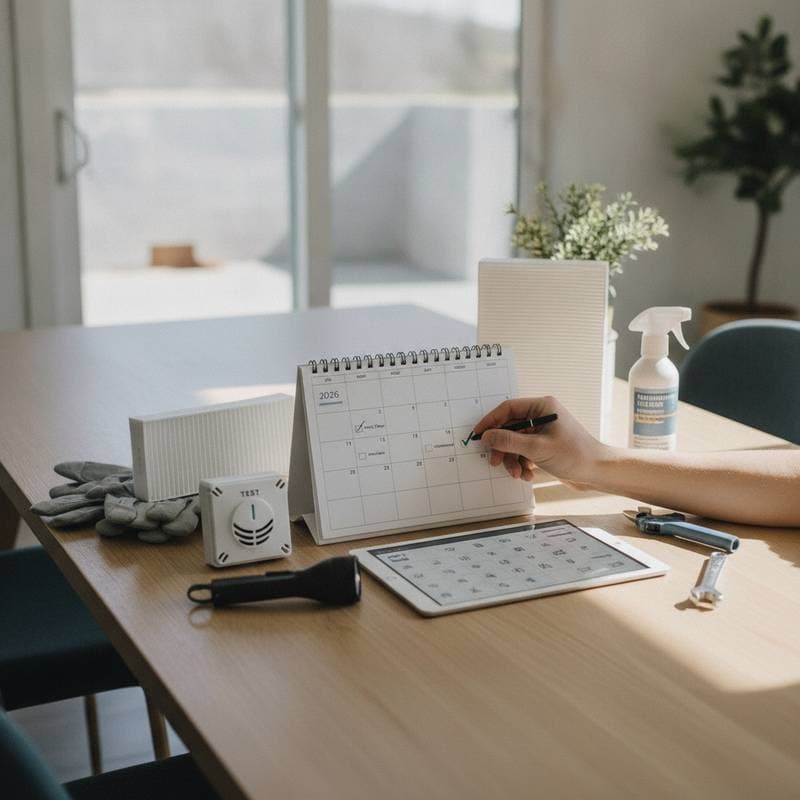
12 Monthly Checks to Keep Your Home Running Smoothly
Consistency protects your home investment. A reliable monthly maintenance routine prevents small issues from escalating into major repairs and keeps systems operating at peak performance. Performing these checks before problems arise saves money on emergency services and replacements.
The following guide details twelve essential monthly tasks. Each one addresses wear, inefficiency, and safety concerns.
1. Inspect and Replace HVAC Filters
Your heating and cooling system consumes significant energy. Dirty filters reduce airflow, lower efficiency, and shorten equipment life. Monthly inspection protects this major investment.
What to Do
- Remove the filter and hold it to the light. Replace it when light no longer passes through.
- Select a filter with the MERV rating specified by your system.
- Note the airflow direction arrow before installing the new filter.
Cost and Time Estimate
Standard filters range from ten to twenty five dollars. Replacement requires five minutes.
Warning Sign
Uneven airflow or extended run times indicate a clogged filter. Continued use risks blower motor failure.
2. Test Smoke and Carbon Monoxide Detectors
These devices provide the first warning during emergencies. Monthly testing confirms readiness.
What to Do
- Press the test button on each unit until the alarm sounds.
- Replace weak batteries immediately.
- Remove dust with a soft brush attachment.
Cost and Time Estimate
Batteries cost about two dollars each. Whole house testing takes under ten minutes.
Safety Tip
Follow manufacturer instructions for detectors tied to security systems to avoid false alarms.
3. Check Plumbing Fixtures for Leaks
Small drips waste water and promote hidden mold. Routine inspection prevents water damage.
What to Do
- Examine areas under sinks, around toilets, and behind appliances for moisture or stains.
- Run faucets and watch for drips after closing.
- Check toilet bases for dampness or loose bolts.
Cost and Time Estimate
Minor repairs use a five dollar washer or fifteen dollar supply line. The inspection takes fifteen minutes.
Warning Sign
A faint hissing sound near a quiet toilet points to an internal leak in the flapper or fill valve.
4. Clean Kitchen and Bathroom Exhaust Vents
Blocked vents reduce air quality and strain fans. Regular cleaning maintains proper function.
What to Do
- Remove covers and wash them in warm soapy water.
- Vacuum the fan housing and duct opening.
- Wipe adjacent surfaces to clear grease and dust.
Cost and Time Estimate
The task requires twenty minutes and no materials.
Red Flag
Persistent condensation on mirrors after showers signals poor fan performance or duct blockage.
5. Examine Windows and Doors for Drafts
Air leaks increase energy costs. Monthly checks help control utility expenses.
What to Do
- Close all openings and feel for air movement along edges.
- Inspect weatherstripping for damage.
- Apply caulk at frame to siding joints where gaps appear.
Cost and Time Estimate
Weatherstripping costs ten dollars per roll. Installation takes thirty minutes.
Expert Insight
Condensation between double pane glass means the seal has failed. Replacement inserts restore insulation.
6. Flush Sink and Shower Drains
Slow drains indicate buildup that can lead to clogs. Monthly treatment maintains flow.
What to Do
- Pour half a cup of baking soda then one cup of vinegar into each drain.
- Wait ten minutes, then flush with hot water.
- Use a drain snake for persistent slow drainage.
Cost and Time Estimate
Baking soda and vinegar cost under five dollars and last months. Each drain takes ten minutes.
Red Flag
Simultaneous slow drainage at multiple fixtures suggests a main sewer line obstruction.
7. Inspect Exterior Foundation and Grading
Foundation issues affect the entire structure. A monthly walk around catches problems early.
What to Do
- Check walls for new or widening cracks.
- Confirm soil slopes away from the house for at least five feet.
- Clear debris from downspouts and verify extensions direct water outward.
Cost and Time Estimate
Small crack repair kits cost under twenty dollars. Inspection takes twenty minutes.
Expert Advice
Basement moisture after rain calls for extended downspouts or regrading. Persistent issues require professional evaluation.
8. Test GFCI and AFCI Outlets
These outlets guard against electrical hazards. Monthly testing ensures protection.
What to Do
- Press the test button. The reset button should pop out.
- Press reset to restore power. Replace any unit that fails.
- Confirm GFCI outlets serve bathrooms, kitchens, garages, and outdoor areas.
Cost and Time Estimate
Each test takes under one minute. Replacement outlets cost about fifteen dollars.
Warning Sign
Repeated tripping indicates a short in the connected appliance. Inspect cords before reuse.
9. Check and Clean Refrigerator Coils
Dust on coils forces the compressor to work harder. Cleaning improves efficiency and extends life.
What to Do
- Unplug the unit and locate coils at the back or bottom.
- Vacuum or brush away dust with a coil tool.
- Wipe nearby surfaces before restoring power.
Cost and Time Estimate
A coil brush costs eight dollars. Cleaning takes fifteen minutes.
Expert Tip
Continuous running or warm sides signal overdue cleaning. Regular attention can cut energy use by ten percent.
10. Examine Roof, Gutters, and Downspouts
Ground level inspection with binoculars reveals early roof concerns. Prompt action prevents interior leaks.
What to Do
- Scan for missing shingles, sagging gutters, or debris.
- Clean gutters when water pools.
- Secure loose brackets and confirm free flow.
Cost and Time Estimate
Professional cleaning ranges from one hundred to two hundred dollars. DIY work requires only time and basic tools.
Red Flag
Dark streaks on siding near gutters indicate overflow. Adjust slope and clear blockages at once.
11. Inspect Fire Extinguishers and Safety Equipment
Safety gear must remain ready. Monthly verification prepares you for emergencies.
What to Do
- Confirm pressure gauges read in the green zone.
- Shake dry chemical units gently to prevent settling.
- Verify flashlights and first aid kits remain stocked and accessible.
Cost and Time Estimate
Replacement units cost about forty dollars. Inspection takes ten minutes.
Professional Insight
Check printed expiration dates. Dispose of expired units according to local hazardous waste rules.
12. Review Your Home Systems and Utility Usage
Monthly review connects all other tasks. It highlights inefficiencies before they grow.
What to Do
- Compare current utility bills with prior months for unusual spikes.
- Listen for odd noises from appliances and systems.
- Operate water heaters, sump pumps, and garage doors to confirm smooth function.
Cost and Time Estimate
The review takes thirty minutes and may uncover savings of hundreds of dollars.
Expert Insight
Sudden energy increases without habit changes point to insulation or duct issues. A professional audit can identify hidden problems.
Organizing Your Monthly Routine
These tasks become habitual with simple planning. The following approaches maintain consistency.
Create a Simple Tracking System
Record each check on a calendar or app. Note findings for future reference during home sales or insurance claims.
Group Tasks by Location
Combine related items in one area. Complete plumbing, outlet, and vent checks during a single bathroom visit.
Keep Basic Supplies Handy
Store filters, batteries, and tools in one labeled container. Easy access removes delays.
Know When to Call a Professional
Electrical problems, gas odors, or structural concerns require licensed help. Attempting complex repairs may void warranties.
Seasonal Adjustments
Increase attention to seals, irrigation, and heating components during weather transitions.
Protecting Long Term Value
Regular checks preserve home value and reduce unexpected costs. A documented maintenance history supports higher resale prices and fewer insurance claims.
Owners who adopt this routine experience fewer breakdowns and lower energy bills. The approach becomes a reliable financial practice when treated like other recurring household responsibilities.
Expanding Your Maintenance Knowledge
After mastering these checks, explore seasonal projects such as winterizing pipes or improving insulation. Each added skill strengthens property protection.
Awareness and steady action suffice. No professional contractor license is required. Begin this month with a scheduled reminder and enjoy improved reliability.