
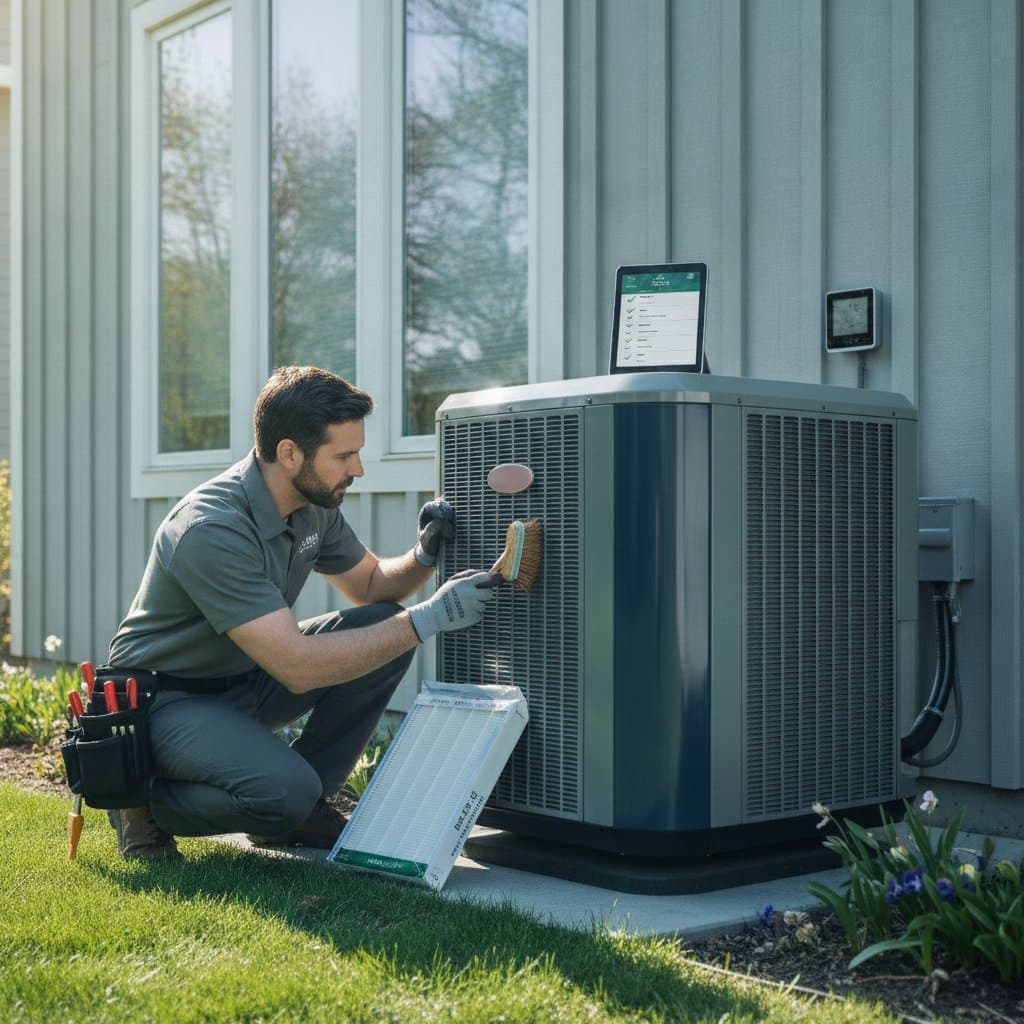
Spring HVAC Maintenance Checklist
- Replace indoor air filters with MERV 8 to 11 rated options.
- Clear debris from the outdoor condenser and trim surrounding vegetation.
- Test the thermostat in cooling mode and verify steady airflow.
- Inspect ductwork for leaks and vacuum all supply and return vents.
- Review visible wiring and safety switches for wear or damage.
- Examine insulation on refrigerant lines and clean the condensate drain.
- Schedule a professional tune up before peak season begins.
Replace Indoor Air Filters
Dirty filters restrict airflow and force the system to work harder. Select a filter rated between MERV 8 and 11 to capture particles without limiting performance. Homes with pets or allergy sufferers benefit from changes every one to two months during summer. Fresh filters also support better indoor air quality.
Clear Debris from Outdoor Units
Leaves, twigs, and dirt accumulate around the condenser during winter and block airflow. Turn off power at the disconnect box first. Remove debris from the base and cut back plants to maintain at least two feet of clearance. Rinse fins gently with a hose and straighten any bent sections using a fin comb. Pressure washers can damage the fins, so avoid them. Clear space also reduces the chance of pests nesting inside the unit.
Verify Thermostat Operation
Confirm the thermostat switches to cooling mode without delay. Lower the set point a few degrees below room temperature and listen for consistent fan and compressor activity. Older models may benefit from replacement. Smart thermostats priced between 100 and 300 dollars adjust temperatures automatically during absences and provide usage reports that help track efficiency gains.
Examine Ductwork and Vents
Leaks in ductwork can waste up to 30 percent of cooling capacity. Use a flashlight to spot dust trails or loose joints along accessible runs. Seal minor gaps with aluminum foil tape. Schedule a professional duct test if larger issues appear. Vacuum vents to remove dust accumulation and keep furniture or drapes from blocking airflow.
Review Electrical Components
Safety remains the priority during any inspection. Check visible wiring for corrosion, looseness, or fraying. Confirm that the circuit breaker and disconnect switch operate correctly. Any signs of burning odors or damaged wires require immediate attention from a licensed technician. Routine checks prevent small faults from escalating into expensive repairs.
Inspect Refrigerant Lines
Look along the lines that connect the outdoor unit to the indoor coil. Confirm that insulation remains intact to limit energy loss. Ice formation, oil stains, or hissing noises point to possible leaks that demand professional service. Only certified technicians may handle refrigerant.
Clean Condensate Drain Lines
Moisture removed from indoor air flows through a small drain line that can become blocked by algae or mold. Pour one cup of white vinegar or an approved HVAC cleaner into the line near the indoor unit to dissolve buildup. Standing water in the drain pan signals a partial blockage that needs further attention.
Arrange Professional Service
A technician measures refrigerant charge, tests electrical loads, inspects moving parts, and calibrates controls with greater precision than most homeowners achieve. A standard visit lasts about one hour and costs between 100 and 250 dollars. Seasonal maintenance agreements often cover both spring and fall visits at a reduced rate and provide priority scheduling during emergencies.
Evaluate System Replacement Options
Uneven cooling, unusual noises, or rising energy bills may indicate the equipment has reached the end of its service life. Newer systems deliver up to 40 percent better efficiency and include advanced controls. Request an energy audit first to determine whether added insulation, sealed ducts, or zoned cooling could resolve comfort issues at lower cost.
Follow Safety Practices
Disconnect power before any cleaning or inspection. Wear gloves and eye protection when handling debris or cleaning solutions. Never attempt work on refrigerant circuits or electrical panels. Keep children and pets away from the outdoor unit throughout the process.
Track Ongoing Performance
Record filter changes and service dates to support warranty claims. Note any new sounds or airflow changes during the first warm days. Consistent attention extends equipment life and maintains steady comfort.