
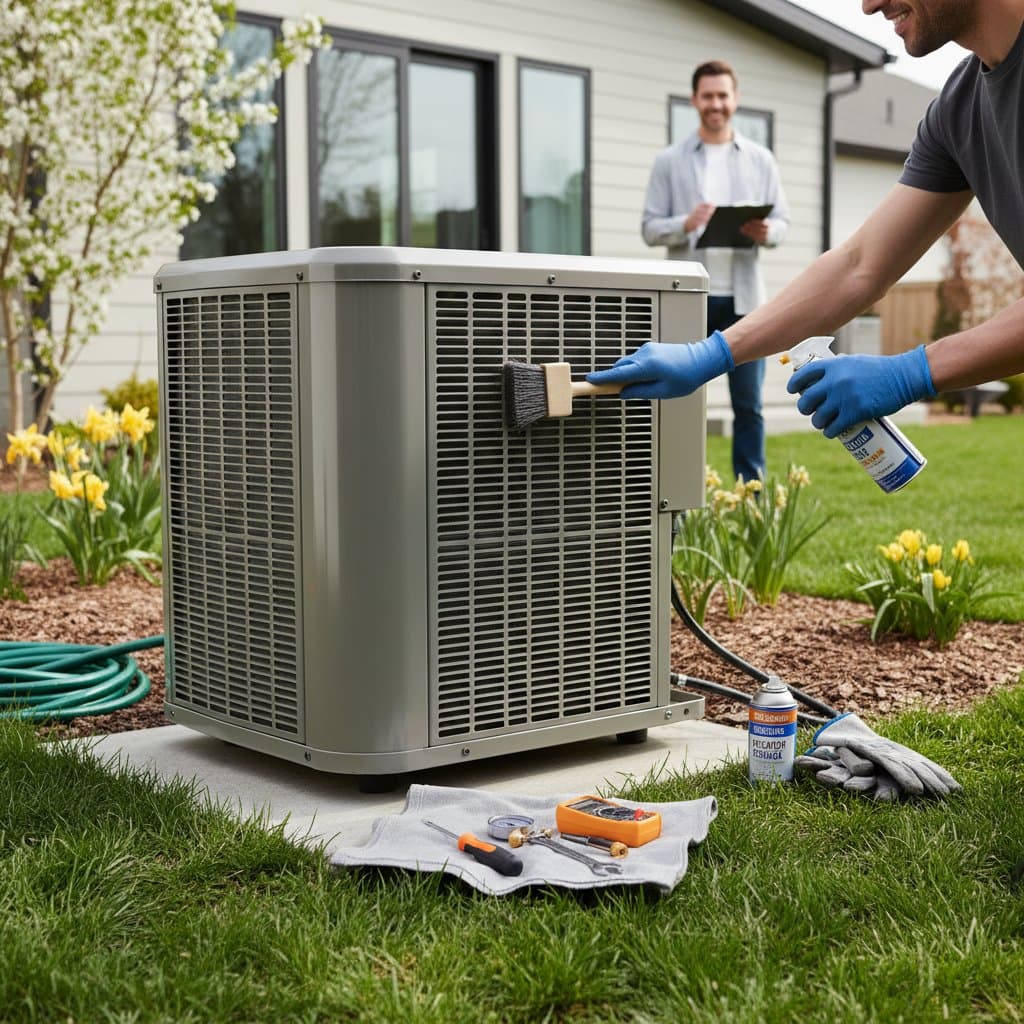
Inspect: Evaluate Before You Activate
Before transitioning from heating to cooling mode, conduct a thorough visual inspection of your HVAC system. This initial step identifies potential issues early and prevents minor problems from escalating into major repairs. A systematic check ensures the system operates safely and efficiently when activated.
Checklist
- Outdoor Unit: Clear debris, leaves, or animal nests from the condenser area. Ensure at least two feet of clearance on all sides to allow proper airflow and prevent overheating.
- Indoor Unit: Examine the evaporator coils for accumulated dust and dirt. Confirm that insulation surrounding the refrigerant lines remains intact and undamaged.
- Thermostat: Replace the batteries if necessary and compare the displayed temperature against a reliable separate thermometer for accuracy.
- Vents and Registers: Verify that all vents and registers remain fully open and free from obstructions such as furniture or accumulated dust.
What to Watch For
Listen for unusual rattling sounds when the fan engages, or observe if warm air emerges instead of cool air. These indicators often point to loose electrical connections or insufficient refrigerant levels. Immediately shut off the system upon detecting such signs and proceed with further investigation to avoid exacerbating the problem.
Clean: Prepare Components for Optimal Performance
After completing the inspection, focus on cleaning key components to remove buildup that hinders efficiency. Dirt and debris reduce airflow, strain the system, and increase energy consumption. Regular cleaning extends equipment life and maintains consistent performance.
Cleaning Steps
- Air Filters: Remove and inspect the filters. Replace them if dirty, as clogged filters restrict airflow and force the system to work harder.
- Evaporator Coils: Gently vacuum the indoor coils to eliminate dust. Use a soft brush for stubborn spots, but avoid bending the fins.
- Condenser Coils: Hose down the outdoor coils with a garden hose on a low-pressure setting. Direct water from the inside out to flush away grime effectively.
- Drain Lines: Flush the condensate drain line with a mixture of vinegar and water to prevent clogs that lead to water damage.
- Blower Fan: Wipe the fan blades clean if accessible, reducing resistance and noise during operation.
Perform these tasks with the power disconnected to ensure safety. Cleaning typically requires basic household tools and takes about one to two hours for most homeowners.
Test: Run and Review Performance
With the system inspected and cleaned, activate it to assess functionality. This testing phase confirms that all components work in harmony and identifies any lingering issues. Observe the operation closely to gauge overall health.
Testing Steps
- Set the thermostat to cooling mode and reduce the temperature setting by several degrees to trigger the system.
- Listen attentively for smooth fan operation, free from grinding, buzzing, or other irregular noises that may indicate mechanical wear.
- Verify that cool air emerges steadily from every vent. Inadequate airflow often signals a blockage, dirty filters, or a deteriorating blower motor.
- Monitor the outdoor unit to ensure the fan rotates freely and the compressor engages without hesitation or unusual vibrations.
Short cycling, where the system turns on and off frequently, warrants attention. Possible causes include soiled coils, low refrigerant, or thermostat misalignment. Simple cleaning may resolve the issue, but refrigerant adjustments demand professional intervention.
Cost Analysis: Prevention vs. Repair
Investing in preventive maintenance yields significant financial benefits beyond mere comfort. Routine care averts expensive breakdowns and optimizes energy use. Consider the long-term savings when planning your spring routine.
| Issue | Preventive Cost | Repair Cost | Potential Savings |
|---|---|---|---|
| Filter Replacement | $10-$40 | $0 (neglect leads to damage) | Extends system life |
| Coil Cleaning | $20 (DIY) | $600-$1,200 (coil replacement) | Up to $1,000 |
| Refrigerant Check | $120 (pro service) | $1,500+ (compressor damage) | Up to $1,380 |
| Annual Maintenance Plan | $150-$400 | Average repair $900-$2,500 | Up to $2,100 |
A properly maintained HVAC system lowers cooling expenses by up to 15 percent. This reduction becomes evident in reduced utility bills during intense summer periods. Over time, these savings accumulate substantially.
Safety and Code Considerations
HVAC systems incorporate electrical wiring and refrigerants, presenting hazards if mishandled. Always disconnect power at the breaker before any cleaning or inspection activities. Unauthorized handling of refrigerants violates federal environmental laws and requires certification.
When considering component replacements or thermostat upgrades, consult local building codes. These regulations dictate wiring standards and compatibility. For instance, smart thermostats frequently need a common (C) wire, which older installations might not provide, necessitating professional adaptation.
Deciding Between DIY and Professional Help
Homeowners can manage basic upkeep confidently, but complex repairs demand expert skills. Distinguishing between tasks preserves safety and warranty integrity. Evaluate your comfort level and system age before proceeding.
DIY-Friendly Tasks
- Changing air filters regularly to maintain airflow.
- Removing debris from outdoor units to ensure ventilation.
- Cleaning accessible coils and drain lines to prevent buildup.
- Verifying thermostat accuracy with simple tools.
Professional-Only Tasks
- Assessing and adjusting refrigerant pressure levels.
- Repairing or rewiring electrical connections.
- Replacing motors, compressors, or other major components.
- Balancing airflow across the duct system for even distribution.
Retain service records and receipts, especially if the system operates under warranty. Professional involvement often proves essential to uphold coverage terms.
Pro Tips for Long-Term Success
Enhance your maintenance efforts with these targeted strategies. Each tip addresses common vulnerabilities and promotes durability.
- Adopt a Smart Thermostat: These devices optimize cycle times and sustain even temperatures, minimizing unnecessary wear on the system.
- Add a Surge Protector: Electrical surges frequently damage compressors and circuit boards. An inexpensive $50 unit prevents repairs costing thousands.
- Seal Air Leaks: Apply insulation to ducts and caulk around windows to lessen the load on the HVAC system.
- Select High-Efficiency Filters: Such filters capture more particles for better air quality, though frequent replacement prevents airflow restriction. Adhere to manufacturer guidelines.
- Track Energy Usage: Monitor bills for unexpected increases, which often precede visible malfunctions.
Securing Comfort Through Proactive Care
Spring maintenance equips your HVAC system for reliable performance all season. By following these steps, you safeguard against failures, cut costs, and enjoy cleaner air. Consistent attention translates to peace of mind and a more efficient home environment.