
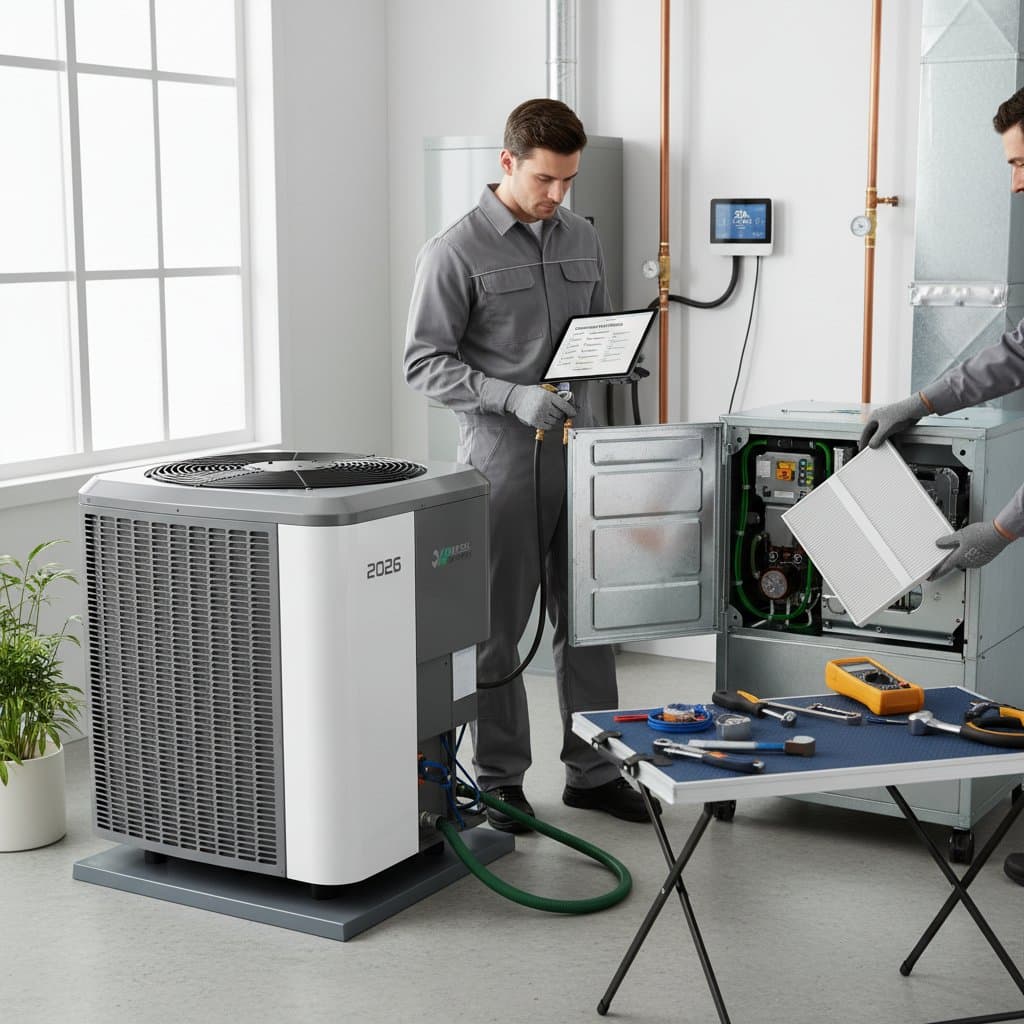
Condensate Drain and Refrigerant Inspection
Purpose: Prevent leaks and obstructions that cause water damage or diminished cooling capacity.
Procedures:
- Identify the condensate drain line and flush it using a solution of equal parts vinegar and water to eliminate potential algae accumulation.
- Inspect for any water accumulation near the indoor unit, a clear sign of blockage.
- Examine the refrigerant lines closely. The presence of frost or unusual hissing noises indicates possible leaks, necessitating immediate professional intervention.
Expense Estimate: Cleaning the drain line requires less than ten dollars for materials in a do-it-yourself approach. Refrigerant leak repairs fluctuate significantly but typically begin at two hundred dollars.
Diagnostic Advice: Should the drain line become obstructed frequently, install a float switch to halt system operation automatically and avert overflow situations.
Optimal Scheduling and Seasonal Planning
Spring emerges as the optimal period for HVAC servicing due to greater technician availability and simpler procurement of replacement components. Proactive measures taken early guarantee system readiness prior to intense heat waves, during which service requests surge and delays extend.
Establish a calendar alert for annual maintenance well in advance of peak temperatures. Integrate this task with complementary seasonal activities, including gutter clearing and smoke detector verification, to foster a reliable home maintenance regimen.
Beneficial Preventive Enhancements
Contemporary HVAC add-ons address frequent problems while elevating operational efficiency.
Intelligent Thermostats
These units adjust settings according to occupancy patterns, minimizing energy consumption during absences. Advanced versions track system health and notify users regarding necessary filter replacements.
Approximate Expense: One hundred fifty to three hundred dollars for the unit, with additional fees for professional setup if desired.
Power Surge Safeguards
Surge protectors for HVAC systems defend delicate electronics against voltage spikes that might damage circuit boards irreparably.
Approximate Expense: One hundred to two hundred dollars, including installation.
Ultraviolet Air Purification Systems
Positioned within the ductwork, ultraviolet lamps eradicate mold and bacteria that proliferate in humid zones near coils and drains.
Approximate Expense: Three hundred to five hundred dollars, installed.
These enhancements bolster system dependability and diminish ongoing service expenditures, positioning them as prudent investments within spring renovation allocations.
Diagnosing Typical Spring Activation Issues
Despite meticulous preparation, HVAC systems may exhibit irregularities upon initial spring operation. Consult this reference to pinpoint and address prevalent concerns.
| Symptom | Probable Origin | Suggested Remedy |
|---|---|---|
| Warm air blowing from vents | Insufficient refrigerant or soiled coil | Arrange for expert evaluation |
| Frequent on-off cycles | Obstructed filter or thermostat positioning error | Swap the filter; verify thermostat site |
| Reduced air circulation | Obstructed ducts or deteriorating blower motor | Remove vent blockages; assess blower performance |
| Unusual smells | Mold growth in drain pan or ducts | Clean the drain; operate fan mode to dehydrate |
| Thermostat non-responsiveness | Breached circuit or depleted batteries | Restore circuit; install fresh batteries |
Should initial remedies fail to resolve the issue, engage a certified technician promptly. Neglecting minor anomalies frequently escalates to severe, costly breakdowns.
Safety Protocols and Regulatory Adherence
HVAC servicing entails risks from electricity and refrigerants. Disconnect the power supply prior to any cleaning or examination of components. Utilize protective gloves and eyewear when applying coil cleaners or similar substances.
Homeowners must refrain from attempting refrigerant recharges, as such actions without proper certification violate regulations in numerous jurisdictions. Likewise, gas furnace elements demand scrutiny by specialists versed in combustion safety assessments.
Adhering to local construction standards proves essential for preserving warranty integrity. Producers commonly mandate records of professional servicing to uphold coverage terms; thus, organize receipts and inspection documentation meticulously.
Adapting to Regional and Climatic Factors
Local weather patterns dictate precise maintenance timing. Humid locales promote greater moisture retention in condensate drains and coils, warranting more regular cleanings. Arid environments accelerate dust buildup, heightening filter change frequency. Residences in coastal zones benefit from corrosion-proof materials and periodic outdoor unit rinses to dispel salt deposits.
Regions prone to storms or electrical disruptions amplify the importance of surge protection. In cooler climates, heat pumps require defrost mechanism checks before shifting to cooling mode.
Realizing Long-Term Energy Savings and System Longevity
Consistent spring HVAC preparation yields measurable reductions in energy consumption, often achieving up to twenty percent savings on bills through enhanced efficiency. Beyond immediate cost benefits, these practices extend equipment lifespan, deferring the need for premature replacements that can exceed thousands of dollars.
Track utility statements post-maintenance to quantify improvements, and adjust habits accordingly for sustained gains. By prioritizing these steps annually, homeowners secure a resilient, cost-effective home environment year-round.