
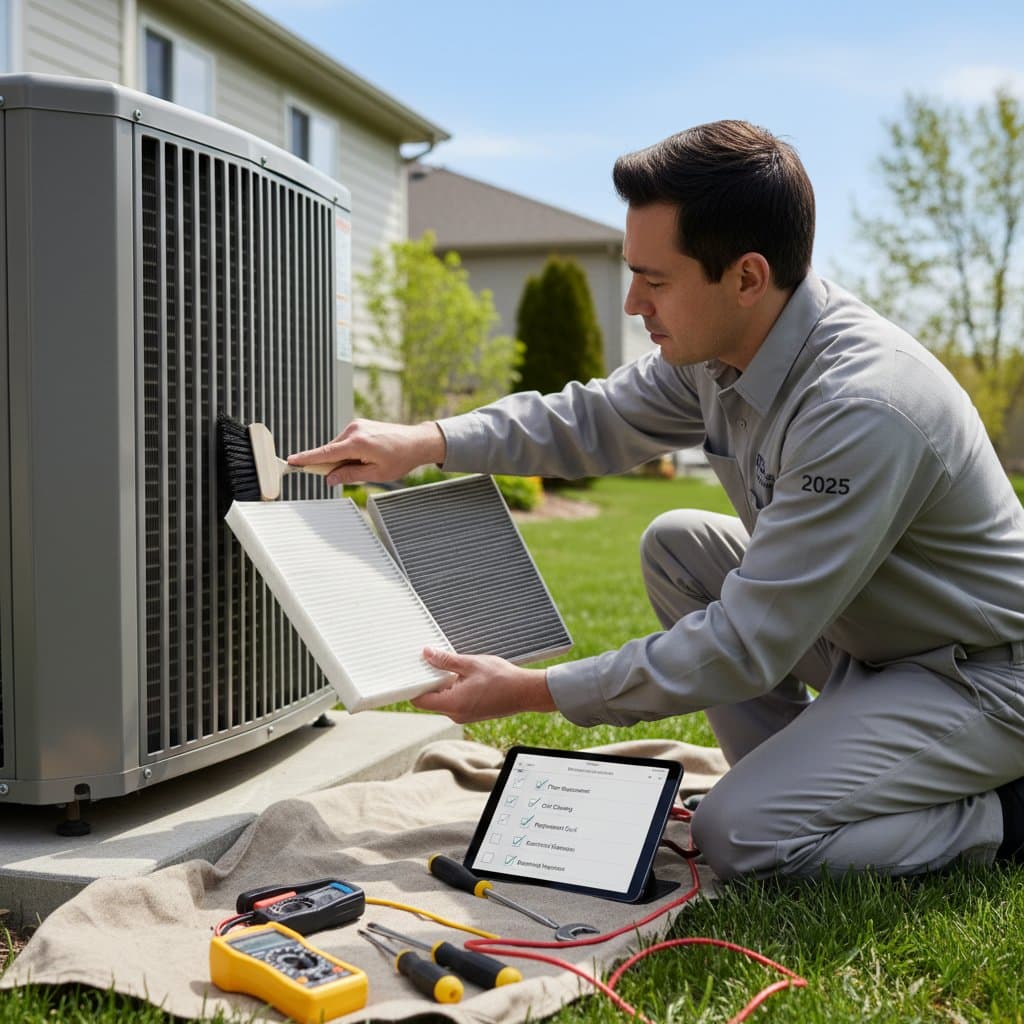
Why Spring HVAC Maintenance Is Essential
Spring signals the shift from winter heating to summer cooling demands on your HVAC system. After enduring months of dust accumulation, dry conditions, and temperature swings, hidden wear may emerge. Components that functioned adequately during cooler months often falter under the intense workload of warm weather. Addressing these issues early through a preseason inspection minimizes repair expenses and simplifies scheduling with technicians.
Proper upkeep boosts system efficiency by as much as 25 percent compared to neglected units. This improvement yields steadier indoor climates, reduced utility costs, and fewer urgent service requests. Households typically realize annual savings of 200 to 400 dollars through lower energy consumption and avoided fixes. Beyond finances, efficient operation eases environmental impact by curbing energy needs, which in turn lowers carbon emissions and eases strain on power grids.
Sustainable practices start with routine care. A tuned system delivers consistent comfort while promoting eco-friendly home management. Regular attention ensures your HVAC contributes to a greener lifestyle without sacrificing reliability.
Choosing Between DIY Tasks and Professional Help
Homeowners can handle straightforward maintenance to control costs, yet certain procedures demand expert intervention. Safe DIY options include replacing air filters and clearing debris from the outdoor condenser. More complex work, such as evaporator coil cleaning, refrigerant level assessment, and electrical diagnostics, requires certified technicians to avoid risks and preserve warranty coverage.
Breaking Down the Costs
- DIY efforts: Involve 20 to 50 dollars for filters, cleaning solutions, and basic tools.
- Professional inspection: Ranges from 90 to 200 dollars, covering thorough cleaning, testing, and adjustments.
- Mid-summer emergency fixes: Frequently total 500 to 1,500 dollars, varying by affected parts like compressors or motors.
Investing modestly in spring preparation often offsets the expense of peak-season disruptions. Numerous service providers offer annual plans with biannual visits, reduced repair rates, and expedited appointments. Such arrangements typically recoup their value after preventing just one major incident.
Benefits of Consistent Preventive Maintenance
Systems receiving regular care average 15 to 20 years of service, outlasting neglected counterparts that may quit after 10 years. Seasonal diligence preserves peak performance, minimizes operational noise, and enhances indoor air purity. Efficiency gains of 10 percent or more compound into substantial savings, potentially amounting to hundreds of dollars yearly based on regional climate and household patterns.
Over the equipment's full cycle, these efficiencies can cover the price of eventual replacement. Comfort extends beyond temperature control to include even distribution, humidity balance, and reduced allergens. Individuals with sensitivities benefit from fresher air circulation, leading to improved health and daily ease.
Pitfalls to Steer Clear Of in HVAC Care
Overlooking filter swaps tops the list of errors, as clogged units restrict airflow and accelerate component strain. Unusual sounds, such as rattles indicating loose parts or squeals from worn belts, warrant prompt investigation to halt progression to breakdowns. Applying covers over exterior units during off-seasons invites moisture buildup and rust formation.
Mismatching refrigerants in legacy systems risks incompatibility without proper retrofitting. Neglecting vent maintenance allows blockages that elevate internal pressures and diminish overall output. These oversights accumulate, transforming minor issues into extensive damage. Approach your HVAC with diligence akin to other home elements for sustained performance.
Enhancing Efficiency with Strategic Upgrades
Use spring servicing as a chance to integrate modern enhancements. Programmable thermostats adapt to occupancy schedules, optimizing settings for energy conservation. Advanced models track usage data and alert for service needs, fostering proactive management. Variable-speed blowers modulate operation to match cooling requirements, easing mechanical stress and trimming power draw during lighter loads.
For aging installations, consider swapping to units with superior SEER ratings, which can slash consumption by 30 percent relative to dated models. Prioritize ENERGY STAR-qualified options eligible for regional incentives or credits. These investments amplify returns through amplified savings and refined control.
Practical Strategies for Effective Maintenance
Maintain logs of all service sessions, noting observations and measurements for reference. Identify and mark circuit breakers tied to HVAC functions for swift troubleshooting during outages. Inspect registers weekly to confirm clear paths, free from household items.
Install protective devices on exterior components in storm-prone regions to guard against voltage spikes. Adhere to fixed timelines for professional reviews to uphold guarantees and operational integrity. These routines minimize unexpected issues and extend equipment durability.
Sustaining Year-Round Comfort and Savings
Yearly spring evaluations form the cornerstone of reliable HVAC performance. Clean, inspected systems deliver superior efficiency, extended usability, and purified airflows. View this practice as essential protection for your home's core comfort infrastructure, ensuring resilience against seasonal challenges and financial burdens.