
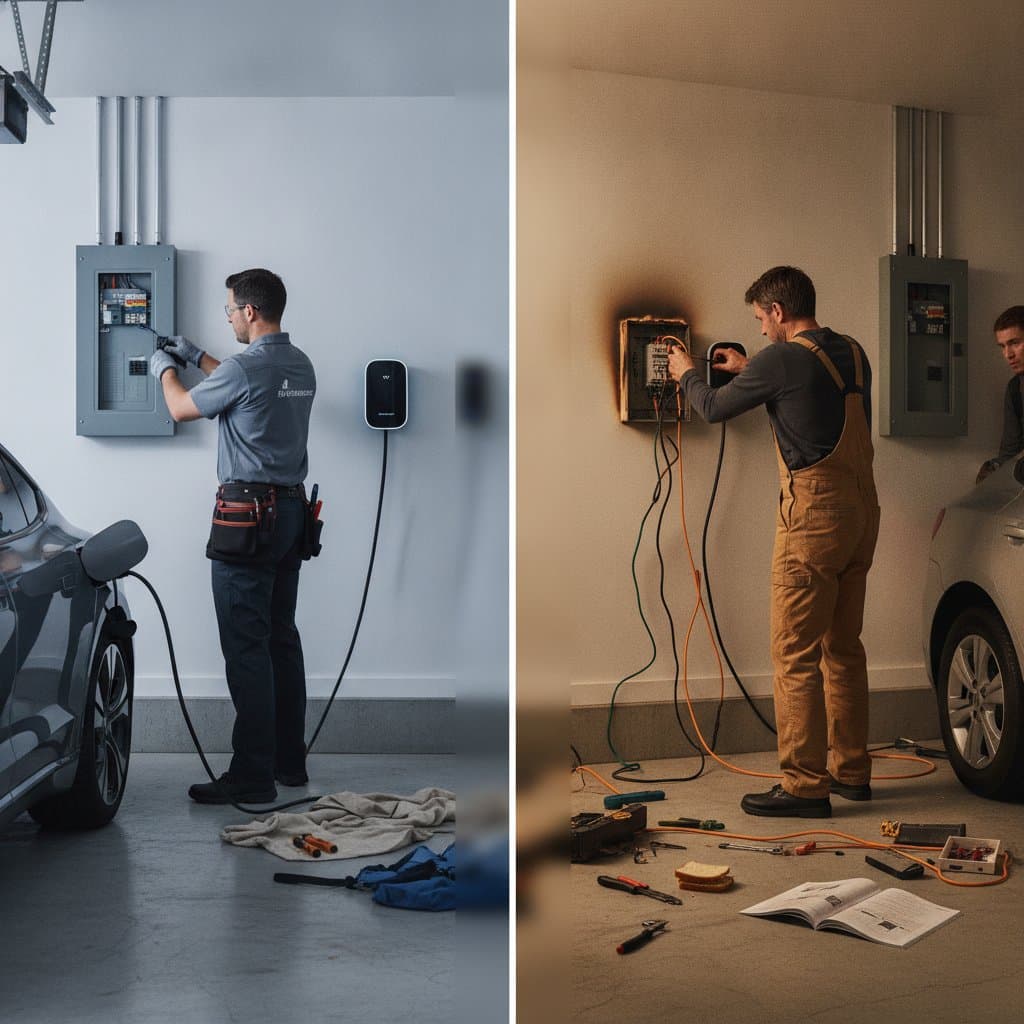
EV Charger Installation: Why Professional Expertise Outperforms DIY
If you have recently added an electric vehicle to your household, installing a home charger is the next big step. It promises faster charging, lower energy costs, and daily convenience. The temptation to handle installation yourself might be strong, especially if you are comfortable with tools and wiring. Professional help remains essential for safety, performance, and long-term reliability.
The Real Challenge Behind EV Charger Installation
An EV charger requires a dedicated circuit, high-voltage wiring, and compliance with local electrical codes. Level 2 chargers, which most homeowners prefer for faster charging, typically run on a 240-volt circuit. Even a small mistake here can cause electrical fires, void your vehicle warranty, or damage your home electrical system.
Professional electricians evaluate your existing panel capacity and determine whether an upgrade is needed. They also ensure grounding and circuit protection meet code requirements. A do-it-yourself approach might skip these critical steps and place both your vehicle and your home at risk.
Cost Comparison: DIY Savings versus Long-Term Value
At first glance, DIY installation might look cheaper. The average EV charger unit costs between $400 and $800, while professional installation ranges from $700 to $1500 depending on panel location, wiring distance, and regional labor rates. These upfront savings vanish quickly if an electrical issue occurs or if the system fails inspection.
A professional installation includes load calculation to ensure your panel can handle the new circuit, proper conduit and cable routing for indoor or outdoor placement, certified components that meet safety standards, and warranty protection for both labor and materials. In contrast, a DIY job might require rework or inspection fees if it does not meet code.
Safety First: The Hidden Risks of DIY Electrical Work
Working with high-voltage circuits is fundamentally dangerous. Even experienced DIYers can underestimate the risk of arc flashes or improper grounding. Professional electricians use insulated tools, voltage testers, and protective equipment to minimize these hazards. They also understand load balancing, which prevents system overloads that could trip breakers or damage appliances.
Many local permits require certified installation to pass inspection. Skipping this step can result in fines, denied insurance claims, or future resale complications. A licensed electrician completes the work safely and handles permits and documentation.
Performance and Efficiency Matter
A poorly installed charger might still work, but not at its full potential. Incorrect wiring or undersized breakers can cause slower charging speeds or inconsistent performance. Professionals calibrate the charger to match your vehicle specifications, optimizing both charging speed and energy efficiency. They can also integrate smart charging features that schedule sessions during off-peak hours.
When a Professional Makes the Difference
Hiring a certified electrician ensures your home charging setup supports your lifestyle without constant troubleshooting. If your electrical panel needs expansion or if you plan to install solar panels later, a professional can design your system with future upgrades in mind. This foresight saves additional costs and disruptions later.
Maintaining Your Investment
Once installed, your EV charger requires minimal maintenance. Schedule a quick inspection every few years to ensure cables and connectors remain in good condition. Keep the unit clean, check for visible wear, and verify that the circuit breaker functions properly.
Key Considerations for Your Installation
Choose a certified Level 2 charger for faster performance and compatibility with most vehicles. Request a load capacity assessment before installation to avoid overloading your electrical system. Keep installation documents and warranty paperwork together for future home appraisals or resale. Ask your electrician about smart charging options that track energy use and optimize costs.
A professional installation turns your EV charger into a seamless part of your home energy system. It ensures safety, maximizes efficiency, and gives you the confidence that your vehicle will always be ready when you are.