
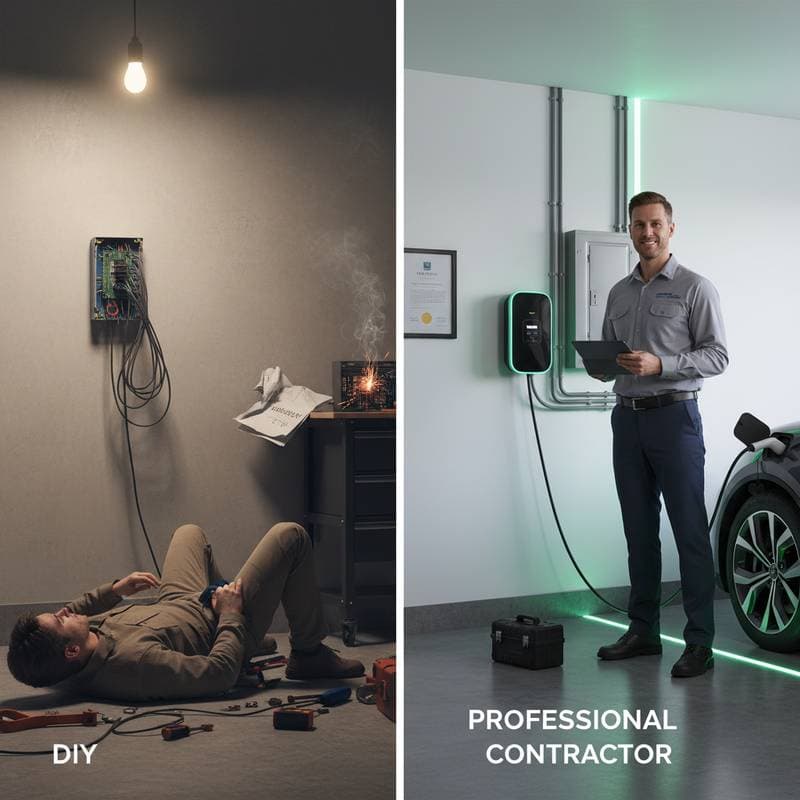
Avoid DIY Pitfalls: The Value of Professional EV Charger Installation
Purchasing an electric vehicle marks an exciting shift toward sustainable driving. Homeowners often view installing an EV charger as a straightforward task, similar to connecting a household appliance. In reality, this setup involves integrating high-voltage systems directly into the home's electrical infrastructure, demanding expertise to avoid hazards and inefficiencies.
Opting for a certified electrician minimizes risks and delivers enduring benefits. Professional services guarantee compliance with local codes, prevent costly errors, and enhance the overall value of the installation. This approach transforms a potential liability into a seamless addition to the home.
The following sections detail the financial advantages, safety considerations, and practical steps involved in professional installation, providing a clear path to informed decision-making.
Comparing Costs: DIY Versus Professional Approaches
A thorough cost analysis reveals the hidden expenses of DIY installations compared to professional services. While initial outlays may appear comparable, long-term implications favor expert involvement.
| Expense Category | DIY Installation | Professional Installation |
|---|---|---|
| Charger Unit | $400–$800 | $400–$800 |
| Tools (wire strippers, conduit bender, voltage tester) | $100–$250 | Included in service |
| Electrical Permit | $50–$200 (self-managed) | Handled by contractor |
| Materials (wire, conduit, breaker) | $100–$200 | Included or detailed in quote |
| Labor Time | 6–10 hours (owner's effort) | 2–4 hours (expert execution) |
| Potential Code Violation Fixes | $500+ (fines or repairs) | Eliminated through compliance |
| Insurance and Warranty Protection | Frequently invalidated | Fully maintained |
| Total Average Cost | $650–$1,450 + ongoing risks | $900–$1,300 (comprehensive) |
Professional installations often incorporate post-setup inspections and extended warranties, further offsetting costs. These elements safeguard against future repairs, preserving the home's electrical system integrity.
Essential Safety and Insurance Considerations
EV chargers operate at power levels of 7 to 11 kilowatts, far exceeding typical appliances. Incorrect installation risks overheating, circuit overloads, or electrical shocks, which can endanger lives and property.
Certified electricians assess grounding requirements, select appropriate wire gauges, and install breakers calibrated to the charger's specifications. They adhere to ground fault circuit interrupter standards, mitigating fire risks effectively. Such measures ensure the system functions reliably under varying loads.
Insurance policies typically mandate licensed installations for coverage eligibility. Unauthorized work may result in claim denials during incidents, exposing homeowners to substantial financial burdens. Prioritizing professionals aligns with these protections, offering peace of mind.
Scenarios Requiring Immediate Professional Expertise
Certain conditions necessitate hiring a specialist without delay to address complexities:
- An outdated electrical panel operating near its load limit requires upgrades for safe integration.
- Long cable runs from the panel to the charger, involving wall penetrations or outdoor routing, demand precise planning.
- Local regulations enforce rigorous permitting and inspection processes, which experts navigate seamlessly.
- High-capacity Level 2 or DC fast chargers involve advanced electrical configurations.
- Pursuing utility rebates or federal tax credits, such as those under the Inflation Reduction Act, depends on documented professional work.
In these cases, electricians perform load calculations and prepare necessary paperwork. This expertise not only complies with standards but also unlocks financial incentives, amplifying the installation's value.
Steps to a Seamless Professional Installation
Initiate the process by selecting a licensed electrician experienced in EV systems. Request quotes that outline scope, timeline, and inclusions like permitting.
During consultation, discuss charger location, panel capacity, and desired features such as smart connectivity. The installer will conduct a site assessment to recommend optimal wiring and breaker sizes.
Post-installation, verify the setup through testing and obtain inspection approval. Schedule routine maintenance to sustain performance, ensuring the charger remains efficient for years.
Realizing Long-Term Benefits and Efficiency
A professional EV charger installation extends beyond immediate setup to foster ongoing savings and reliability. Reduced energy waste through proper sizing lowers utility bills, while compatibility with future vehicle upgrades future-proofs the home.
Homeowners benefit from enhanced property value, as verified installations appeal to eco-conscious buyers. By investing in expertise, the setup becomes a cornerstone of sustainable living, delivering consistent returns on the initial outlay.