
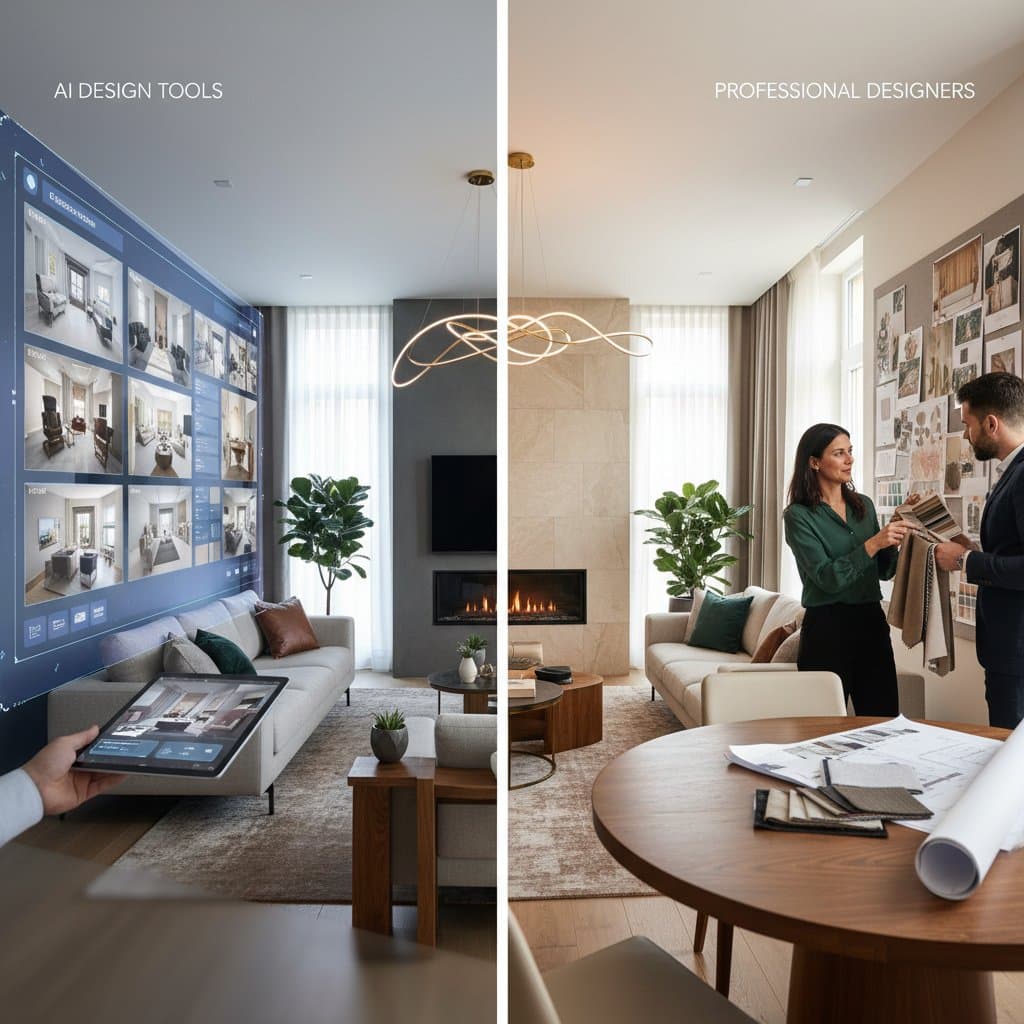
Comparing AI Design Tools and Professional Designers for Home Makeovers
Many homeowners contemplate whether to rely on virtual design applications or engage a professional designer when envisioning changes to their living spaces. The emergence of AI-driven interior design platforms simplifies the process of imagining layouts, experimenting with colors, and projecting expenses from the comfort of home. However, achieving a truly individualized environment raises the question: can algorithms match the nuance of human ingenuity? This analysis examines the strengths of each method and explores integration strategies for superior outcomes.
Advantages of AI-Powered Design Platforms
AI design platforms attract users seeking prompt guidance and economical previews. Individuals upload room photographs, respond to preference queries, and receive digital simulations shortly thereafter. These systems frequently produce procurement lists featuring direct connections to furniture and accessories.
Key attractions of AI design include:
- Rapid execution: Immediate visualizations and configurations eliminate extended consultations.
- Economic value: Fees typically range from $20 to $200 per space, significantly below the $1,000 to $5,000 charged by experts.
- User-friendliness: Exploration of aesthetics, palettes, and furnishings requires no specialized knowledge.
AI excels in assessing proportions accurately. Homeowners avoid common errors, such as selecting oversized pieces, through precise spatial modeling. For instance, tools simulate how a new rug integrates with existing flooring or how window treatments affect light distribution.
Nevertheless, AI delivers surface-level results without grasping personal narratives. Algorithms prioritize visual balance but overlook sentimental attachments, like preserving a cherished heirloom, or preferences for warmth over minimalism.
Value of Professional Designers
Experts introduce irreplaceable elements: intuition and narrative crafting. Designers interpret lifestyles and manifest them through spatial arrangements. They harmonize form and utility while addressing complexities such as illumination, regulations, and movement patterns.
Enduring benefits of designers encompass:
- Bespoke adaptation: Sourcing distinctive elements aligned with daily routines beyond mere measurements.
- Innovative resolutions: Tackling irregular architectures or suboptimal illumination that programs may ignore.
- Oversight coordination: Managing tradespeople, suppliers, and schedules to prevent expensive oversights.
Engaging a designer demands greater investment and time. Projects span weeks to months, with expenses fluctuating by scope and region. The reward lies in a unified scheme rooted in empathetic insight rather than data patterns.
Professionals also consider sustainability and future adaptability. They recommend durable materials that withstand wear and evolve with family needs, ensuring the design remains relevant over years.
Integrating AI and Expert Input for Optimal Results
Forward-thinking homeowners blend technologies with expertise. AI functions as an ideation catalyst, clarifying visions prior to expert involvement. Designers now incorporate AI for efficient prototypes and collaborative visuals.
Steps to merge approaches successfully:
- Initiate with AI exploration. Generate layout variations and hue combinations; compile visuals for designer discussions.
- Elevate through expertise. Share preferences with a professional to refine elements, achieve unity, and procure premium items.
- Apply AI for maintenance. Post-completion, utilize tools for periodic adjustments like holiday themes or accessory rotations without altering core aesthetics.
This synergy controls expenditures while fostering authenticity. View AI as a supportive tool and the designer as the guiding visionary. For example, start with anmodern kitchen layout, then have a designer adjust cabinetry for ergonomic cooking flows.
Evaluating Expenses and Timelines
Budget-conscious individuals favor AI for its immediacy and low cost. A comprehensive room plan emerges in hours for a fraction of consultation fees. In contrast, extensive overhauls benefit from designer efficiency, reducing errors that inflate long-term costs.
Concise overview:
- AI platforms: $20 to $200 per area, finished in hours.
- Expert services: $1,000 to $5,000 per area, spanning weeks.
Consider hidden savings: AI prevents impulse buys, while designers streamline vendor negotiations. Time estimates vary; AI suits quick tweaks, professionals handle multifaceted transformations.
Sustaining Design Harmony Over Time
Post-implementation, observe how designs perform in daily use. Digital renders capture static beauty but may neglect dynamic elements like diurnal light changes or material aging. Experts foresee these, selecting adaptable fixtures that maintain appeal.
For AI-led projects, conduct periodic reviews. Modify illumination, fabrics, or arrangements based on lived experience. Both paths yield impressive transformations: AI emphasizes efficiency, designers emphasize resonance. Select according to project scale and personal priorities to build enduring, welcoming environments.