
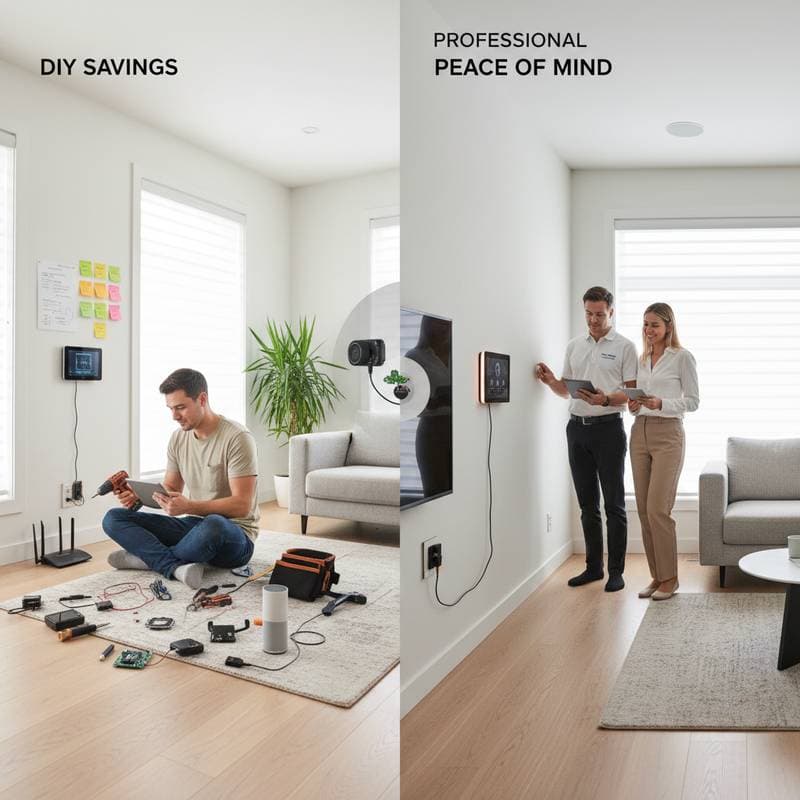
Smart Home Installation: DIY Cost Savings Versus Professional Reliability
The initial moment when a smart plug activates a lamp via an application creates a sense of wonder. Homeowners then envision broader automation possibilities, such as lighting that dims at dusk, doors that lock automatically, and heating systems that adapt to daily patterns. This enthusiasm prompts a fundamental decision: undertake the installation independently or engage qualified experts?
Advantages of DIY Smart Home Projects
DIY smart home projects typically commence with modest elements. Examples include a voice-activated light bulb or a wireless security camera. Initial investments range from fifty dollars for one item to five hundred through one thousand dollars for setups spanning multiple rooms, influenced by the level of intricacy.
The financial benefits stem from avoiding labor fees, which professionals charge at rates of seventy-five to one hundred fifty dollars hourly. Individuals comfortable with technology appreciate the autonomy to select compatible brands, configure communication protocols, and plan future expansions. Contemporary platforms feature user-friendly applications that offer guided instructions, enabling completion over a single weekend.
Nevertheless, obstacles emerge during implementation. Inadequate Wi-Fi coverage disrupts automated sequences. Software updates occasionally lead to device incompatibilities. Certain components, like electronic door locks or hardwired climate controls, demand familiarity with electrical systems or adherence to building regulations, which may deter novices. Success depends on assessing personal troubleshooting skills and commitment to investigating resolutions.
Value Provided by Professional Installers
Engaging certified installers introduces substantial expertise. These specialists comprehend how various products interconnect and prioritize safety alongside durability. They unify elements such as alarm systems, fire alerts, power trackers, and environmental regulators into a cohesive interface. This knowledge averts costly errors in elaborate configurations.
Costs for professional whole-home implementations fall between two thousand and five thousand dollars. This encompasses planning, cabling, and fine-tuning devices. Although the initial outlay exceeds DIY options, services frequently incorporate guarantees and ongoing assistance. Homeowners receive confirmation that cybersecurity measures and power linkages comply with prevailing codes.
Professionals prove particularly beneficial in established residences featuring legacy electrical infrastructure or variable signal strength. Installers deploy specialized controllers, signal enhancers, or organized wiring frameworks to establish a robust base for intelligent operations.
Balancing Expenses with Assurance
Homeowners often identify an optimal path by integrating DIY and professional elements. Begin with straightforward, wireless options such as intelligent bulbs, outlets, or surveillance units that rely on existing networks. These demand little infrastructure and allow testing of scheduling functions.
After gaining insight into personal needs, consult experts for sophisticated features like embedded illumination systems, fixed temperature regulators, or comprehensive surveillance arrays. This combined strategy facilitates precise budget allocation. Initial expenditures of a few hundred dollars on independent installations can precede investments in expert adjustments for core controllers or speech recognition linkages.
Such progressive methods preserve the fulfillment of direct engagement while upholding operational stability.
Essential Strategies for Effective Implementation
- Select an integrated framework prior to purchases. Opt for items compatible with standards like Matter, Zigbee, or Z-Wave to ensure seamless interaction.
- Evaluate network reach in advance. Employ applications designed for signal analysis to pinpoint areas of poor performance.
- Document all connections clearly. This practice reduces time spent on diagnostics or system growth.
- Fortify digital protections. Implement robust passcodes, activate multi-step verification, and apply updates regularly.
- Recognize limits of self-sufficiency. Seek professional intervention for tasks involving electrical modifications or regulatory compliance.
Realizing Everyday Enhancements
With operations functioning efficiently, tangible advantages emerge. Illumination synchronizes with habits, consumption of resources decreases, and the residence adapts intuitively. Regardless of the installation method, a thoughtfully constructed smart home transcends mere utility. It evolves as a dynamic extension of lifestyle, fostering continuous improvement in a networked habitat.