
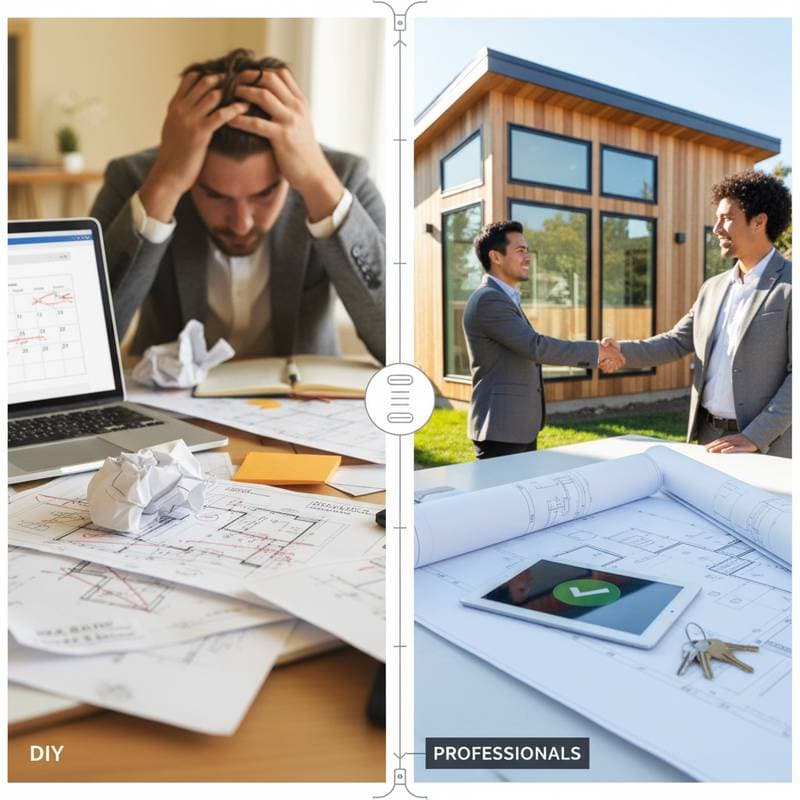
Why DIY ADU Permits Cost More Than Hiring Professionals
Consider the appeal of transforming your backyard into a rentable space or a secluded guest area through an accessory dwelling unit. The prospect of cutting costs by managing permits independently holds strong allure. However, this approach frequently proves more expensive than engaging a professional from the outset.
Navigating the Complex Permitting Landscape
ADU permit applications may appear simple at first glance. In practice, they resemble a labyrinth with unique local variations. Municipalities impose specific standards, such as setback distances from property lines, mandatory parking provisions, connections to utilities, and requirements for fire safety access.
Overlooking even a minor detail can result in outright rejection of the submission. Each subsequent resubmission might extend the approval timeline by several weeks. During this period, expenses accumulate from design modifications or suspended financing arrangements.
Experienced ADU contractors or permit expediters possess intimate knowledge of local building department preferences. They identify potential pitfalls prior to submission, thereby preventing the repetitive exchanges that plague many independent applicants. For instance, they ensure that site plans include precise elevation details and soil reports, which DIY efforts often neglect.
Analyzing the True Financial Impact
Initially, self-managing permits seems to eliminate fees ranging from $3,000 to $8,000 for administrative services. Yet, when accounting for necessary design alterations, multiple resubmissions, and penalties for code infractions, initial economies disappear.
A failed inspection alone incurs reinspection charges of several hundred dollars, alongside weeks of project downtime. Professional ADU construction services generally range from $150 to $250 per square foot, influenced by material selections and geographic location.
This investment secures specialized knowledge that maintains project momentum. In comparison, independent permitting frequently triggers demands for additional engineering assessments, hires for consultants, or severe measures like partial demolition to rectify non-compliance. To illustrate, a common oversight involves inadequate structural reinforcements, leading to supplemental engineering costs exceeding $2,000.
The Value of Time in ADU Development
Individuals pursuing DIY permits often fail to anticipate the extensive time commitment involved. Tasks such as thorough research, coordination of application elements, and oversight of revisions can consume more than 100 hours solely for obtaining approvals.
This duration detracts from essential activities like refining architectural designs, securing funding, or attending to daily responsibilities. Professionals optimize workflows by recognizing the sequence for departmental stamps on documents and by arranging inspections with precision.
Their proficiency can shorten the approval phase from several months to as little as three, avoiding protracted struggles that extend to a full year. For example, they prioritize electronic submissions where available, reducing processing times by up to 40 percent in tech-savvy jurisdictions.
Ensuring Safety Through Rigorous Code Adherence
The permitting process serves as a critical safeguard for public safety and regulatory compliance. Bypassing procedures or misunderstanding building codes risks introducing dangers, such as faulty electrical wiring or inadequate fire barriers between structures.
Such errors halt construction immediately or necessitate expensive retrofits post-completion. Licensed contractors demonstrate comprehensive code familiarity and maintain insurance coverage for liabilities.
This arrangement provides reassurance and protects against financial burdens from unforeseen corrections. Professionals conduct pre-submission audits, verifying elements like seismic reinforcements in earthquake-prone areas, which independent filers might overlook.
Steps to Optimize Your ADU Permitting Strategy
For those inclined toward active involvement, a hybrid model offers balance. Retain control over aesthetic decisions, material finishes, and construction timelines while delegating permitting to specialists.
Numerous ADU experts provide targeted consulting options, managing submissions while allowing oversight of creative elements. To proceed effectively:
- Solicit detailed quotes from contractors, including breakdowns of permitting expenses and projected durations.
- Review references from past clients with comparable ADU initiatives to assess reliability.
- Inquire about delineations between self-managed tasks and those requiring professional intervention.
Developing an ADU represents a strategic enhancement to your property value. Although initial cost reductions tempt, escalating administrative challenges and timeline extensions reveal the merits of expert involvement. With competent guidance on permits, transition seamlessly from conceptual stages to foundational work, achieving your vision with efficiency and confidence.