
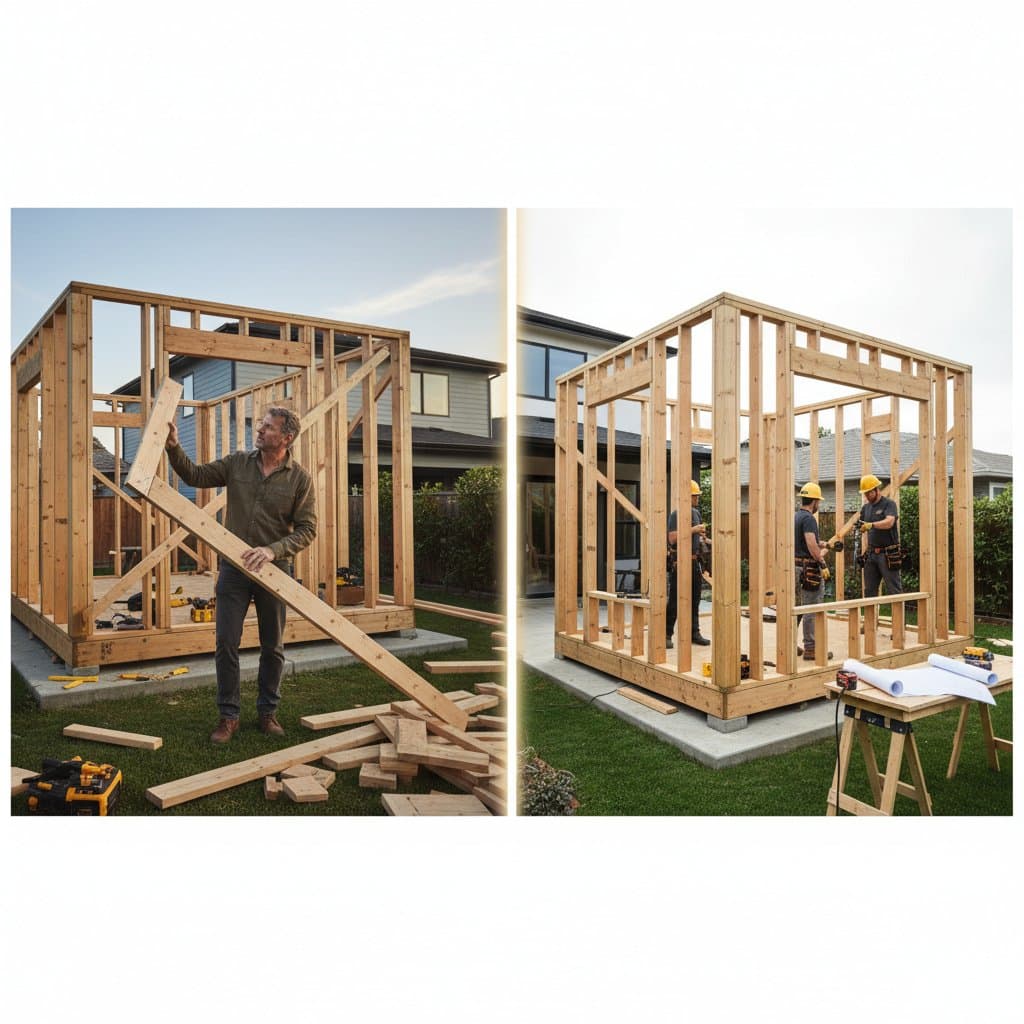
Framing Your ADU: DIY Challenges and Professional Advantages
Building an accessory dwelling unit expands your property with versatile space for guests, rentals, or personal use. This addition enhances functionality and increases long-term value. However, after completing designs and obtaining permits, framing emerges as a critical phase that shapes structural strength and overall efficiency. Homeowners often consider handling framing independently to cut costs, yet even minor inaccuracies result in substantial financial and time losses. Recognizing the boundary between personal effort and expert intervention keeps projects aligned with goals.
Why Framing Forms the Foundation
Framing serves as the core framework for your ADU, upholding walls, floors, and roofs while positioning windows, ceilings, and load paths. Proper execution aligns components for seamless integration of insulation, drywall, and roofing. Deviations as small as half an inch trigger cascading issues: doors bind, drywall fractures, and roofs distort. Beyond basic assembly, framing establishes a robust system compliant with local codes, enduring years of environmental stresses like expansion and contraction.
The Attraction of DIY Framing
Constructing the frame personally appeals to those seeking control and savings. Materials such as lumber appear simple, and online videos simplify the process. Individuals with prior building knowledge view it as a way to avoid labor expenses, which constitute 20 to 35 percent of total ADU budgets. Labor rates range from 15 to 25 dollars per square foot based on project details and location. For a 600-square-foot unit, this equates to 9,000 to 15,000 dollars, fueling the motivation for self-reliance.
Common Pitfalls in DIY Framing
ADU framing demands precision beyond basic cuts. Layout errors, such as uneven floor joists or non-square wall plates, compromise the entire build. Novices frequently overlook how framing affects plumbing and electrical installations; a shifted stud obstructs pathways, necessitating costly adjustments.
Exposure to moisture poses further risks. Lumber requires dry, level storage prior to use; warping leads to bowed walls under drywall. Compliance with codes for nailing, bolts, and connectors proves challenging without experience, often resulting in inspection failures, project halts, and added expenses.
Navigating Safety and Regulations
All frames must adhere to regional safety and seismic requirements, including shear walls, specialized fasteners, or engineered elements. Experts interpret these rules and collaborate with engineers to confirm load integrity. Amateur efforts risk missing these, fostering hazards that surface over time.
Working at heights with tools like ladders and saws heightens injury potential without proper scaffolding or protection. The blend of physical demands and technical accuracy positions professional involvement as the safer option for most.
DIY Versus Contractor: A Side-by-Side Comparison
| Aspect | DIY Approach | Contractor Approach |
|---|---|---|
| Cost | Reduced initially, yet corrections inflate totals | Elevated start, but reliable and regulation-ready |
| Timeframe | Extended due to skill-building phases | Efficient, often finished in one to two weeks |
| Tools Required | Basic saws, nailers, levels, and ladders | Advanced machinery and protective equipment |
| Expertise Needed | Advanced carpentry background | Handled by certified specialists |
| Inspection | Prone to revisions post-review | Typically clears on initial check |
| Safety | Elevated personal hazards | Structured site with established safeguards |
Paper savings from DIY fade against delays, redo work, and concealed flaws. Contractors leverage expertise, accelerate progress, and secure discounted materials, balancing labor investments.
Benefits of Contractor-Led Framing
Licensed teams exceed mere construction; they synchronize with plumbers, electricians, and HVAC installers for optimal openings and routings. They guarantee plumb corners and precise alignments matching blueprints, paving the way for subsequent phases.
Crews operate with speed: weekends of solo effort compress into days using tools like laser levels and pneumatic nailers for uniform results. Accountability ensures prompt fixes for any inspection notes, included in service.
Budgeting for Professional Framing
Expenses fluctuate with area, design intricacy, and selections. A single-story wood ADU demands 25 to 45 dollars per square foot for combined materials and labor. Complex features like lofts or high ceilings elevate figures. Later repairs from errors surpass these costs through waste and labor.
Quotes generally cover sheathing, window framing, and truss setup, sometimes initial sealing. When evaluating bids, verify inclusions, licensing, and insurance to shield against site incidents.
Choosing Your Path: DIY or Professional
Evaluate options with this structured approach:
- Evaluate Experience: Have you constructed frames previously? Practice on minor projects like sheds to grasp alignment and loads if inexperienced.
- Check Resources: Possess or rent pro-level tools such as accurate saws and nailers? Frequent rentals erode financial benefits.
- Gauge Availability: Commit full-time effort until completion? Sporadic sessions invite delays and element damage.
Doubts in these areas favor experts. Contribute to non-structural tasks like site prep or finishing to trim costs.
Correcting Frequent DIY Errors
Persistent issues arise even among dedicated builders. Address these proactively:
- Off-Center Studs: Double-check measurements; snap chalk lines for 16-inch spacing.
- Distorted Wood: Position stock on flat, aired surfaces; tarp only dry pieces.
- Wrong Hardware: Select ring-shank framing nails for superior hold and durability.
Early detection averts disruptions in later stages like insulating or sheeting.
Securing Lasting Structural Value
Expert framing yields enduring gains: even walls simplify fixture mounting, true roofs avert water issues, and tight insulation boosts efficiency. Appraisers value certified builds, aiding rentals or loans.
Safeguarding Frame Integrity Over Time
Post-framing, inspect for shifts or dampness before enclosing. Annually review seams for minor settling, common in wood. Refresh seals and paint to sustain resilience.
Retain contractor details for checkups; many provide warranties. Vigilance preserves your ADU's strength and utility for generations.