
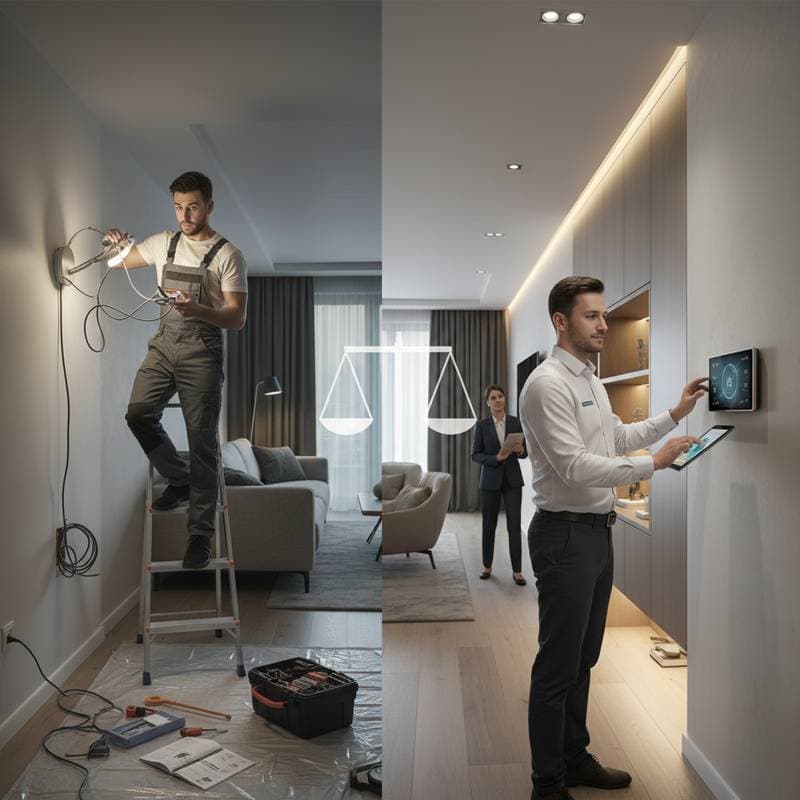
When Smart Home DIY Stops Making Sense
DIY installation saves on labor costs, which often account for 30 percent to 50 percent of total project expenses. However, errors in setup or wiring can result in expensive repairs down the line. Professional installers provide system calibration, warranty protection, and ongoing support to prevent such issues.
For homeowners planning to sell, professionally installed smart systems enhance resale value. These setups integrate seamlessly without visible cables or incompatible devices, appealing to potential buyers who prioritize modern conveniences.
When to Call in the Pros
Projects involving electrical wiring, structural changes, or connections to HVAC or security systems require professional expertise for safety reasons. Licensed technicians verify that all connections comply with building codes and that high-voltage wiring receives proper grounding.
Consider hiring a professional for these specific scenarios:
- Hardwired lighting circuits that demand precise electrical integration
- Electric panel upgrades to support increased smart device loads
- Smart locks linked to existing alarm systems for reliable access control
- Integrated security monitoring that includes cameras and motion sensors
- Custom home theater or distributed audio systems requiring structured cabling
Professionals also address device interoperability challenges. Many smart products from different brands fail to communicate effectively, leading to fragmented control. An installer with experience can create a cohesive network that eliminates redundancies and ensures smooth operation across all components.
Electrical modifications or permanent low-voltage installations might necessitate permits. Contractors manage the application process, schedule inspections, and confirm compliance to maintain your home's insurability and legal standing.
To evaluate your needs, assess the project's complexity early. Start by listing required devices and their integration points. If any involve cutting into walls or altering electrical paths, consult a certified electrician immediately to avoid hazards like short circuits or fire risks.
Long-Term Value and Maintenance
Smart home systems demand regular upkeep to sustain performance. Software updates, evolving app standards, and shifts in home network configurations can disrupt functionality over time. As you incorporate more devices, this maintenance grows more intricate.
DIY approaches allow straightforward expansion but risk creating disjointed setups when combining brands and platforms. In contrast, professional installations often feature a centralized hub for unified control, simplifying daily management and future adjustments.
Schedule reviews every three to six months to check for issues. Look for signs such as delayed responses from devices or frequent disconnections, which signal the need for firmware refreshes or hardware replacements. Maintain a detailed record including device logins, serial numbers, and installation timelines to streamline any diagnostics.
Beyond routine checks, consider the energy efficiency gains from well-maintained systems. Optimized smart thermostats and lighting can reduce utility bills by 10 to 20 percent annually. Professionals often recommend scalable solutions that adapt to your household's changing needs, preserving long-term value without frequent overhauls.
For security, prioritize systems with end-to-end encryption and regular vulnerability patches. DIY users might overlook these, but experts ensure protocols like two-factor authentication and secure cloud integrations protect against unauthorized access.
Building Your Smart Home Strategy
Begin with a basic DIY foundation if you are new to automation. Select plug-and-play options like battery-operated sensors or Wi-Fi bulbs to familiarize yourself with routines such as automated lighting at dusk. Test these elements in one room before scaling up, noting how they interact with your daily flow.
Once comfortable, map out your full vision. Identify core automations, such as temperature control or entry notifications, and evaluate compatibility using manufacturer specifications. This preparation highlights areas where professional input adds the most benefit, like wiring for whole-home coverage.
Adopt a hybrid model for established setups. Manage simple additions yourself, such as smart plugs for appliances, while delegating complex tasks to specialists. This combination leverages your hands-on knowledge with expert precision for optimal results.
Budget wisely by comparing quotes from multiple installers. Factor in not just initial costs but also potential savings from energy efficiency and avoided errors. Certifications like CEDIA or local electrician licenses indicate reliable service providers.
Achieving a Seamless Connected Home
A well-executed smart home enhances daily life through energy savings, heightened comfort, and elevated property appeal. Strategic decisions between DIY efforts and professional assistance create a reliable network tailored to your needs. This balanced approach delivers lasting convenience and peace of mind, transforming your space into an efficient, forward-thinking haven.