
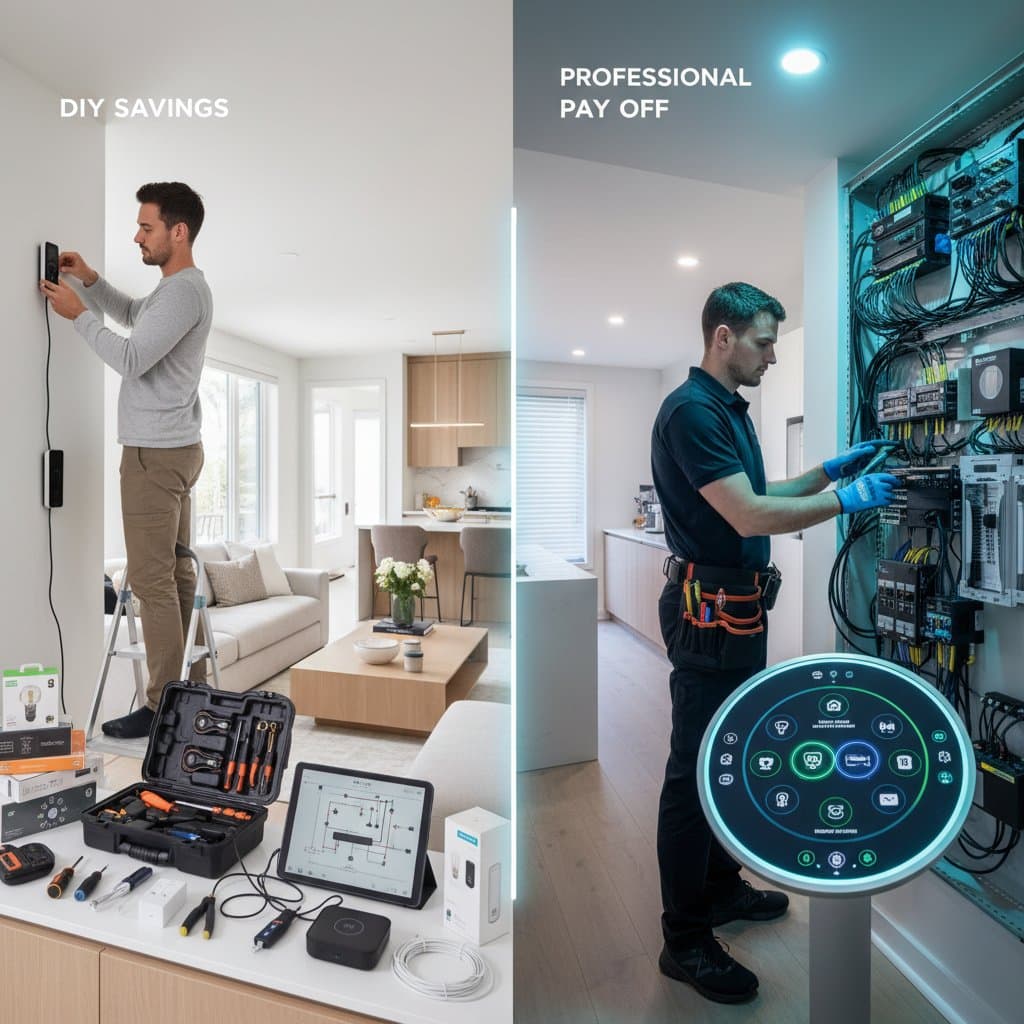
Smart Home Costs: DIY Savings vs Professional Peace of Mind
The decision hinges on a straightforward principle. Homeowners can construct a smart home at lower expense by performing certain tasks independently, yet engaging a professional safeguards the investment and averts expensive errors. The essential consideration involves determining the scope of personal involvement and identifying moments when expert intervention proves essential.
Key Points
- DIY configurations for smart homes typically reduce labor expenses by 30 to 60 percent.
- Professional services guarantee certified safety measures, adherence to building codes, and warranty safeguards.
- Enhanced long-term performance and seamless system integration frequently warrant the fees for intricate installations.
- A combined method, managing straightforward devices personally while delegating wiring or networking to specialists, harmonizes expense with assurance.
Understanding Smart Home Project Types
Smart home initiatives vary significantly in scope and complexity. Substituting individual light switches or incorporating smart plugs differs markedly from installing a comprehensive automation network that links lighting, security, and heating, ventilation, and air conditioning systems.
Entry-level devices, such as smart bulbs, plugs, and thermostats, prove straightforward to set up. These often demand no electrical modifications beyond simple plugging or battery replacement.
Mid-level systems, including smart locks, thermostats integrated with heating, ventilation, and air conditioning units, or networked security cameras, might necessitate wiring, drilling holes, or adjusting network settings.
Advanced systems, like hardwired lighting control panels, automated irrigation setups, or centralized home automation hubs, require specialized expertise in low-voltage wiring, network architecture, and regulatory compliance.
Cost Breakdown: DIY vs Professional Installation
DIY Costs:
- Smart plugs or bulbs: $15 to $50 per unit
- Smart thermostats: $100 to $300 each
- Security cameras: $80 to $250 per camera
- Video doorbells: $150 to $350 per device
With DIY methods, basic systems remain under $1,000 in total outlay. The primary investment becomes personal time commitment and any subsequent issue resolution.
Professional Installation Costs:
- Hourly labor rates: $75 to $150
- Design and configuration for mid-range projects: $500 to $1,500
- Complete smart home integration: $3,000 to $10,000, scaled by project size and intricacy
Professional services introduce initial expenses yet encompass precise system tuning, application configuration, and warranty inclusions. For those anticipating property resale, verified installations enhance appeal to potential buyers and appraisers.
The Real Value of Professional Expertise
Beyond mere device connection, a professional assesses existing wiring, Wi-Fi signal strength, and interoperability among components to foster cohesive operation. Specialists adhere to electrical regulations and safety protocols, minimizing dangers such as fire risks or invalidated warranties.
Consider professional assistance under these circumstances:
- Devices span multiple floors or separate structures.
- Setup requires hardwired power sources or low-voltage cabling.
- Integration involves voice commands or applications across diverse manufacturers.
- The primary internet router resides beyond immediate proximity to primary devices.
Certified installers often hold qualifications from leading firms like Control4, Crestron, or Lutron. Such endorsements verify proficiency in system unification and safe diagnostics.
The DIY Advantage: Flexibility and Cost Control
DIY smart home endeavors attract individuals who value direct involvement and system autonomy. Contemporary devices feature intuitive application guidance, simplifying initial configuration. Homeowners initiate modestly, test functionalities, and scale incrementally without pledging to extensive designs.
This approach permits selection of budget-friendly options and circumvents premiums associated with bundled professional offerings. Errors typically allow rectification through targeted research or community forums.
Boundaries exist, however. Improper thermostat or switch wiring risks HVAC impairment or electrical shocks. Suboptimal Wi-Fi setups lead to sporadic disconnections. While DIY conserves funds, it demands technical aptitude to preserve efficiency and dependability.
Balancing Hybrid Approaches
A hybrid strategy suits numerous homeowners optimally. Manage plug-and-play elements independently, reserving structural tasks for experts. For example, install smart lighting and audio components over a weekend, then engage an electrician for the control panel and thermostat cabling.
This method aligns with phased enhancements. Begin with isolated connected items, then summon an integrator to unify them later. Such progression distributes expenditures, facilitates skill acquisition, and secures robust, expandable foundations.
Hidden Costs and Long-Term Considerations
Smart home ownership extends beyond initial setup. Allocate resources for ongoing maintenance, subscription services, and expansions.
- Cloud storage for surveillance recordings: $5 to $20 monthly
- Firmware revisions: Occasional diagnostic efforts required
- Network growth: Additional hubs or signal extenders for uniform coverage
Professionally managed systems frequently incorporate sustained support agreements, ensuring updates and protection. DIY arrangements shift these duties to the owner. Although this fosters self-reliance, it necessitates proactive monitoring for security and functionality.
When Safety and Compliance Matter
Prioritize electrical integrity, data protection, and regulatory adherence. Municipal codes often mandate permits for wiring alterations, particularly circuit modifications or low-voltage controls. Noncompliance invites insurance complications during incidents.
Experts typically manage permitting and evaluations within their scope. For DIY pursuits, consult local ordinances prior to commencement. Retain purchase records and setup logs to demonstrate adherence, especially in preparation for home sales.
Pro Tips for Success
- Map your residence layout in advance and pinpoint Wi-Fi vulnerabilities.
- Focus initially on a single category, such as illumination or temperature regulation, prior to incorporating security or media elements.
- Apply clear labels to all wiring and configurations to avoid future disarray.
- Confirm device interoperability with intended platforms; review application and hub specifications beforehand.
- Archive configurations via cloud storage or exports to simplify recovery post-reboot or enhancement.
Maintaining Your Investment
Sustained smart home efficacy relies on regular care. Conduct monthly verifications of automation sequences to confirm post-update viability. Swap batteries promptly, wipe camera optics, and assess voice interface responsiveness.
Address performance dips, like delays or signal losses, by resetting network hardware or evaluating mesh Wi-Fi solutions. Organize comprehensive records over time. This diligence not only preserves value but elevates marketability upon resale, underscoring technological sophistication to prospective owners.