
Essential 2026 Upgrades for Climate-Resilient Homes
Homeowners often observe flooding in backyards during intense storms or express concern about roofs enduring extreme heat. Climate patterns continue to evolve, prompting the recognition that outdated weatherproofing measures fall short. Fortunately, comprehensive rebuilding proves unnecessary to achieve resilience. Targeted upgrades enable the conversion of any home into a fortified sanctuary capable of withstanding environmental pressures.
This guide details priority modifications, including estimated costs and scenarios warranting professional involvement. These steps address flood prevention, heat management, and insurance optimization, ultimately fostering a safer, more efficient, and comfortable residence.
Safeguard Against Flooding and Moisture Intrusion
Intense rainfall can overwhelm urban drainage, leading to unexpected flooding regardless of proximity to waterways. Begin with an assessment of site grading and gutter functionality to ensure water directs away from the foundation. Regrade soil slopes if necessary, or extend downspouts to a minimum distance of six feet from the structure.
Incorporate a sump pump equipped with battery backup within basements or crawl spaces for reliable operation during power failures. Such systems range from $1,200 to $2,500 in cost. Install a backflow prevention valve to block stormwater entry into plumbing lines, particularly in properties connected to municipal sewers; expect expenses of $600 to $1,000 for professional fitting.
For residences in flood-vulnerable zones, opt for permeable pavers on driveways and pathways. These surfaces facilitate groundwater infiltration, diverting excess water from foundations. Materials and self-installation keep costs at $5 to $8 per square foot.
Enhance Windows and Doors for Temperature Regulation
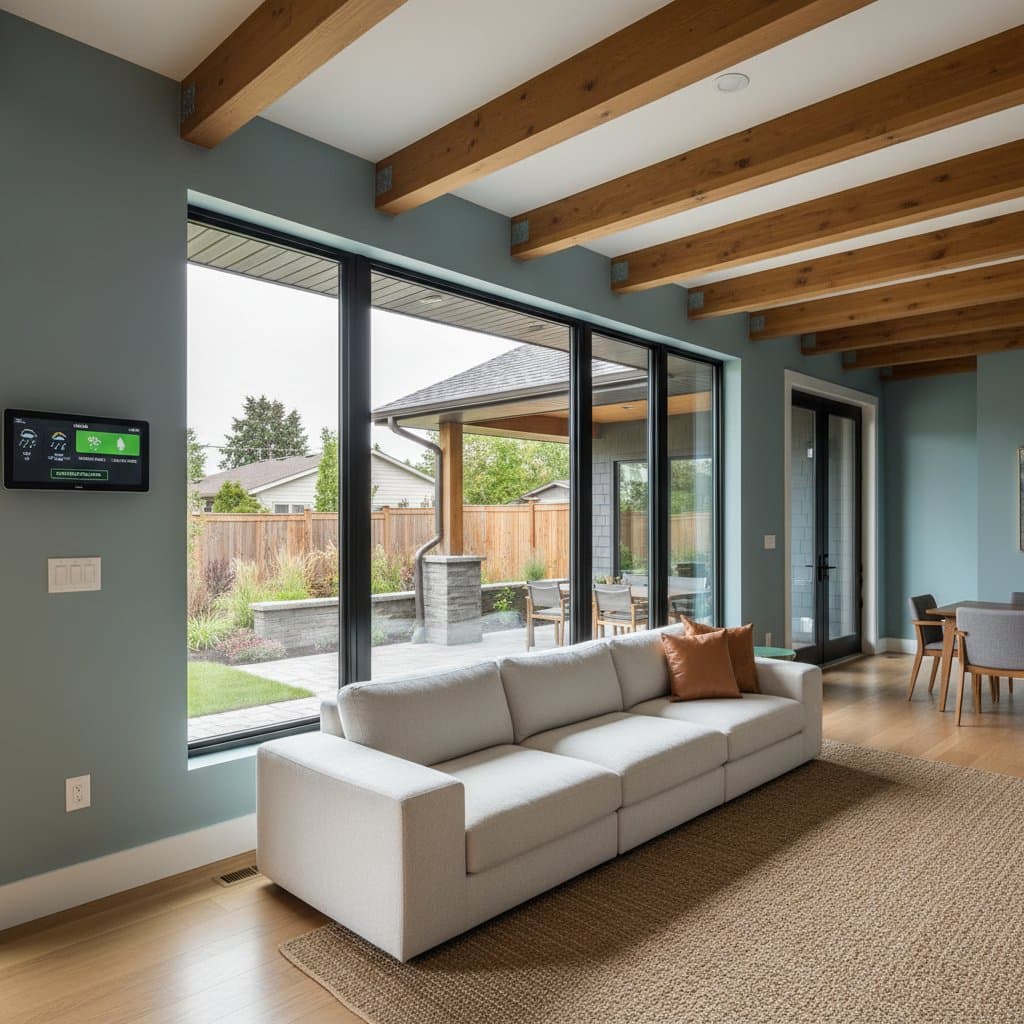
Extreme temperature fluctuations challenge homes with inadequate seals on windows and doors, resulting in uncomfortable interiors. Transition to low-emissivity (Low-E) double- or triple-pane windows to minimize thermal conductivity and elevate energy performance. Installation fees span $700 to $1,200 per unit, influenced by frame composition and glass specifications.
Budget constraints may favor interim solutions like weatherstripping or interior window films to curb air leakage. Complement these with door sweeps and insulated storm doors, which retain conditioned air at minimal expense.
In regions susceptible to hurricanes or gale-force winds, select impact-rated windows and fortified exterior doors. These features resist debris impacts and potentially qualify for reduced insurance premiums.
Optimize Insulation and Ventilation Strategies
Effective insulation extends beyond mere thermal comfort to underpin overall climate durability. In warmer climates, apply radiant barriers within attics to deflect solar heat and maintain cooler indoor environments. Colder areas benefit from spray foam insulation, which seals voids and resists moisture penetration; pricing ranges from $1 to $3 per square foot for blown-in options to $4 to $7 per square foot for spray foam applications.
Integrate ventilation enhancements to complement insulation efforts. Install ridge vents, soffit vents, and whole-house fans to promote air circulation and control humidity levels, thereby inhibiting mold proliferation and structural decay. Evaluate ventilation adequacy prior to insulation additions to maximize efficacy.
Design Landscaping for Environmental Adaptation
Strategic yard modifications serve dual purposes of aesthetic appeal and functional protection. Position native trees and shrubs to provide summer shading and winter wind buffering for the home. Maintain clearance by trimming branches at least ten feet from roof edges to mitigate storm-related hazards.
Address drought risks by replacing water-intensive lawns with xeriscaping elements such as gravel, mulch, and resilient plant species. This approach curtails irrigation needs and stabilizes soil during arid periods. Direct rainwater via a rain garden positioned near downspouts to capture and infiltrate runoff, thereby safeguarding the foundation.
Homeowners manage modest landscaping adjustments independently over a weekend for costs under a few hundred dollars. Professional designs for comprehensive climate-adaptive landscapes typically fall between $3,000 and $8,000, scaled to lot dimensions.
Fortify Home Systems for Efficiency and Durability
Climate extremes expose mechanical systems to failure risks. Adopt a heat pump HVAC unit for versatile performance across heating and cooling demands, with upfront costs of $7,000 to $12,000 offset by sustained energy reductions. Prepare for outages with solar battery storage or natural gas generators, essential for powering vital appliances in high-storm regions.
Relocate water heaters in flood-prone locations onto elevated platforms to avert submersion damage; this adjustment incurs less than $200. Deploy smart thermostats and leak detection sensors for remote oversight, enabling prompt interventions to potential issues.
Bolster Electrical and Structural Integrity
Weather events impose unseen strains on electrical infrastructure, culminating in disruptions. Engage a certified electrician to add whole-house surge protectors, priced at $400 to $800, to shield devices from voltage spikes induced by lightning or grid instability. Modernize outdated panels with advanced circuit breakers for enhanced reliability and compliance.
Reinforce structural elements against seismic activity or storm forces through seismic straps, bolstered framing, and foundation anchors. Allocations of $2,000 to $4,000 for these measures not only heighten safety but also elevate property marketability and insurance favorability.
Prioritize and Execute Resilience Improvements
Approach climate-proofing systematically by addressing high-risk zones first, then expanding scope gradually. Conduct yearly evaluations post-peak weather events in your locale to identify emerging needs. Maintain a detailed inventory of essential components, spanning roofing to subflooring, and revise it alongside completed enhancements to track progress and sustain long-term protection.