
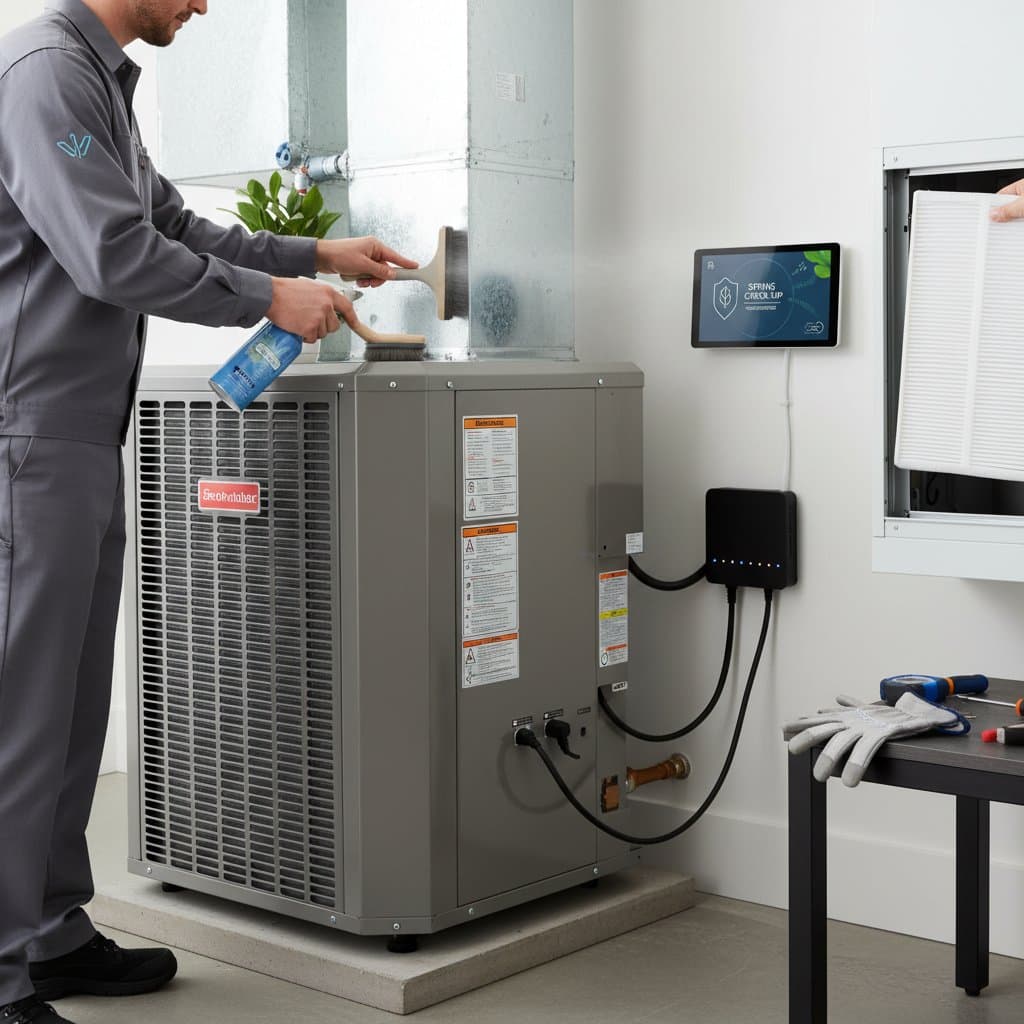
Spring HVAC and Smart Home Maintenance Guide
Warmer weather signals the time to open windows for fresh air. This season also presents an ideal opportunity to maintain home systems. Homeowners often overlook HVAC and smart devices after initial setup, yet spring tune-ups avert major issues later. A modest investment of time now yields substantial savings on energy bills and repairs when summer heat intensifies.
Spring maintenance provides a thorough reset for the home, suitable for novice or experienced owners. The following steps detail how to revitalize the HVAC system, fine-tune smart devices, and promote overall efficiency and safety.
Optimizing Smart Thermostats
A smart thermostat functions as more than a novelty item. Proper configuration transforms it into a significant energy conservation tool. Spring allows for a review of settings and routines to align with changing seasons.
Recalibrate for Seasonal Changes
Winter settings prioritize heating, so adjust for cooling needs. Set the temperature to 78 degrees Fahrenheit during occupancy and higher when absent. Although many models adapt to routines automatically, manual adjustments typically achieve greater energy savings. Review usage data in the app to identify optimal patterns.
Verify Firmware Updates
Smart thermostats, similar to smartphones, benefit from periodic software enhancements. Access the manufacturer's application to ensure the latest version installs. These updates resolve glitches, refine energy analytics, and introduce advanced capabilities, such as improved integration with other systems.
Integrate with Additional Smart Devices
Link the thermostat to elements like window sensors, ceiling fans, or automated blinds for a cohesive setup. For example, blinds may activate upon detection of elevated indoor temperatures, thereby easing the cooling demand and conserving power.
Projected energy savings: As much as 10 percent yearly through smart automation integration.
Inspecting Key Smart Home Devices
HVAC systems represent only one aspect of spring preparation. Other smart home components require attention to sustain performance and synchronization.
Evaluate Wi-Fi Network Stability
Smart devices depend on reliable internet access. Restart the router, install any available firmware upgrades, and assign clear names to devices for simplified oversight. Position the router nearer to the thermostat or deploy a mesh network to eliminate connectivity gaps.
Replace Batteries Proactively
Sensors, cameras, and locks operate on batteries that degrade gradually. Conduct replacements in spring to avoid disruptions. Devices often send low-power notifications, yet preemptive action ensures uninterrupted service.
Confirm Voice Assistant Compatibility
Account for any devices added over the past year and verify their connection to the voice assistant. Commands such as 'activate the fan' or 'adjust temperature to 74 degrees' streamline routines. During this process, examine privacy configurations within the application.
Enhancing Seasonal Energy Efficiency
Identify and Seal Air Leaks
Prior to peak HVAC usage, examine windows, doors, and attic access points for drafts. Apply weatherstripping or caulk to close openings. A single can of expanding foam, priced between 5 and 10 dollars, addresses multiple leaks and minimizes energy escape.
Consider Smart Vents or Zoning Solutions
Smart vents enable room-specific airflow control, balancing comfort and efficiency. Costs range from 80 to 200 dollars per unit. For homes with uneven temperatures across rooms, a zoning system justifies the expense through targeted cooling.
Arrange Professional Inspection
DIY efforts cover basic needs, but a licensed technician assesses refrigerant charges, electrical integrity, and compliance with safety codes. Such services preserve warranty coverage and forestall expensive failures. Schedule an appointment early to secure availability.
Prioritizing Safety in Maintenance
HVAC work entails electrical components and mechanical elements, requiring caution. Disconnect power at the circuit breaker prior to tasks like coil cleaning or filter swaps. Seek expert assistance for any refrigerant leaks, as exposure poses health risks.
Practical Strategies for Effective Maintenance
- Maintain a detailed log of activities, including filter replacements, inspections, and software updates. This record reveals patterns and prevents escalation of minor problems.
- Leverage voice assistants to set recurring reminders for upkeep tasks.
- Assess thermostat location; proximity to sunlight or drafts can skew readings. Relocation enhances accuracy, comfort, and efficiency.
- Perform a full system test before summer arrives. Early detection allows for measured corrections rather than emergency fixes.
Realizing Benefits in a Streamlined Home
Completed maintenance yields noticeable improvements. Cleaner air circulation, steady temperatures, and responsive devices elevate daily living.
These efforts extend beyond problem prevention to foster sustained comfort and reliability. The subtle operation of an optimized air conditioner or the seamless control of a thermostat delivers well-deserved assurance throughout the season.