
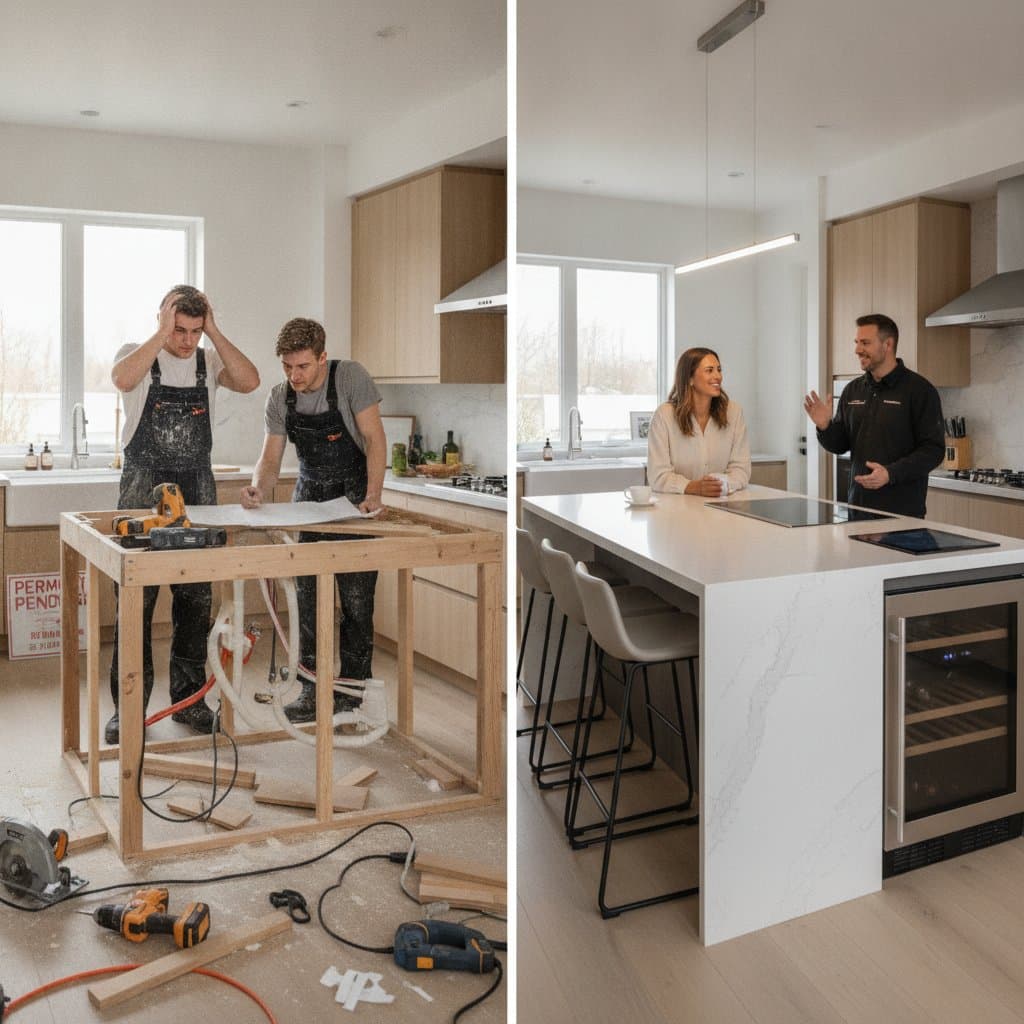
Is a DIY Kitchen Island Worth the Risk in 2026?
If you have been eyeing your kitchen and imagining a sleek new island at its center, you are not alone. The kitchen island serves as prep station, breakfast bar, storage hub, and social centerpiece. The question many homeowners face is whether building one yourself is a smart weekend project or a risky gamble that could cost more than it saves.
This guide breaks down the practical, financial, and structural realities of a DIY kitchen island. You will learn what it truly takes to execute the project safely, when to call in a professional, and how to decide if the DIY route fits your skills and budget.
Understanding the Scope of the Project
Building a kitchen island requires more than assembling cabinets and adding a countertop. It involves several disciplines that demand precision and planning.
Structural integrity comes first. The island must remain level, stable, and anchored securely to the floor. Any wobble can crack flooring or create safety hazards.
Electrical and plumbing work adds another layer. Outlets, lighting, or a sink bring you into the domain of licensed trades. Local codes frequently require professional installation and inspection for these elements.
Material selection affects stability. A stone countertop can weigh several hundred pounds. The base must include proper reinforcement to support that load without failure.
Space planning prevents workflow issues. The National Kitchen and Bath Association recommends at least 36 inches of clearance around the island. Smaller kitchens often ignore this guideline and end up with cramped, inefficient layouts.
Skill Level Assessment Framework
Evaluate your abilities honestly before starting. Use this framework to determine your readiness.
- Carpentry: Beginners can assemble flat-pack furniture. Intermediate users can cut and install trim or build shelves. Advanced users can design and build from raw materials.
- Electrical: Beginners have no experience. Intermediate users can replace outlets under supervision. Advanced users can wire outlets safely and follow code.
- Plumbing: Beginners have no experience. Intermediate users can replace a faucet. Advanced users can install a sink and connect supply lines.
- Finishing: Beginners can paint walls. Intermediate users can sand and stain wood evenly. Advanced users can apply durable finishes and sealants.
If your skills fall mostly in the beginner column, choose a modular island kit instead of a full custom build. These kits supply preassembled bases and clear instructions that lower complexity and risk.
Time Commitment and Workflow Planning
A simple island without plumbing or electrical can often be completed over a two to three day weekend with careful planning. A more complex design that includes built-in seating, power, or a sink may require one to two weeks.
Follow this sequence for a standard DIY island:
- Planning and measurement takes about two hours. Sketch the design, measure the kitchen, and confirm clearance space.
- Material sourcing requires one day. Purchase cabinets, countertop, and hardware.
- Assembly and installation spans one to two days. Secure the cabinets, attach the countertop, and anchor the unit to the floor.
- Finishing touches need one day. Paint, seal, or stain surfaces and install hardware.
- Professional services, if needed, come last. Schedule licensed electricians or plumbers for final connections.
Proper sequencing keeps the project organized and reduces frustration.
Building Skills Gradually
Treat a first large woodworking project as a learning opportunity. Begin with a rolling island or butcher block cart. These mobile options add prep space and storage without permanent installation challenges. Once confidence grows, move to a fixed island with integrated utilities.
Deciding When to Hire Professionals
Compare your available time, skill level, and local code requirements against the project scope. When electrical or plumbing work is involved, or when the countertop weight exceeds standard cabinet capacity, professional installation protects both safety and long-term value.