
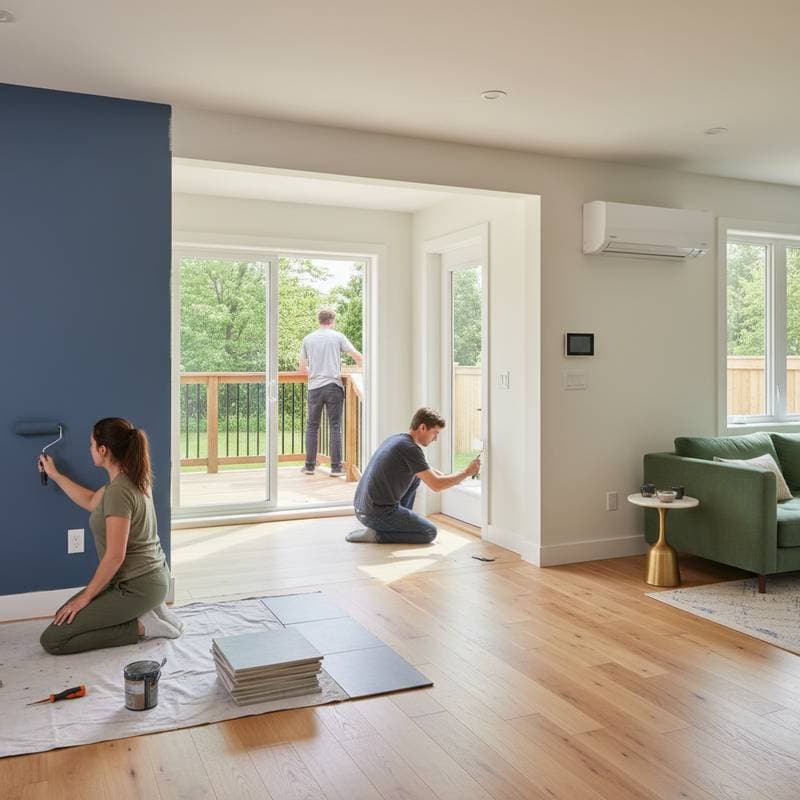
Homeowners often seek ways to refresh their living spaces without navigating complex permitting processes. In 2026, local building codes continue to emphasize safety while allowing certain low-impact updates to proceed independently. These projects focus on cosmetic enhancements, minor repairs, and efficiency boosts that maintain structural integrity.
Most permit-free DIY efforts involve surface-level changes or replacements that do not alter the home's core systems. Professionals recommend verifying local regulations through municipal websites or offices before starting. This approach ensures compliance and avoids potential fines.
Key Permit-Free DIY Projects
Interior Painting
Refresh walls, ceilings, and trim with a new coat of paint to instantly elevate room aesthetics. Select low-VOC paints for better indoor air quality and easier cleanup. Expect costs between $100 and $300 for supplies covering a standard 12x12 room, including primer, brushes, rollers, and drop cloths.
Preparation involves cleaning surfaces, taping edges, and applying primer on bare or patched areas. Apply two coats for even coverage, allowing drying time between layers. This project typically spans a weekend and requires basic tools like ladders and sandpaper.
Flooring Updates
Replace worn carpeting or vinyl with peel-and-stick tiles or laminate planks in high-traffic areas. These materials install over existing subfloors without structural modifications. Budget $200 to $500 for materials in a 150-square-foot space, plus underlayment if needed.
Measure the area precisely and acclimate new flooring to room conditions for 48 hours. Begin installation from the room's center, working outward to minimize seams. Use a utility knife for cuts and a rubber mallet for secure fitting; this method suits beginners and yields professional results.
Small Deck Additions or Repairs
Construct or repair decks under 200 square feet and below 30 inches high, adhering to setback rules from property lines. Use pressure-treated lumber for durability against weather exposure. Material costs range from $300 to $800, covering joists, decking boards, and fasteners.
Level the ground and install concrete footings for support posts. Assemble the frame with galvanized hardware to prevent rust, then attach decking boards with appropriate spacing for drainage. Sand edges and apply sealant post-construction to extend lifespan.
Energy-Efficient Window Treatments
Install cellular shades or thermal curtains to improve insulation without replacing windows. These additions reduce heat loss and gain, potentially lowering utility bills by 10 to 20 percent. Prices vary from $50 to $200 per window, depending on size and fabric quality.
Measure windows accurately for custom fit and mount brackets securely into studs. Hang treatments evenly to ensure smooth operation and maximum coverage. Combine with weatherstripping on frames for enhanced sealing against drafts.
Lighting Fixture Swaps
Upgrade outdated fixtures to LED equivalents for brighter, more efficient illumination. Focus on surface-mounted options that do not require wiring changes. Allocate $50 to $150 per fixture, including bulbs and mounting hardware.
Turn off power at the breaker before removal. Disconnect old wires carefully, cap unused ones, and connect the new fixture following manufacturer diagrams. Test functionality immediately after restoring power to confirm secure installation.
While these projects carry low risk, always disconnect electricity before handling any wiring, even for simple swaps.
When Permits Become Necessary
Certain modifications cross into regulated areas, demanding professional oversight and official approval. Structural, electrical, or plumbing alterations typically trigger permit requirements to safeguard habitability and resale value.
Consult local authorities if projects involve electrical panels, major plumbing relocations, load-bearing walls, central heating systems, or enlarging window openings. These changes impact the home's foundational safety features and warrant inspection.
Indicators to halt and seek professional assistance:
- Introducing additional electrical circuits or repositioning outlets extensively
- Relocating plumbing lines beyond basic fixture replacements
- Extending decks past jurisdiction-specific height or size thresholds
- Incorporating new gas lines or modifying HVAC configurations
Strategies for Effective Execution
Maintain detailed records of all materials purchased and installation steps, including photographs, to support future home sales or audits. Opt for durable, certified products that align with industry standards, ensuring longevity and aesthetic consistency.
Review homeowners association covenants thoroughly, as they may impose restrictions on colors, materials, or visible alterations independent of city codes. Prepare for waste management by sorting recyclables like paint containers and wood scraps, utilizing community facilities to promote sustainability.
Schedule projects during favorable weather and allocate buffer time for unexpected challenges. Gather tools in advance, such as levels, drills, and safety gear, to streamline the process.
Realizing the Rewards of Your Efforts
Completing these DIY initiatives empowers homeowners to customize their environments efficiently and economically. Each finished task enhances comfort, curb appeal, and personal satisfaction without bureaucratic delays.
Assess your space's needs, gather resources, and proceed with verified local guidelines. The tangible results of hands-on improvements foster a deeper connection to your home, blending functionality with individual style.