
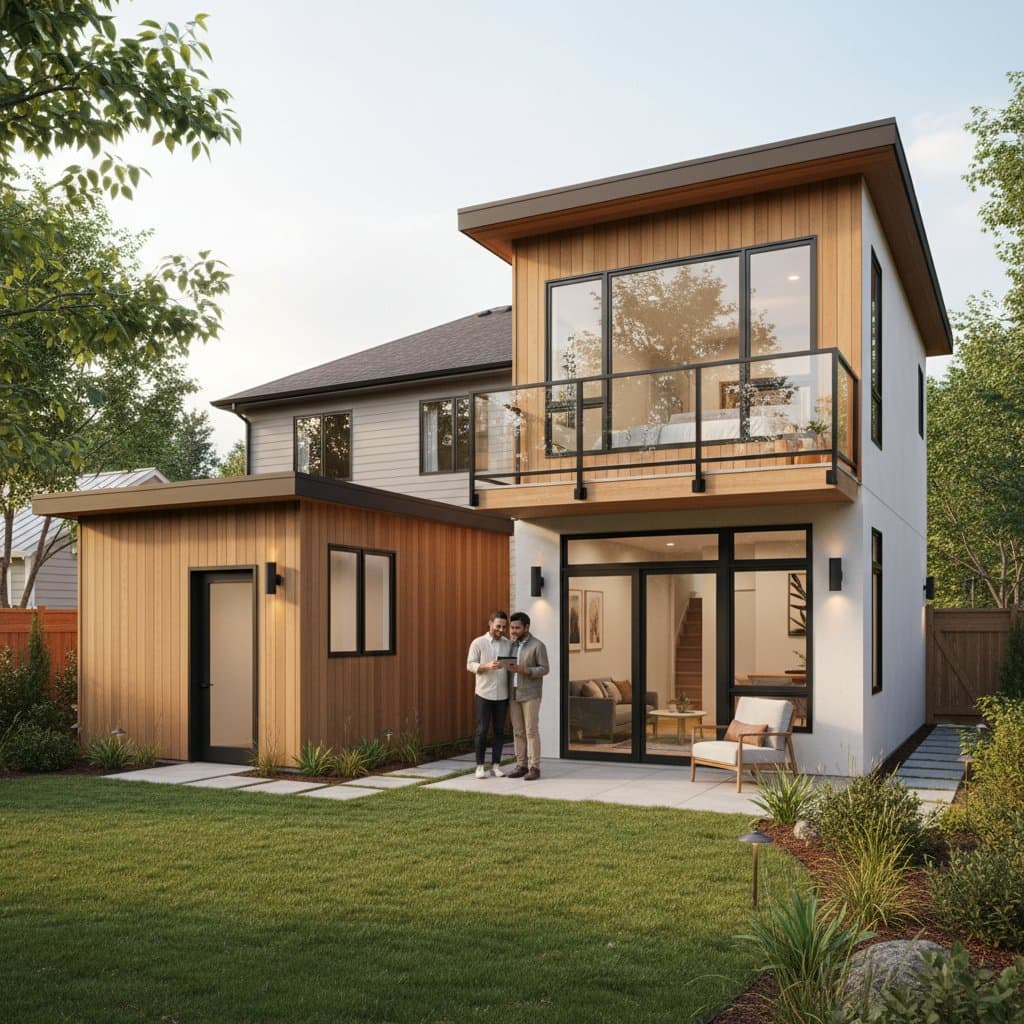
Single-family zones in most municipalities permit ADUs, yet restrictions on lot size or setbacks from boundaries apply. Review your city's planning portal to confirm eligibility and avoid redesigns.
2. Utility infrastructure:
Connecting to water, sewage, and power lines incurs costs from $10,000 to $30,000, influenced by site conditions. Shared utilities lower expenses in permissive areas, whereas separate systems demand higher investments.
3. Compliance with building standards:
ADUs adhere to full residential codes, covering structural integrity, energy performance, minimum ceiling heights of eight feet, adequate ventilation, and clear emergency egress paths.
4. Aesthetic and design oversight:
Certain jurisdictions mandate reviews to align the ADU with the primary residence's architecture. Prepare comprehensive blueprints and elevations upfront to expedite approvals.
Consult a local expert in compact builds, such as an architect or licensed contractor, early on. These professionals identify bundling opportunities for permits and guide appeals for zoning variances, saving time and resources.
Selecting the Optimal ADU Configuration
Evaluate your property's layout and personal needs before committing to construction. Each ADU variant presents unique advantages in cost, privacy, and utility integration.
Detached ADU:
This standalone structure maximizes separation from the main home, suiting rental scenarios or extended family arrangements. It requires dedicated foundations but allows flexible placement on the lot.
Attached ADU:
An extension of the existing house facilitates easier utility access, potentially reducing hookup fees by 15 to 25 percent. Privacy may diminish, so plan interior divisions accordingly.
Garage conversion:
Homeowners favor this for its efficiency, leveraging existing enclosures to slash material needs and cut total costs by at least 20 percent. Address any structural reinforcements during planning.
Basement ADU:
Utilize finished or unfinished lower levels for cost-effective expansion. Investments in moisture barriers and escape windows ensure habitability and code compliance.
Above-garage ADU:
This vertical addition preserves yard space, ideal for compact lots. It demands robust garage reinforcements but yields premium rental appeal through elevated views.
Align your choice with intended use, such as income generation or family support, and factor in local permitting nuances for each type.
Prioritizing Safety and Accessibility Features
Safety forms the foundation of any ADU design. All units comply with standards for fire prevention, including strategically placed smoke and carbon monoxide detectors, plus illuminated exit routes.
For accommodating older relatives or those with mobility challenges, incorporate universal design elements:
- Doorways at least 36 inches wide to accommodate wheelchairs
- Ramped or level entries eliminating thresholds
- Handle-operated doors and faucets for ease of use
- Barrier-free bathrooms with integrated support rails
These enhancements promote inclusivity, comply with accessibility guidelines, and increase the unit's versatility for future occupants or resale.
Sustaining Value Through Ongoing Maintenance
An ADU demands the same upkeep as the primary residence to preserve its condition and profitability. Conduct annual assessments of roofing, drainage systems, and safety equipment to prevent minor issues from escalating.
When leasing, outline responsibilities in the rental agreement, such as tenant-led cleaning and prompt reporting of repairs. Opt for durable, energy-saving materials like LED lighting and high-efficiency appliances to minimize operational costs and appeal to discerning renters.
Well-maintained ADUs experience shorter vacancies and command higher rents, safeguarding your investment while enhancing overall property equity.
Realizing Lasting Benefits from Your ADU
With construction complete, the ADU delivers tangible advantages. It may serve as an elegant guest area, a reliable income source, or a convenient workspace adjacent to daily life.
This addition extends beyond square footage; it redefines property utility and financial potential. Collaborate with skilled builders if needed, and approach the project with an eye toward both immediate enjoyment and enduring worth. The result is enhanced living quality and a fortified asset for years ahead.