
ADU Permits and ROI: What 2026 Numbers Really Mean
Accessory Dwelling Units (ADUs) offer homeowners a practical way to expand living space and generate income. As regulations evolve and construction costs stabilize, projections for 2026 highlight significant opportunities for return on investment. This article explores permit processes, cost breakdowns, and strategies to maximize value, drawing on anticipated trends in housing demand and regulatory changes.
Navigating the Permit Process
Securing permits forms the foundation of any ADU project. Local building departments enforce zoning laws, setback requirements, and occupancy standards that vary by municipality. Begin by reviewing your city's ADU ordinance, often available online or through a planning office consultation. Submit detailed plans including site surveys, floor layouts, and elevation drawings to expedite approval.
Anticipate timelines of three to six months for permit review, though streamlined processes in progressive areas like California could shorten this to weeks by 2026. Engage an architect or expediter early to align designs with codes, avoiding revisions that delay construction. Fees typically range from $2,000 to $10,000, influenced by unit size and complexity.
Common permit hurdles include height restrictions and parking mandates. For instance, some jurisdictions cap ADUs at 800 square feet and require off-street parking unless near transit. Address these by incorporating energy-efficient features, which may qualify for exemptions or incentives under updated green building codes expected in 2026.
Utility Connections and Compliance
Integrating utilities demands careful planning to ensure independence and efficiency. Separate meters become essential if you intend to rent the unit separately, allowing accurate billing and compliance with rental regulations. Coordinate with local providers for electrical, water, and sewer connections, as capacity upgrades might add $5,000 to $15,000.
Hire a designer versed in local ADU codes to streamline this phase. Their expertise prevents oversights, such as inadequate wiring for modern appliances, which could lead to redesigns costing thousands. By 2026, smart home integrations like solar panels and EV charging stations will likely influence permit approvals, enhancing long-term ROI through energy savings.
Breaking Down ADU Costs
Constructing an ADU requires a clear budget to align with financial goals. Detached units generally cost $150,000 to $300,000, factoring in custom materials and challenging sites. Garage conversions prove more affordable at $80,000 to $140,000 by leveraging existing foundations. Attached additions sit between $120,000 and $200,000, balancing integration with new builds.
Consider this detailed cost breakdown:
| Category | Estimated Cost Range | Notes |
|---|---|---|
| Design and Permits | $8,000 - $20,000 | Encompasses architectural drawings, engineering reviews, and filing fees |
| Site Preparation | $10,000 - $25,000 | Covers excavation, grading, and utility trenching for stable groundwork |
| Construction | $100,000 - $220,000 | Includes framing, roofing, walls, and basic structural elements |
| Utilities and Systems | $10,000 - $25,000 | Accounts for wiring, piping, heating, and ventilation installations |
| Interior Finishes | $15,000 - $40,000 | Features cabinetry, countertops, flooring, and lighting selections |
Opt for cost-effective choices like vinyl siding over premium brick or LED fixtures to trim expenses. Prefabricated or modular ADUs can reduce on-site labor by 20 percent, accelerating completion and minimizing weather-related delays. Projections for 2026 suggest material costs may rise 5 to 10 percent due to supply chain factors, underscoring the value of early planning.
Calculating the ROI Potential
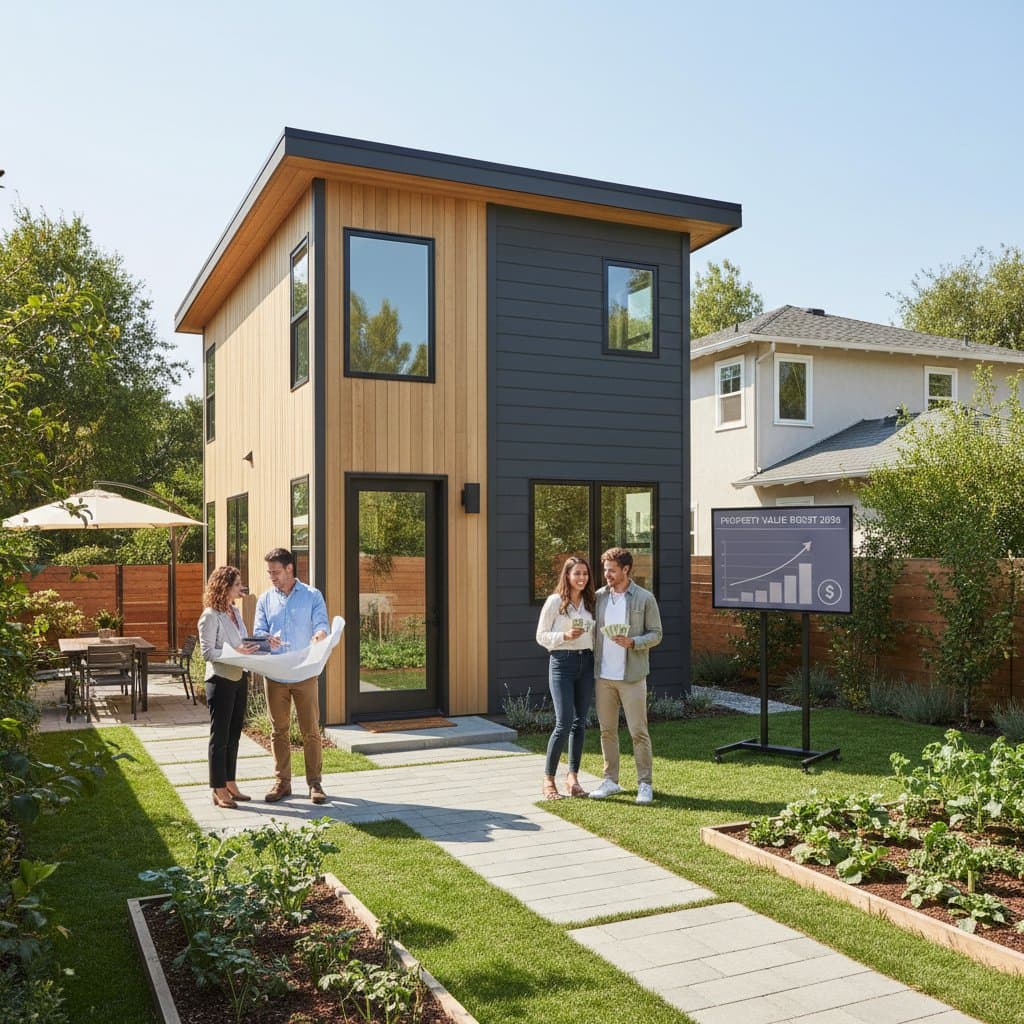
ADUs deliver strong returns through property appreciation and rental revenue. A thoughtfully built unit can increase home value by 20 to 30 percent, with national averages showing $50,000 to $100,000 gains for a $500,000 property. In rental scenarios, one-bedroom ADUs command $1,500 to $2,500 monthly in urban markets, yielding over $20,000 annually after expenses.
Follow this step-by-step framework to project your ROI:
-
Assess Total Investment: Sum all costs from design through furnishing, adding 10 percent for contingencies.
-
Estimate Annual Net Income: Calculate gross rent minus taxes, insurance, maintenance, and vacancy allowances—typically 20 to 30 percent of revenue.
-
Compute ROI Percentage: Divide net income by investment; for a $200,000 build netting $15,000 yearly, expect 7.5 percent initially.
By 2026, rising housing shortages could boost rents 15 percent in key areas, elevating ROI to 10 percent or more. Factor in tax advantages, such as deductions for home office use in the ADU, to refine calculations.
DIY vs. Professional Build Decisions
Homeowners with skills can cut costs through selective DIY efforts, but safety and legality demand professional input for critical elements. Partial involvement suits tasks like painting or landscaping, potentially saving $5,000 to $10,000. However, structural errors from amateur work often lead to fines or rebuilds exceeding initial savings.
Identify suitable DIY tasks:
-
Applying paint and installing trim for a custom finish
-
Laying laminate or tile flooring with proper underlayment
-
Planting gardens and constructing simple pathways
-
Selecting and arranging furniture for optimal flow
Reserve these for professionals:
-
Pouring concrete foundations and erecting frames
-
Installing electrical panels and plumbing lines
-
Applying roofs and adding insulation layers
-
Conducting final inspections and permit sign-offs
A hybrid model, where pros handle 70 percent of the work, achieves compliance while controlling budgets. Consult licensed contractors via local associations to ensure credentials.
Troubleshooting Common ADU Challenges
Projects rarely proceed without obstacles, from bureaucratic delays to site-specific issues. Allocate a 10 percent contingency fund to absorb surprises like permit revisions or material price hikes. Maintain detailed records of contractor agreements and progress to resolve disputes efficiently.
Address frequent challenges with these solutions:
-
Utility Capacity Limits: Schedule assessments with providers months ahead; upgrade transformers if loads exceed 200 amps.
-
Drainage Problems: Implement sloped grading and install French drains to direct water away, preventing foundation erosion.
-
Design Misalignments: Employ software like SketchUp for 3D previews, allowing adjustments pre-construction to fit family needs.
By 2026, digital permitting platforms may reduce approval times, but proactive communication remains key to staying on track.
Maintaining Your Investment
Post-construction care preserves value and ensures longevity. Schedule annual inspections for structural integrity, pest control, and system efficiency. Update interiors every five years to sustain rental appeal, budgeting $2,000 to $5,000 for refreshes.
Monitor local regulations for changes, such as new energy standards, and adapt accordingly. Insurance adjustments cover the addition, often increasing premiums by 10 to 15 percent—shop policies to mitigate this.
Building on Your ADU Success
An ADU extends beyond immediate gains, serving as a versatile asset for family support or income diversification. With strategic permitting and cost management, it aligns with 2026 market trends toward multigenerational living and affordable housing. Invest thoughtfully to secure enduring financial benefits and enhanced property utility.