
Heat Pump Savings: What to DIY and What to Hire Out
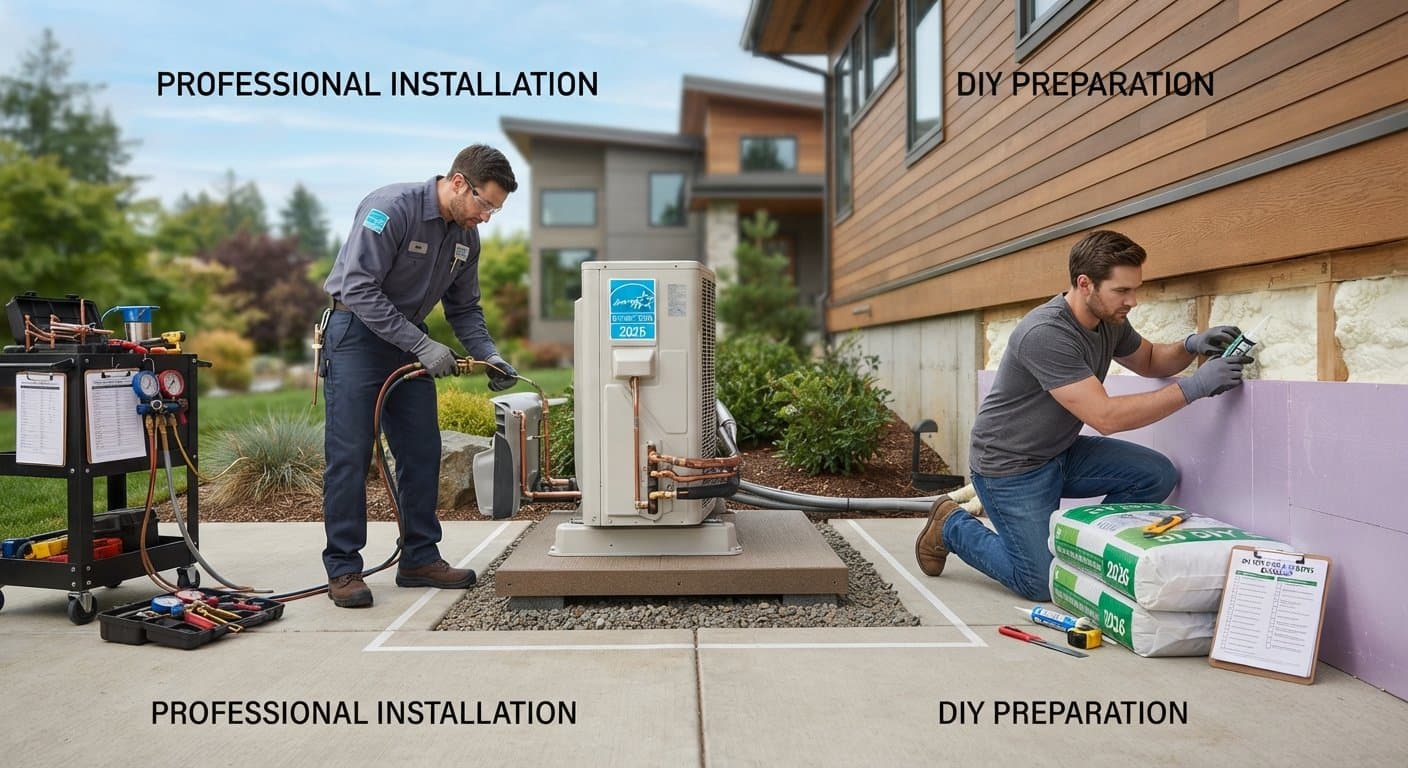
A heat pump can reduce heating and cooling expenses, but poor sizing or improper installation can eliminate those savings. The most reliable approach separates tasks homeowners can handle safely from work that requires licensed professionals. Preparation, insulation improvements, and contractor comparisons fall within the DIY category. Refrigerant handling, electrical connections, and system commissioning belong to trained HVAC technicians.
Understanding Typical Installation Costs
Professional installation of a ductless mini-split system usually ranges from four thousand to twelve thousand dollars. A complete whole-home system often costs between eight thousand and twenty thousand dollars or more. These figures include equipment, labor, permits, and commissioning. Regional labor rates, climate conditions, and home layout influence the final price.
Homeowners reduce total expenses through preparation rather than attempting technical work. Gathering measurements, documenting existing conditions, and improving insulation before contractors arrive can lower labor hours. These steps do not replace professional installation.
Preparation Tasks That Reduce Labor Costs
Begin by evaluating insulation levels and air leakage throughout the house. Seal gaps around windows and doors with weatherstripping or caulk. Add insulation to attics or crawl spaces where heat loss occurs. Clear the planned location for the outdoor unit of debris, vegetation, and snow accumulation. These improvements help the system operate at designed efficiency.
Document room dimensions, existing ductwork locations, and the electrical panel configuration. Take clear photographs of the service panel, including breaker labels and available space. Provide this information to contractors during the bidding process. Accurate details help installers prepare precise quotes and reduce change orders.
Comparing Contractor Bids
Request itemized proposals from at least three licensed HVAC contractors. Each quote should list equipment model numbers, labor hours, permit fees, electrical upgrades, and commissioning procedures. Compare line items rather than total prices alone. A lower bid may omit required electrical work or permit costs that appear later as change orders.
Ask whether the proposal includes removal of existing equipment and restoration of affected surfaces. Confirm that startup testing and a written commissioning report are included. These details affect both performance and warranty coverage.
Ductless Mini-Split Considerations
A ductless system serves individual rooms or small additions effectively. Some manufacturers offer precharged lineset kits that simplify refrigerant connections. These kits reduce installation time but do not eliminate code requirements or warranty conditions. Verify whether local regulations and incentive programs require professional installation regardless of kit design.
Measure the room carefully and confirm that the selected unit matches the calculated heating and cooling load. Oversized equipment short-cycles and wastes energy. Undersized equipment struggles during extreme temperatures and increases reliance on backup heat.
Work That Requires Licensed Professionals
Refrigerant handling demands EPA Section 608 certification in the United States. Technicians must recover, charge, and leak-test systems according to federal and manufacturer standards. Homeowners who attempt these tasks risk equipment damage, refrigerant leaks, and voided warranties.
Electrical connections to the service panel require permits and inspections in most jurisdictions. Incorrect wiring creates shock and fire hazards. Only licensed electricians or HVAC contractors with appropriate credentials should perform this work.
System commissioning verifies that airflow, refrigerant charge, and control settings meet manufacturer specifications. Proper commissioning prevents premature component failure and ensures the system delivers rated efficiency. Skipping this step often leads to higher operating costs and service calls.
Incentive and Rebate Requirements
Federal, state, and utility programs offer rebates and tax credits for qualifying heat pump installations. Eligibility frequently depends on equipment efficiency ratings and installer credentials. Some programs require installation by contractors on an approved list. Purchasing equipment independently may disqualify the project from incentives.
Review program guidelines before selecting equipment or signing contracts. Note the minimum efficiency ratings, required documentation, and post-installation verification steps. A slightly higher equipment cost may qualify for rebates that exceed the price difference.
Maintenance Practices That Protect the Investment
Keep the outdoor unit level and free of leaves, snow, and debris. Maintain at least two feet of clearance on all sides for proper airflow. Replace or clean indoor filters according to the manufacturer schedule. Schedule professional maintenance before peak heating and cooling seasons.
In cold climates, confirm that the selected model maintains capacity at low outdoor temperatures. Some units require supplemental heat below certain thresholds. Understanding these limits prevents unexpected comfort issues during winter storms.
Next Steps for Homeowners
Measure rooms, record utility usage, and photograph the electrical panel. Use this information to request detailed quotes from licensed contractors. Focus preparation efforts on insulation and site readiness. Leave refrigerant work, electrical connections, and commissioning to qualified professionals who can deliver a properly sized and commissioned system.