
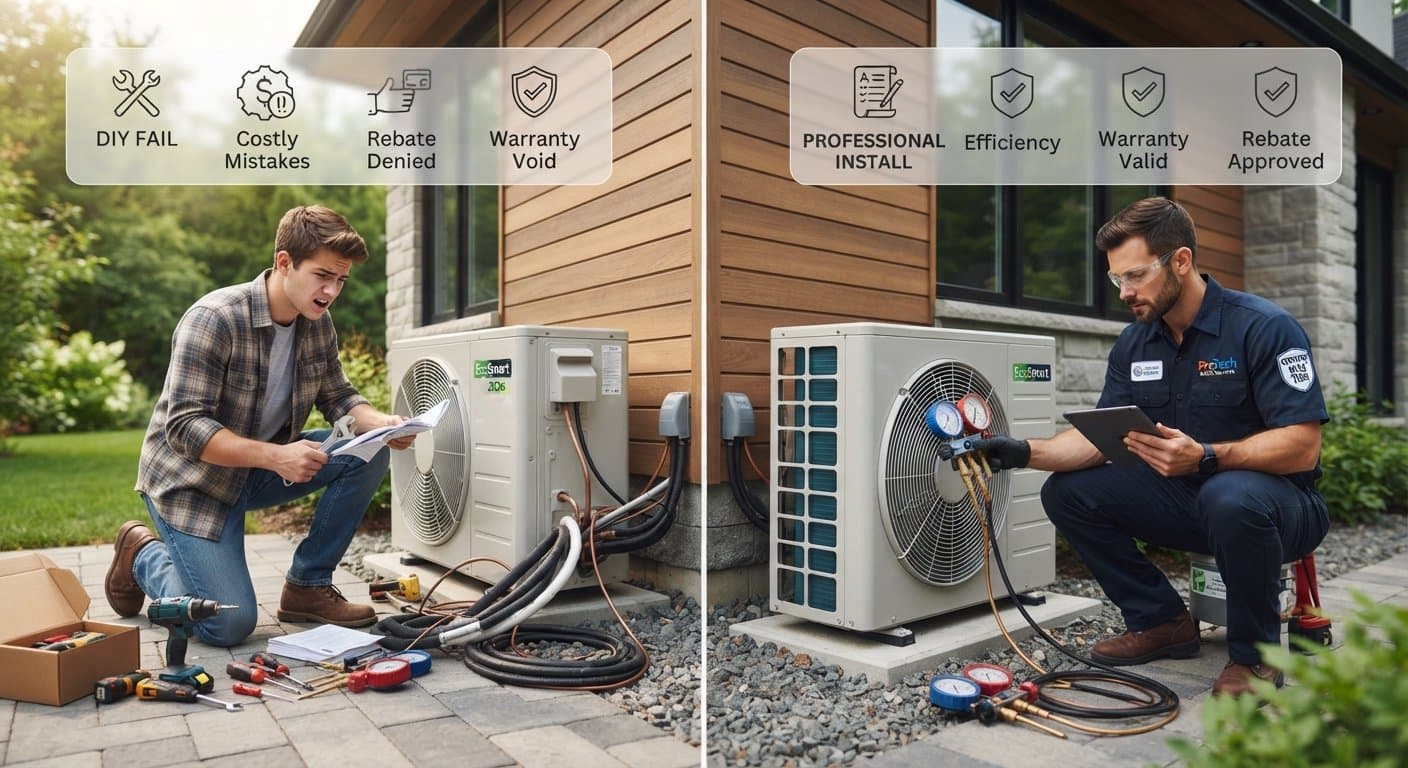
DIY Heat Pump Savings Can Disappear Without Professional Support
A heat pump can reduce heating and cooling expenses, yet installing one yourself rarely delivers the savings many homeowners expect. Professional installation often costs several thousand dollars, while DIY labor appears to offer immediate savings. The reality involves high voltage systems, refrigerant handling, drainage requirements, airflow management, and local code compliance. A single mistake can eliminate expected savings through reduced efficiency, equipment damage, failed inspections, or voided warranty coverage.
Most homeowners benefit from a middle approach rather than choosing between complete DIY and full contractor installation. You can manage planning, site preparation, and certain finish work while leaving refrigerant piping, electrical connections, commissioning, and code-sensitive tasks to licensed professionals. This division controls costs without exposing the system or household to unnecessary risk.
Installation Costs and Realistic Savings
A professionally installed ductless heat pump typically costs between four thousand and twelve thousand dollars for a single-zone system. Larger or more complex installations range from ten thousand to twenty-five thousand dollars or higher. These figures reflect regional labor rates, equipment capacity, electrical upgrades, and site access challenges.
DIY savings prove difficult to achieve legally because refrigerant handling, electrical work, and permits often require qualified professionals. A system that receives incorrect sizing, improper refrigerant charge, or inadequate commissioning will consume more energy and experience earlier component failure. Rebates and tax incentives frequently demand approved equipment, proper permits, and documented installation records.
Homeowners can reduce costs safely by comparing multiple bids, improving insulation before equipment selection, preparing the installation site, and verifying incentive eligibility. These steps deliver measurable value without compromising system performance or regulatory compliance.
Complete Installation Requirements
A heat pump moves thermal energy between indoor and outdoor environments. During heating operation, the system extracts heat from outdoor air and transfers it inside. Cooling mode reverses this process. Equipment may connect to existing ductwork or link to wall-mounted indoor units through refrigerant lines.
Professional installation extends beyond equipment mounting. Contractors must calculate heating and cooling loads, select appropriate equipment capacity, verify electrical service adequacy, route refrigerant lines, establish condensate drainage, and verify system operation. Ducted systems may require duct sealing or airflow adjustments that affect both comfort and energy consumption.
Installation expenses vary according to geographic location, equipment specifications, electrical service requirements, and physical access constraints. Labor and permitting costs increase in dense urban areas or regions with high contractor demand. Difficult line-set routing, extended electrical runs, or undersized electrical panels can add hundreds or thousands of dollars to project costs.
Safe DIY Opportunities
Homeowners can reduce expenses when working within local regulations and without compromising system performance. Contact your building department and utility provider before beginning any work. Requirements differ by jurisdiction, and utility companies may impose additional rules for incentive programs.
Property owners can typically handle these preparatory tasks:
- Remove vegetation and debris from the proposed outdoor unit location
- Create a stable, level mounting surface when permits and manufacturer instructions permit
- Improve air sealing and insulation before equipment sizing occurs
- Remove disconnected indoor equipment when safe and permitted
- Organize receipts, permit documentation, product specifications, and contractor records
These activities provide value but cannot replace professional load calculations or system commissioning. Contractors should employ recognized calculation methods rather than estimating capacity based solely on existing equipment size. Oversized systems cycle inefficiently while undersized equipment struggles during extreme weather conditions.
Technical Requirements That Demand Professional Expertise
Refrigerant circuits require precise installation and testing procedures. Leaks reduce system capacity, increase energy consumption, and damage compressors. United States regulations require EPA Section 608 certification for technicians who handle regulated refrigerants. Equipment purchase does not authorize homeowners to perform restricted refrigerant work.
Electrical connections present additional risks. Heat pumps often require dedicated circuits, properly sized breakers, disconnect switches, grounding systems, and wiring that meets manufacturer specifications and local electrical codes. Poor connections can cause equipment failure, electrical shock, or fire hazards. Licensed electricians can assess whether circuit additions, subpanel installation, or service upgrades are necessary.
System commissioning proves equally important as installation quality. Qualified technicians verify refrigerant charge levels, airflow measurements, static pressure readings where applicable, control operation, and operating temperatures. Skipping these verification steps can leave systems consuming excess energy while appearing to function normally.
Regulatory and Warranty Considerations
Review current requirements for your state, utility provider, municipality, and tax situation before purchasing equipment. Incentive eligibility may depend on equipment efficiency ratings, approved product lists, contractor credentials, project documentation, or inspection results. Programs change frequently, and retailer-advertised rebates may not apply to self-installed systems.
Permits create official records that work meets local requirements. Projects may require mechanical, electrical, or building permits depending on scope. Unpermitted installations can complicate home sales, insurance claims, or future service calls. Corrective work may be required before unpermitted projects pass inspection.
Manufacturer warranties deserve careful review before equipment purchase. Some warranties mandate installation by licensed contractors, proper registration, or documented maintenance records. Even when warranties do not explicitly exclude homeowner installation, damage from incorrect wiring, improper refrigerant handling, or inadequate drainage may void coverage.
Cost Comparison Framework
Single-zone ductless systems typically cost between four thousand and twelve thousand dollars when professionally installed. Multi-zone systems or ducted replacements range from ten thousand to twenty-five thousand dollars or more when projects include panel upgrades, duct repairs, or challenging installation conditions. These represent broad national estimates rather than specific quotes.
DIY equipment costs may appear lower initially, but budget for permits, electrical work, specialized tools, freight charges, disposal fees, and professional commissioning requirements. Technicians may decline service on unverified installations, making future repairs more difficult to arrange. Failed inspections or refrigerant leaks can add substantial costs and delay heating or cooling availability.
Request at least three written bids that detail equipment specifications, load calculations, electrical requirements, drainage provisions, line-set routing, permit responsibilities, warranty coverage, commissioning procedures, and incentive calculations. Avoid bids that omit load calculations, promise unrealistic savings without utility bill analysis, or pressure immediate decisions.
Project Planning Sequence
Standard replacement projects typically require one to three days depending on system type and site conditions. Electrical upgrades, permit reviews, duct repairs, or difficult line routing can extend project duration. Plan for site visits and approval processes before equipment delivery, and discuss temporary heating or cooling arrangements during installation.
Follow this sequence to minimize unexpected complications:
- Collect utility bills and identify comfort issues throughout the home
- Contact building departments and utility providers to confirm permit and rebate requirements
- Request load-based equipment sizing calculations from potential contractors
- Compare complete bids that address equipment, scope, warranty, permits, and commissioning
- Maintain organized records of permits, inspections, model numbers, warranty registration, and commissioning results
- Verify completed work meets specifications for unit placement, drainage, controls, and maintenance access
Avoid electrical work, refrigerant line modifications, or gas appliance alterations without proper training and authorization. Contact professionals immediately if you discover damaged wiring, refrigerant leakage signs, water near electrical components, or electrical panels that overheat or trip repeatedly.
Determining Appropriate Professional Involvement
Professional installation becomes essential when projects involve refrigerant piping, new electrical circuits, service panel modifications, duct redesign, structural penetrations, or systems covered by rebates requiring certified installation. Professional involvement also makes sense when homeowners lack experience reading wiring diagrams or verifying airflow and operating pressures.
Homeowners with strong DIY capabilities can contribute by improving insulation, clearing installation sites, documenting existing conditions, or completing approved finish work. Establish clear responsibility divisions with contractors before work begins. Some companies will not warranty projects if homeowners modify equipment or piping after installation.
Quality contractors welcome specific questions about work assignments, license verification, floor and wall protection methods, and pre-departure testing procedures. Clear answers indicate professional competence more reliably than low prices or polished presentations.
Protecting Your Investment Long-Term
Regular maintenance preserves heat pump efficiency and extends equipment life. Schedule annual professional inspections that include refrigerant level checks, electrical connection verification, condensate drain cleaning, and filter replacement guidance. Document all maintenance activities to support warranty claims and maintain optimal system performance throughout the equipment lifespan.